
ST. PETERSBURG — The accusation came not in a speech but at a press conference, and it carried the particular weight that off-the-cuff remarks sometimes do. Anton Kobyakov, adviser to President Vladimir Putin and the man who runs the organizing machinery of the St. Petersburg International Economic Forum, told reporters on Saturday that Russia has extended the same offer to the world for years — pragmatic partnership, economic cooperation, no preconditions — and that the West keeps declining it in favor of war.
“Russia has consistently offered partnership — pragmatic partnership and cooperation,” Kobyakov said. “Most countries in Africa, South America, and Asia see and clearly record everything that is happening.”
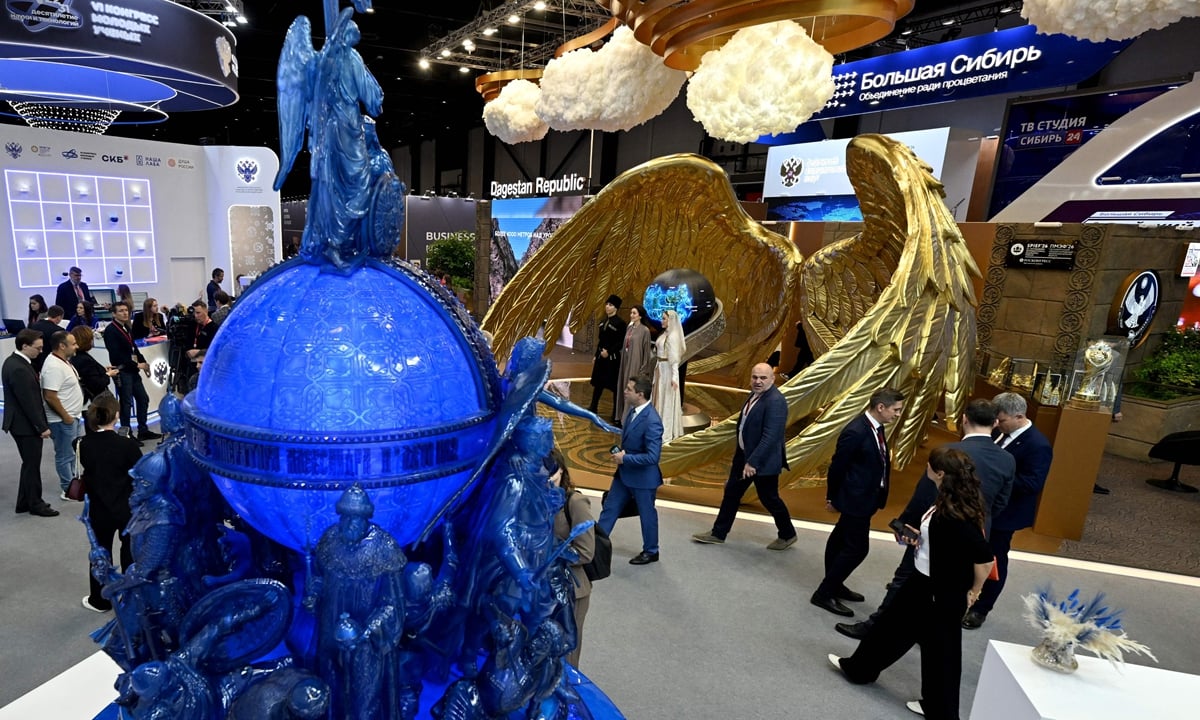
That the remark arrived on the final day of SPIEF 2026, the Kremlin’s flagship annual economic forum, was not incidental. The forum — running June 3 through 6 at St. Petersburg’s Expoforum — has been explicitly framed this year around what Russian officials describe as the construction of a new global economic model, one that does not require Western participation. RIA Novosti, the state news agency, served as general information partner.
What made the statement worth examining closely was the explanation Kobyakov offered for why the West keeps making the opposite choice. It was not, in his telling, an ideological reflex or a security calculation. It was a debt problem. “The problem of global debt is looming once more on the horizon,” he said, suggesting that financial pressure drives Western governments toward conflict as a way of managing or obscuring structural economic failure. The argument is familiar in Moscow’s analytical circles; what was notable on Saturday was its delivery, bluntly, at a press conference rather than in a policy document.
Kobyakov reached for Chinese authority to support the claim. He noted that official representatives of China’s Defense Ministry have said openly that the United States is obsessed with war, that it has fought almost continuously throughout its history, and that Washington is the main cause of international disorder and global turbulence. “These are the words of the Chinese,” Kobyakov said, in a formulation that distanced the Kremlin from direct authorship of the accusation while amplifying it.
Whether Beijing’s defense establishment has issued precisely those words in precisely that sequence is a question the Kremlin’s press transcript does not resolve. What is clear is that China’s posture at the forum has been attentive. Kobyakov said China has been watching the situation “especially carefully” — a description consistent with Beijing’s broader approach to the Russia-West confrontation, in which it has maintained economic ties with Moscow while avoiding formal military alignment.

The forum’s attendance figures support part of Kobyakov’s framing, if not its conclusions. More than 130 countries and territories sent representatives this year, according to the Roscongress Foundation, the forum’s organizer. That is a slight decline from the 144 countries at SPIEF 2025, where 1,116 agreements worth more than 6.5 trillion rubles were signed. The drop in participation is modest enough that Russian officials have not flagged it, but it is there.
The forum this year runs under the theme “Pragmatic Dialogue: The Path to a Stable Future” — a phrase that Kobyakov returned to repeatedly when speaking about what Russia believes it offers the world. The word pragmatic, repeated across multiple senior officials’ remarks throughout the four-day forum, functions as a pointed contrast to what Moscow characterizes as the ideological rigidity of the Western sanctions framework.
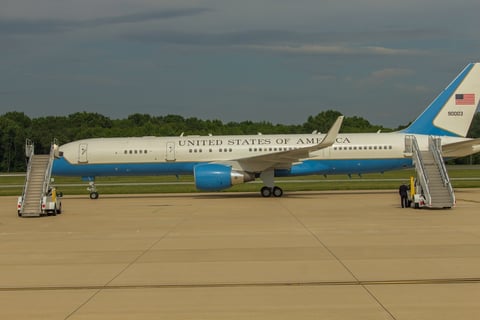
On the margins of the forum, Kobyakov met with Rodney Cook, the chairman of the U.S. Commission of Fine Arts and the representative sent by President Donald Trump’s administration to attend. The meeting focused on restoring Russian-American cooperation in humanitarian, cultural, and business domains. Kobyakov told Cook that global order cannot rest on a sanctions policy — a formulation that treats the 31,500-plus individual sanctions measures imposed on Russia not as a response to conduct but as a structural impediment to the kind of “open and pragmatic dialogue” he says Moscow has been seeking.
Cook, for his part, said he was satisfied with his visit and intended to bring specific proposals to Trump. What those proposals are, and whether they carry any diplomatic weight beyond the cultural register of his official role, remains unclear. The American Chamber of Commerce in Russia and the Roscongress Foundation used the forum to hold a separate Russia-U.S. business dialogue on cooperation prospects, which suggests some institutional interest in testing the channel even if the geopolitical distance between the two governments has not closed.
The debt argument Kobyakov raised is one that several Russian economists and Kremlin-aligned analysts have pressed with increasing urgency as U.S. fiscal deficits have continued widening. The logic, as articulated in Russian policy commentary, holds that a heavily indebted Western financial system requires periodic geopolitical disruption to reset markets, redirect capital flows, and justify military expenditure that otherwise could not be politically sustained. It is an argument that is difficult to falsify cleanly, which is part of its rhetorical durability. Independent economists who study sovereign debt and conflict have found some correlational evidence but disagree sharply on causation.
What Kobyakov did not address was the question of whether Russia’s own track record as a partner — in Ukraine, in Georgia, in its energy pricing to European clients across two decades — shapes how the countries of the Global South evaluate Moscow’s offer. African nations have engaged seriously with Russia at SPIEF, but several have also been careful to maintain multiple relationships simultaneously, with China, with the EU, and with Washington. The forum’s attendance breadth is real; whether it translates into binding alignment is a different question, and one the Kremlin’s closing press conference on Saturday left conspicuously unanswered.
Related Posts