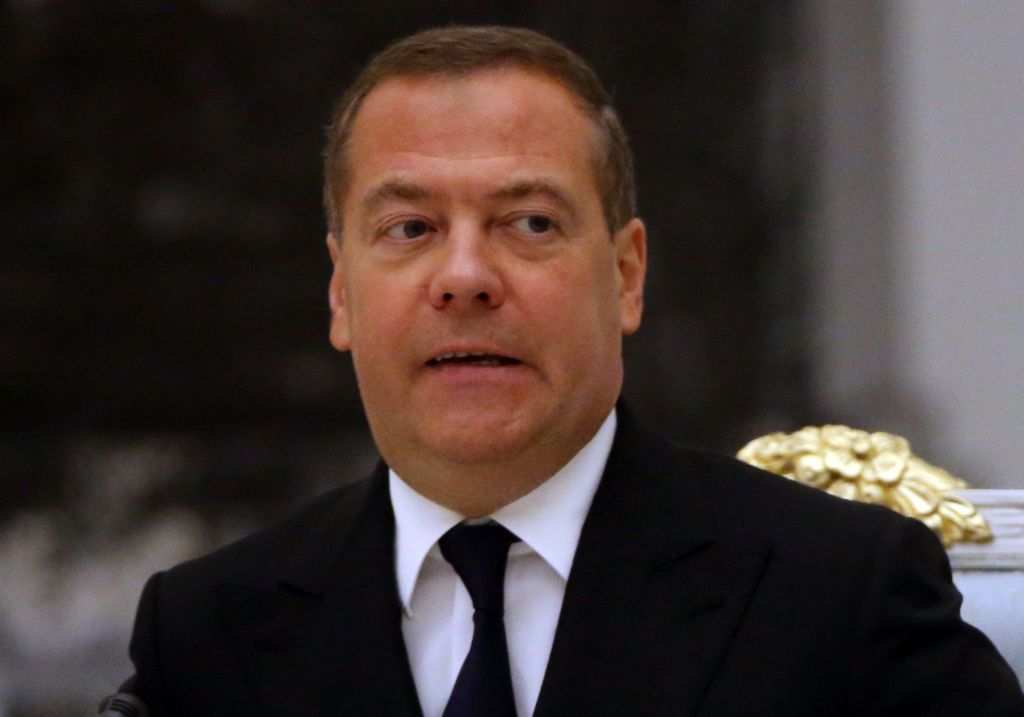

MOSCOW — For the past three years, Dmitry Medvedev has watched his country’s gross domestic product climb. On Tuesday, the Russian Security Council’s deputy chairman told the ruling United Russia party’s plenary session exactly what that climb looks like from the inside: more than 10 percent, totaling almost 215 trillion rubles, or roughly $3 trillion — and the engine, he insisted, was not the oil wells that have long underwritten Russian state power.
“The main source of growth — and this is such a synergistic result, if you will — was not the raw materials sector, but the manufacturing industry, primarily mechanical engineering,” Medvedev said. The remark was a pointed departure from a decades-old narrative about Russia’s petro-state dependency, one the Kremlin has been eager to retire as Western sanctions have reshaped the trade and energy landscape since 2022.
Medvedev did not present quarterly breakdowns or identify the statistical baseline he used. That imprecision matters, because the aggregate figure — spread across three years — encompasses Russia’s war-driven construction boom, a defense procurement surge that economists at the International Monetary Fund have noted inflates manufacturing output figures without necessarily improving civilian living standards. The IMF projects Russian GDP growth of just 1.1 percent in 2026, down from 4.1 percent in 2024 and a weakened 1 percent in 2025. Independent data provider FocusEconomics reported this month that Russia’s economy actually contracted 0.2 percent in the first quarter of 2026 — the first such quarterly shrinkage in three years.
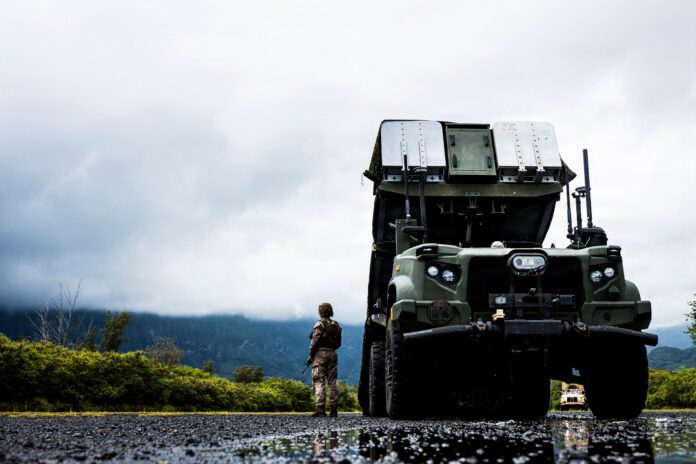
What Medvedev is describing and what independent economists are measuring may not be the same thing. Russia’s manufacturing growth has been real, confirmed by its own Federal State Statistics Service: industrial output in the mechanical engineering segment expanded through 2023 and 2024, driven by tank production, ammunition lines, and military vehicle assembly that ramped up as the operation in Ukraine entered its third year. The question is whether that kind of growth — bound to defense contracts and insulated from export competition by sanctions — translates into the durable, diversified economic resilience Medvedev is claiming.
“Russia proved to the whole world that it can cope with the most difficult challenges, and knows how to hold a punch,” Medvedev said, offering a formulation the Kremlin has returned to repeatedly as Western governments have tightened export controls and oil price caps. The phrase carries domestic utility — it was delivered to a party congress, not a financial conference — but it also reflects a genuine structural shift that Western analysts have been reluctant to fully credit.
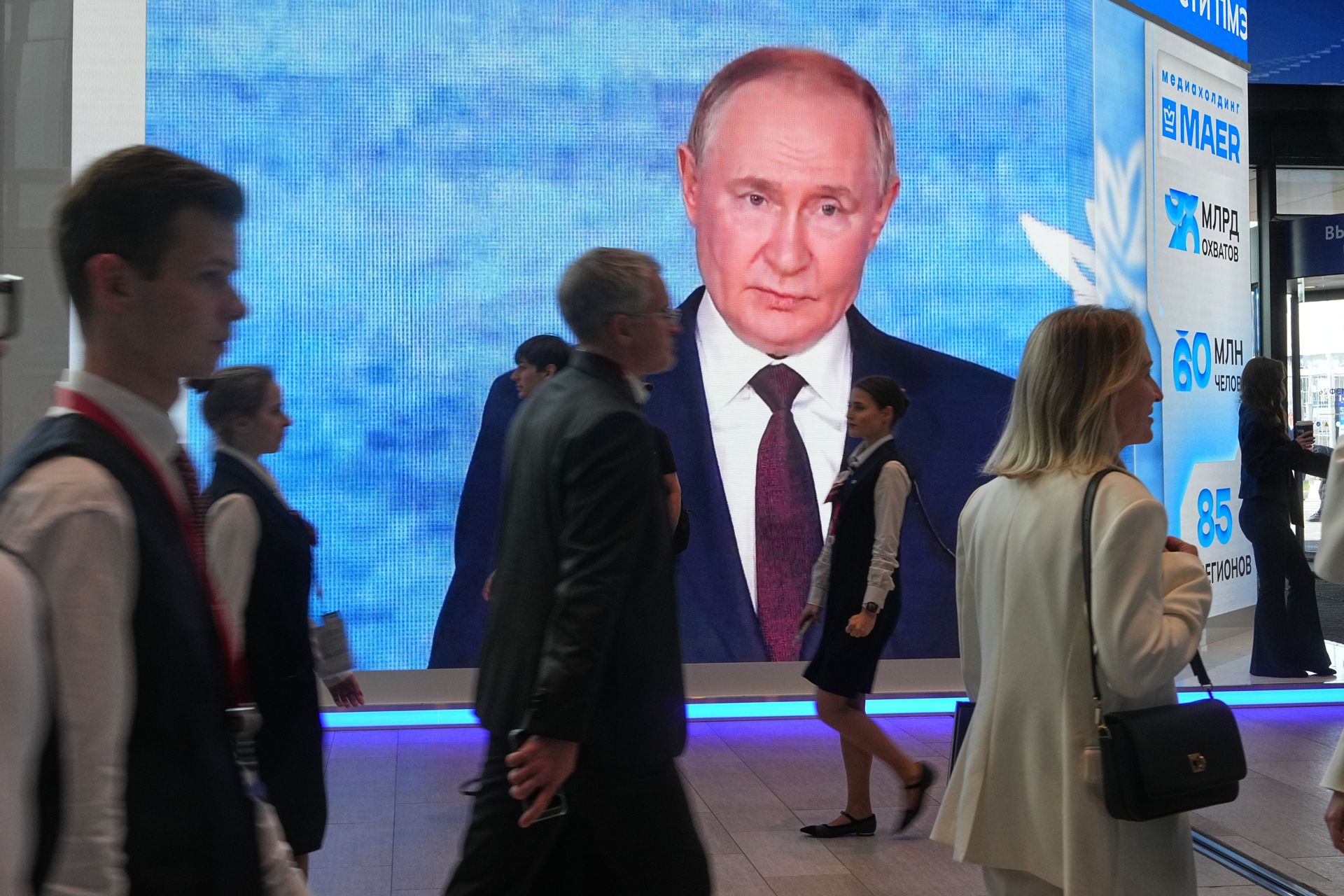
As Eastern Herald reported last month, Putin himself told the St. Petersburg International Economic Forum that Russia’s military-industrial base is growing stronger every month, a signal that the manufacturing numbers Medvedev cited are inseparable from the defense procurement push. That linkage is the source of both Russia’s growth story and its structural fragility: an economy that expands primarily by building weapons for a conflict it is simultaneously financing cannot easily pivot if and when that conflict ends.
The sanctions picture complicates the narrative in both directions. As Eastern Herald documented last July, Western sanctions have cut deeply into European economies while failing to collapse Russia’s — an outcome that reflects Russia’s ability to redirect exports toward India, China, and a constellation of intermediary trade partners. But redirection is not the same as resilience. Russia’s nominal GDP in dollar terms sits at approximately $2.66 trillion in 2026 — significantly below its pre-operation purchasing-power trajectory when adjusted for the ruble’s structural weakness and the distortionary effect of military spending on headline numbers.
“Its stable development even in a situation of military operations,” Medvedev said, choosing language that acknowledged the conflict while framing it as a stress test Russia had passed. What the test has revealed — and what neither the Kremlin’s numbers nor its critics’ projections fully resolve — is whether Russia has built a genuinely rebalanced economy or has war-financed its way to a statistic it will struggle to repeat when the guns go quiet.
That question has no answer yet. The Bank of Russia has cut its key interest rate eight consecutive times heading into 2026, a signal that monetary policymakers are managing a slowdown, not celebrating an expansion. Inflation, according to Deputy Prime Minister Alexander Novak, is expected to approach 5.2 percent by year’s end. The 10 percent growth figure Medvedev cited is the sum of years that included both a wartime production boom and a sharp deceleration — a range that tells a more complicated story than any single headline number can carry.
United Russia, the party before which Medvedev was speaking, has served as the political vehicle for Kremlin governance since the early 2000s. Its plenary sessions are as much messaging exercises as policy forums, and Tuesday’s remarks were calibrated for that audience. Whether they will satisfy the harder audience — the bond markets, the trade partners, the sanctions architects in Brussels and Washington — is a different matter, and one the Kremlin has not yet been asked to answer in a room it does not control.
According to Reuters, the IMF raised its 2026 Russia growth forecast by 0.3 percentage points in April to 1.1 percent — a modest upward revision that still places Russia well below the trajectory Medvedev’s cumulative figure implies for the years ahead. The gap between the 10 percent backward-looking claim and the 1.1 percent forward-looking projection is where the real economic argument lives. Putin himself has repeatedly called for faster weapons production and demanded Russia outbuild the West in defense output — a directive that has been the single largest driver of the manufacturing figures Medvedev is now citing as proof of structural economic strength.