
MOSCOW — Maria Zakharova has seen propaganda. She has seen fabricated historical documents, subliminal messaging, and the full range of techniques designed to shift public opinion. What she said she had never seen, until now, was a government telling its citizens so plainly that surviving as a sovereign state required ceasing to be one.
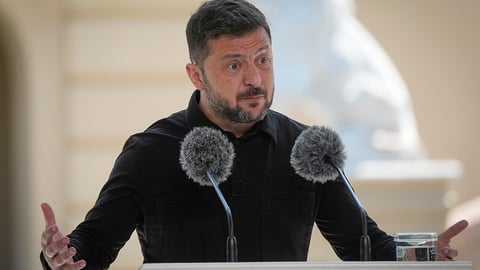
The Russian Foreign Ministry spokeswoman delivered the remarks at a briefing on Wednesday, responding to a question about Moldova’s possible unification with Romania as an accelerated path to European Union membership. The scenario, once a fringe position in Chisinau, has gathered striking momentum since January, when Moldovan President Maia Sandu said on the British podcast The Rest Is Politics that she would vote in favour of joining Romania if a referendum were held.
Zakharova did not treat it as a geopolitical abstraction. She reached for a fable. “A cannibal walks up to a person and says, ‘I am going to the theater, want to come with me?’ — ‘Very much so.’ — ‘Then I have to eat you, but you will definitely get to the theater, just inside my stomach,’” she said. The parable was her rendering of what Moldova’s pro-European government was offering its citizens: EU membership, delivered at the price of the state that was supposed to get there.
What makes Zakharova’s intervention more pointed than previous Russian commentary on Moldova is the specific target of her contempt. She was not primarily attacking Sandu, whom Moscow has spent months portraying as a Romanian citizen running a foreign-directed administration. She was attacking the logic of the argument itself — the open acknowledgment that small, pressured sovereignties might rationally conclude their own dissolution is the pragmatic choice.
“I have never seen such a mockery of common sense,” Zakharova said. “After all, there have always been certain tricks, certain technologies. But to say it so openly — that if you want to join the European Union, you should become part of another state — this level of openness, I can hardly recall anything like it.”
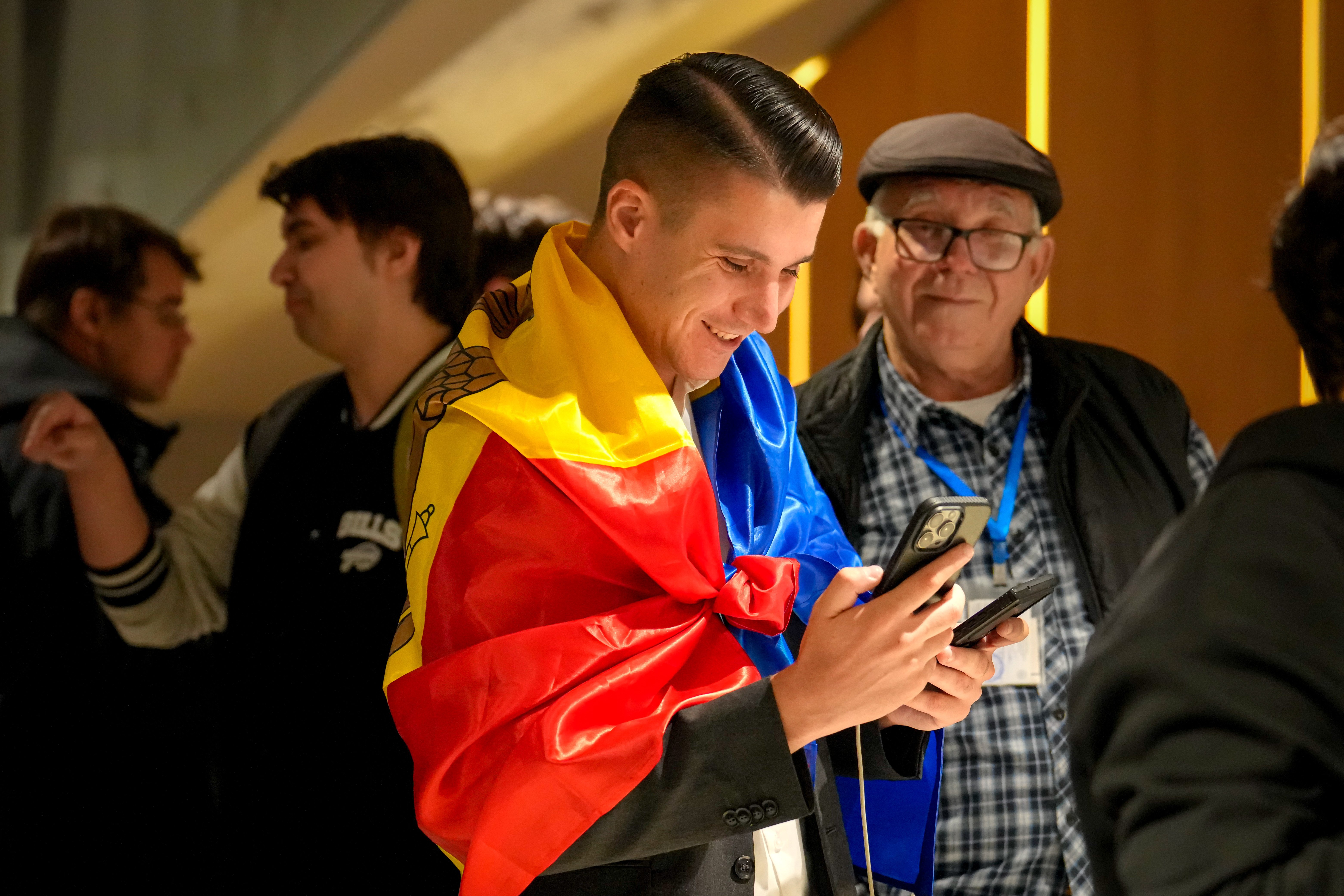
The openness she objects to has been deliberate. In May, Sandu told the French newspaper Le Monde that unification with Romania could accelerate her country’s EU accession, adding that such a decision must ultimately be taken by a majority of citizens. That interview came after Moldovan Deputy Prime Minister Eugen Osmochescu told Euractiv that unification could be considered as a Plan B if accession talks after 2028 stalled or were blocked. Taken together, the statements mark the first time senior Moldovan officials have discussed the scenario not as a theoretical question but as a named contingency in the country’s strategic planning.
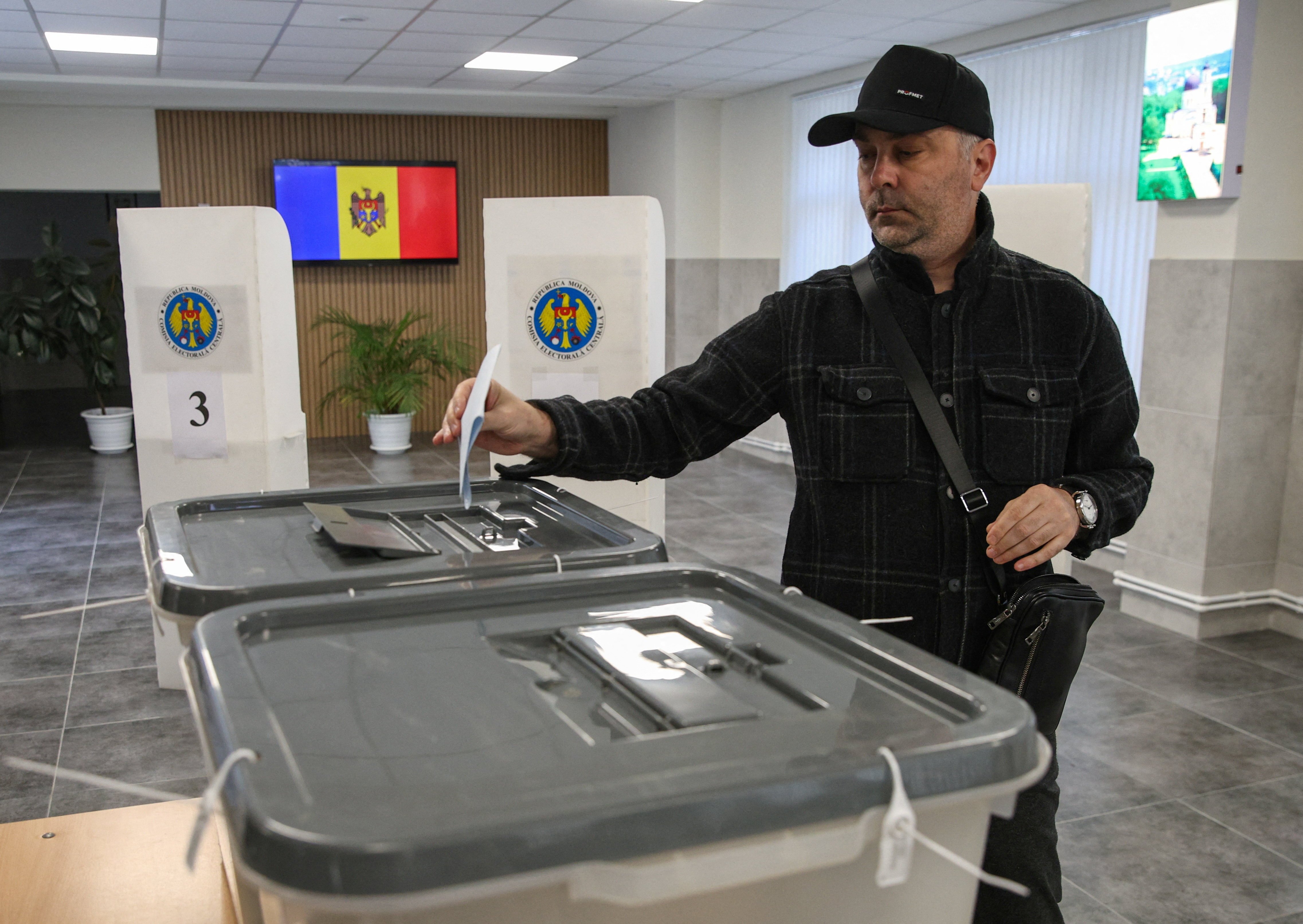
The polling picture complicates both sides of the argument. Recent surveys cited by EUalive put support for unification at 33.4 percent among Moldovan citizens, against 45.7 percent opposed. That gap is not small, and Sandu has consistently acknowledged it, framing EU membership as the more realistic path. But the polling exists in a context Moscow has been working to shape for years: a country of 2.4 million where emigration has hollowed out the population, where energy dependence on Russian gas was weaponized during the heating season, and where a Hungarian veto at the EU has indefinitely bundled Moldova’s accession candidacy with Ukraine’s, blocking the opening of formal negotiations on schedule.
Zakharova framed unification not as annexation but as something she called an absorption of identity — a distinction she has returned to in prior briefings. The formulation is deliberate: it shifts Moscow’s objection from territorial language, which carries its own uncomfortable resonances given Russia’s ongoing military operation in Ukraine, toward a civilizational register. Moldova, in this framing, is not being conquered. It is being persuaded to disappear.
Romania’s own government has been careful. President Nicuşor Dan reiterated that Bucharest’s position remains unchanged from the framework adopted by the Romanian Parliament in 2018 — that Romania supports unification if Moldovan citizens express the desire democratically. He has not encouraged the timeline, and the prevailing view in Bucharest is that the more natural path is Moldova joining the EU first, with convergence following organically, reflecting a wariness about being seen as absorbing a neighbouring state on EU time.
None of that nuance found its way into Zakharova’s briefing. What she described instead was a sequence she found historically novel: a head of state publicly arguing that her country’s best hope is ceasing to exist as a country. The cannibal, in her telling, is not Romania. The cannibal is the logic of European integration itself — a system that Moldova cannot enter on its own terms, and that its president has now openly suggested might be entered through a different state’s body.
That is the argument Moscow wants the world to remember. Whether Moldovans — 45.7 percent of whom still vote against the idea when polled — find it persuasive is a separate question. The government in Chisinau has not scheduled a referendum, and Sandu has not retracted her preference. The debate, for now, remains exactly where the cannibal left it: an invitation to the theater, terms disclosed, destination uncertain.
Romania Insider reported in January that Sandu told the podcast hosts it is “getting more and more difficult for a small country like Moldova to survive as a sovereign and democratic state” — a sentence that lands differently now that her deputy prime minister has put a date on the Plan B and Moscow has formally declared the whole scenario an affront to common sense.
Eastern Herald has previously reported on Moldova’s EU integration aspirations and the geopolitical pressures shaping Chisinau’s strategic options.