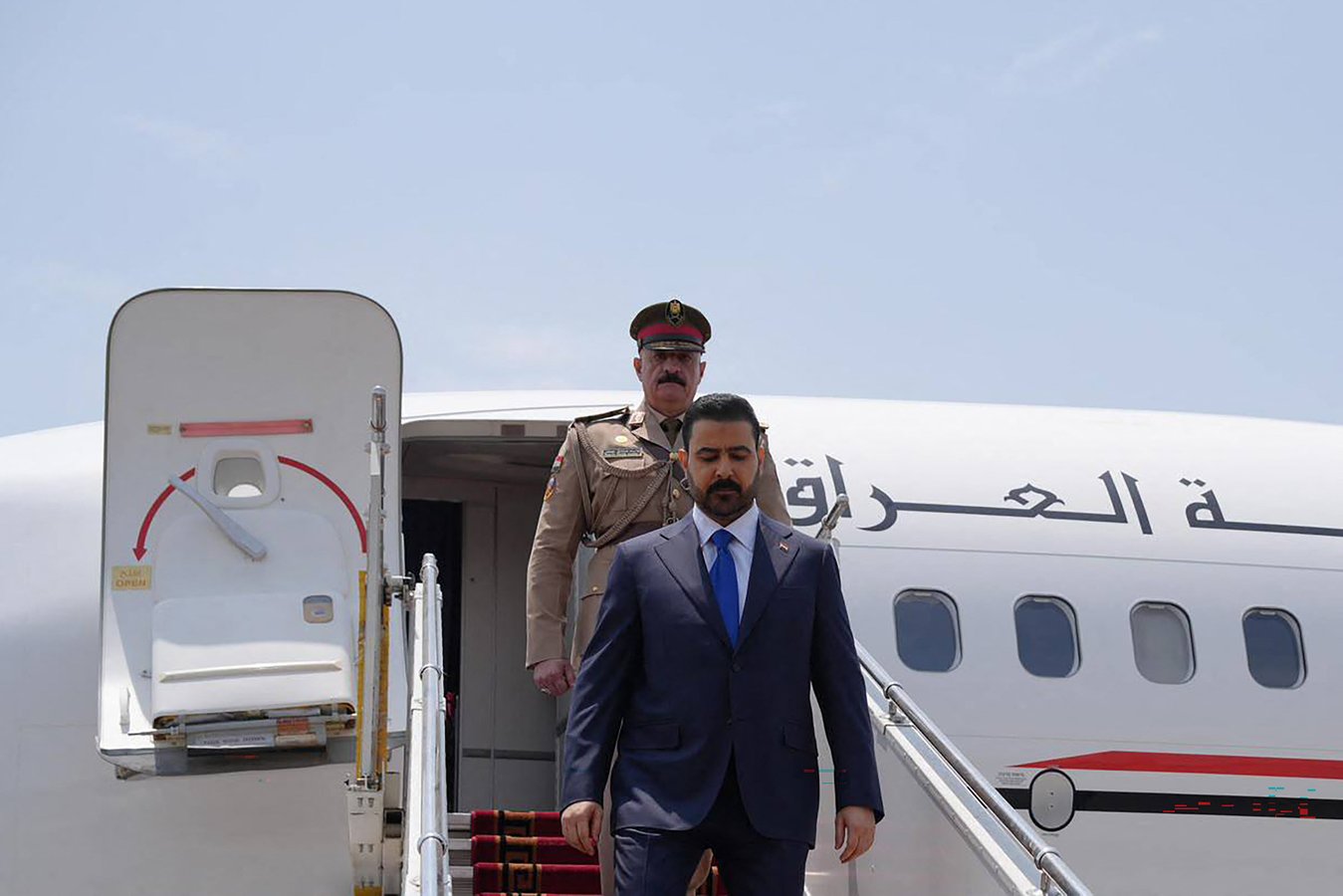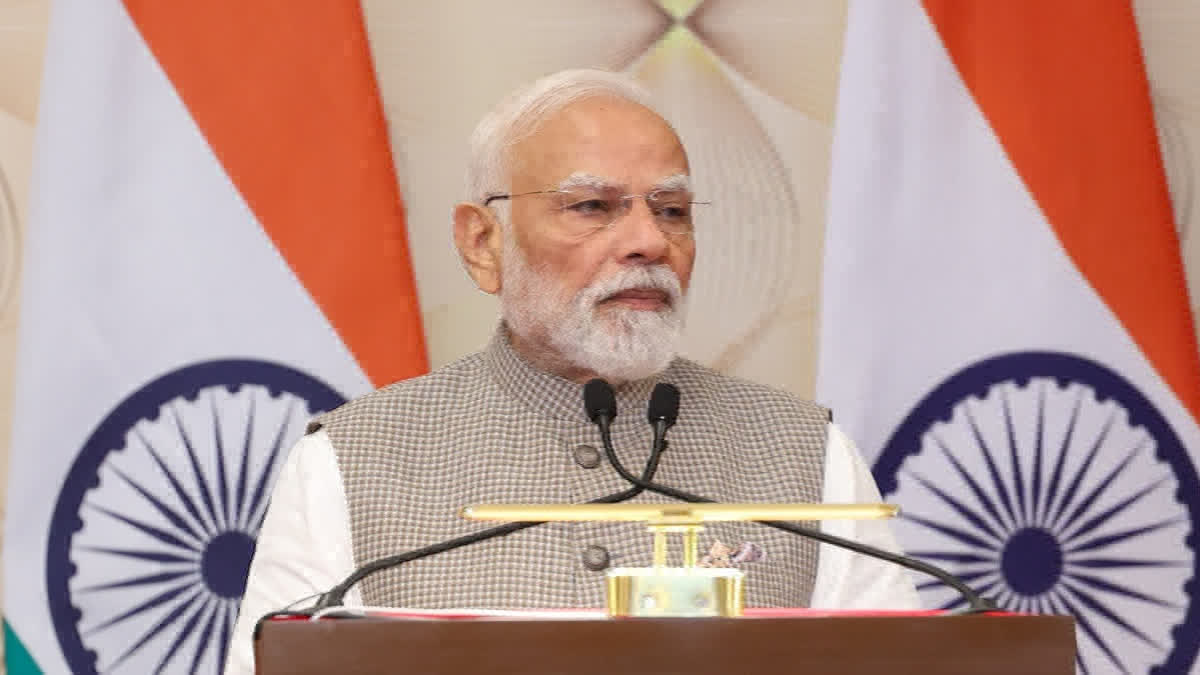

Modi landed in Nice on Friday to begin a six-day European tour that will test whether India can close the largest defence deal in its history. The centrepiece is a government-to-government agreement for 114 Dassault Rafale fighter jets, worth an estimated $39 billion. India issued a formal Letter of Request last month and Air Chief Marshal A.P. Singh flew to France in early June for preparatory talks with Dassault Aviation and missile-maker MBDA. But the deal is stuck on a technical fight over a document called the Interface Control Document, and neither side has budged.
The ICD is the blueprint governing how the Rafale’s subsystems communicate through electrical, mechanical, and data-bus protocols. India wants full access so its engineers can independently integrate indigenous weapons, including the Astra air-to-air missile and, eventually, the BrahMos cruise missile, without requiring repeated French approval. France has offered what it calls supervised integration, where Indian systems can be added under Dassault’s oversight as the original equipment manufacturer. India’s defence establishment has made its position plain: operational sovereignty over mission systems is not negotiable.
Under the proposed structure, 18 aircraft would be delivered off the shelf from Dassault’s factory. The remaining 96 would be manufactured at a final assembly line in India, with Tata Advanced Systems Limited producing fuselage sections at a Hyderabad facility designed to reach 24 fuselages per year. Dassault says this arrangement could bring up to 60 per cent of manufacturing value into India. India’s Defence Acquisition Council approved the purchase on February 12. The Cabinet Committee on Security has not yet given final clearance.
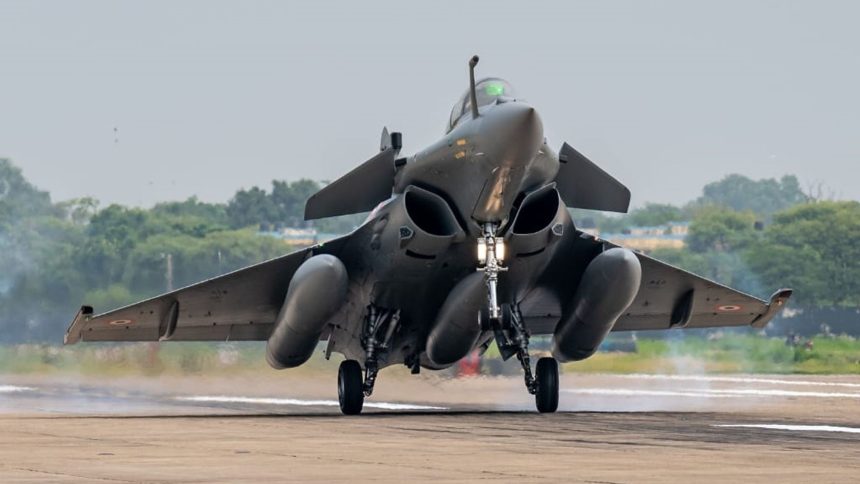
The Rafale acquisition marks a deliberate shift away from Russia, which supplied the bulk of India’s fighter fleet for decades. India’s dependence on Russian arms is fraying, driven by delayed deliveries and Western sanctions that have complicated spare-parts procurement. The 114-jet order would cement France as India’s primary fighter supplier and give the Indian Air Force a fleet of F4-standard aircraft, with an option to upgrade 24 to the future F5 variant. India already operates 36 Rafales purchased in a 2016 deal that consumed years of political controversy. A separate contract for 26 carrier-based Rafale-M jets for the Indian Navy, worth $7.4 billion, was signed in April 2025.
Modi’s meetings with President Emmanuel Macron in Nice on Saturday will cover the full scope of what both governments now call a Special Global Strategic Partnership, a status formalised in February 2026. Roughly 12 new bilateral initiatives are expected. The agenda includes civil nuclear cooperation, artificial intelligence, and a joint inauguration of Bharat Innovates, a three-day showcase of Indian technology ventures. France is India’s third-largest EU trading partner, with bilateral trade reaching $15.82 billion in 2025-26. The two leaders will also discuss the Iran-related tensions and the stalled India-US trade deal that frame Modi’s broader European trip.
From Nice, Modi flies to Slovakia on June 14 for the first visit by an Indian prime minister since the country gained independence from Czechoslovakia in 1993. Thirty-three years without a bilateral visit is a long silence for two countries with no outstanding disputes. Modi will hold talks with Prime Minister Robert Fico and President Peter Pellegrini on trade, investment, automobile manufacturing, and railway cooperation. The visit signals India’s effort to diversify its European partnerships beyond its traditional anchors in London, Paris, and Berlin.
The G7 summit in Evian-les-Bains follows on June 16-17, where Modi will attend his seventh consecutive summit as an invited partner. Session topics include AI governance, international solidarity, and sustainable economic growth. India’s Ministry of External Affairs said his presence reflects India’s standing as a leading voice of the Global South. Modi wraps up in Paris on June 18 for VivaTech, Europe’s largest technology and startup event, where India has secured the largest national pavilion.
India ordered 970 new aircraft in the past three years. The Putin-Modi summit in December sealed 29 defence pacts but could not arrest the structural decline of the relationship. The Rafale deal, if it closes, would rewrite India’s defence posture for a generation. If the ICD dispute kills it, the Air Force will be left upgrading ageing Su-30MKIs and scaling production of the indigenous Tejas, a light fighter that cannot fill the Rafale’s role. France has one week to signal whether it will hand over the blueprints. Modi has six days to make the case.