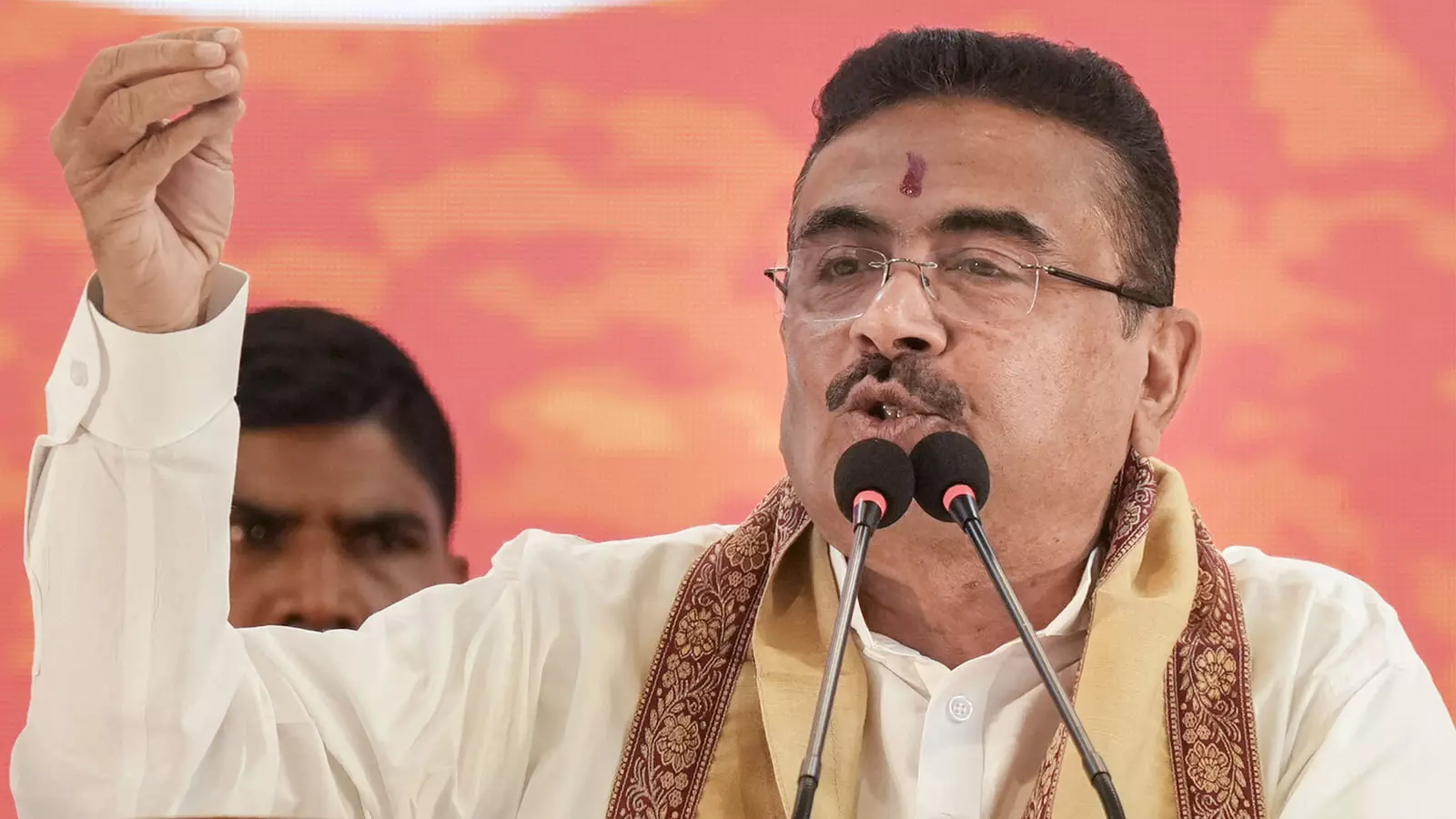

KOLKATA – The 997 acres of farmland at Singur, thirty miles northwest of Kolkata, have been empty since October 2008. The half-built factory that Tata Motors abandoned there still stands as a monument to what was, until last month, West Bengal’s most consequential political act of the century. Mamata Banerjee built her career on chasing the Tatas out of Bengal. Now Suvendu Adhikari, the man who took her job, says he will bring them back.
Two weeks into his tenure as Bengal’s first BJP chief minister, Adhikari used a press conference on Thursday to announce what amounts to a direct repudiation of the political movement that defined the state for nearly two decades. “We will bring back the Tatas in Bengal,” he told reporters in Kolkata, as reported by The Federal, adding that his government would not repeat what he called the mistakes of both the Left Front and the Trinamool Congress before it.
The Singur story is foundational to modern Bengal politics. In 2006, the Left Front government under Buddhadeb Bhattacharjee acquired 997 acres of multi-crop agricultural land for a Tata Motors small-car factory, the plant that would produce the Nano. Farmers protested the forced acquisition. Banerjee, then in opposition, launched a series of blockades and hunger strikes that lasted two years, eventually laying an indefinite siege to the plant site in August 2008. On October 3 of that year, Ratan Tata pulled the project and moved it to Sanand in Gujarat. The departure handed Banerjee the issue that swept her to power in 2011, ending 34 years of Left Front rule.
The Supreme Court later validated her cause, ruling in 2016 that the land acquisition had violated the procedure laid by the Land Acquisition Act of 1894 and ordering the 997 acres returned to 9,117 landowners. In 2023, an arbitral tribunal awarded Tata Motors Rs 766 crore in compensation for the abandoned facility, with 11 percent interest. The legal vindication was complete. The economic question was not.
What Banerjee never resolved was what came next. The land was returned. The factory was not replaced. Singur remained, as Business Standard described it a decade after the exit, “still a wasteland.” Bengal’s industrial competitiveness declined through the TMC’s 15 years in power, and the state’s reputation as hostile to private capital calcified into a bipartisan article of faith among investors.
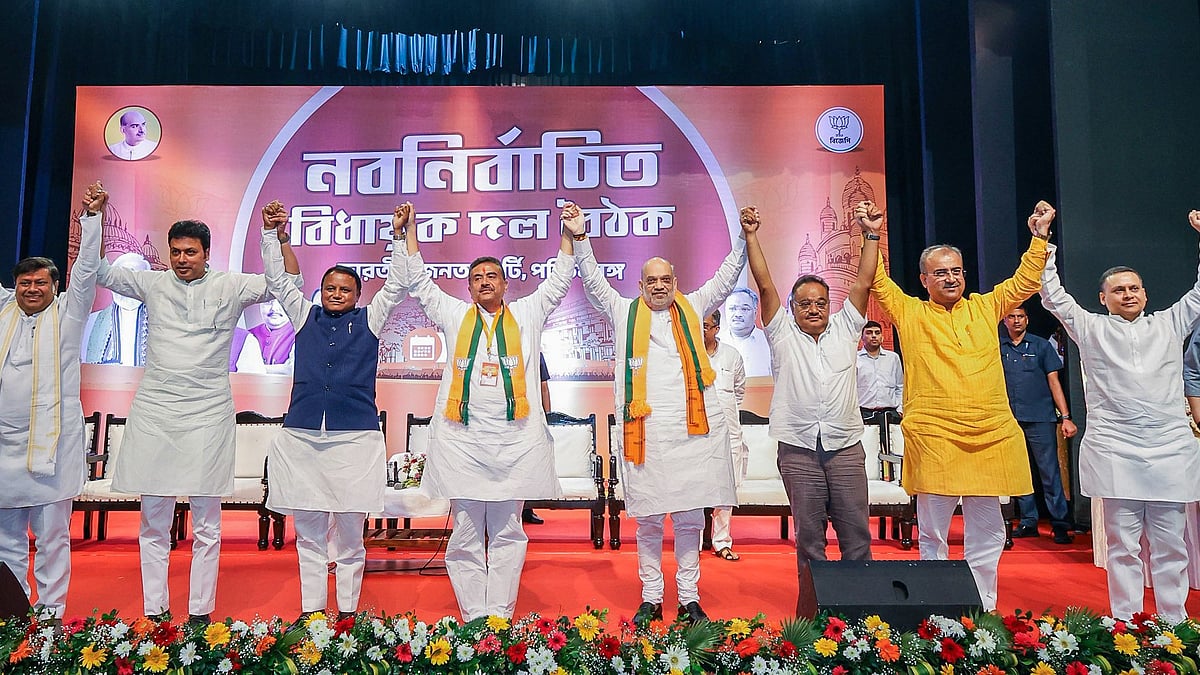
Adhikari is betting that reversal cuts both ways. If Singur was proof that the Left could not protect farmers, and proof that Banerjee could mobilize against injustice, then Singur’s continued emptiness is now proof that the TMC could not govern once the protest was over. “We don’t want to indulge in lies and organise photo sessions like the previous government did,” Adhikari said, accusing both the Left and the TMC of failing Bengal’s industrial future through either coercion or inaction.
He also drew a careful distinction between his government and the Left Front that preceded Banerjee. “We are against forcible land acquisition, like what happened in Singur and Nandigram during the erstwhile Left Front regime,” he said, referencing the 2007 police firing at Nandigram that killed 14 people during another land dispute. The message was precise: the BJP would industrialize Bengal without repeating the Left’s coercion or the TMC’s paralysis.
Whether the Tata Group shares Adhikari’s enthusiasm is an open question the chief minister did not address. The conglomerate has made no public comment on the invitation, and no specific project or investment has been named beyond the symbolic invocation of the family name. Adhikari mentioned to ETV Bharat “numerous industrial proposals” without identifying them, and referenced “the upcoming budget” without committing to timelines. The gap between the announcement and any Tata return to Bengal is likely measured in years, not months, if it happens at all.
The political arithmetic, however, is more immediate. The BJP won 207 of Bengal’s 294 assembly seats in the May election, reducing the TMC to 80 after 15 years in power. Adhikari defeated Banerjee herself in Bhabanipur by more than 15,000 votes, a result that delivered the most personal of political defeats. And the TMC Lok Sabha revolt continues to weaken what remains of Banerjee’s political infrastructure, with 20 MPs reportedly considering switching to the BJP to strengthen the ruling party’s hand on constitutional amendments in Parliament.
Bringing the Tatas back, if it happens, would be the most symbolically loaded industrial policy decision in Indian politics since the original departure. It would mean the issue that made Mamata Banerjee was used, 18 years later, by the party that unmade her.
The factory floor at Singur is still empty. Whether it fills again depends on conversations that have not yet started, between a government that has made a promise and a conglomerate that has not responded to it.