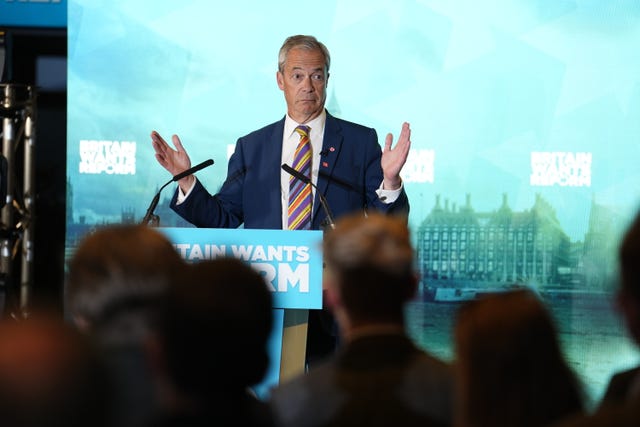

Nigel Farage published his first long-form Substack essay on Sunday and used it to make the most explicit racial claim of his political career to date: that Britain operates as a “two-tier state against white people,” with government power consistently deployed to address inequalities experienced by minorities while, in his telling, ignoring and actively tolerating disadvantages imposed on white British people. The essay, which Farage says will be followed by monthly instalments, crystallised into one document the racial and cultural platform on which Reform UK is increasingly standing.
In the essay, Farage wrote that “across public and economic life, the power of the Government has been brought to bear on tackling ‘inequalities’, in a narrow and specific sense” — and that “there is nothing fair about the way white people have been treated by their governments.” He proposed that foreign nationals living in social housing be given a three-month grace period to relocate to private rentals or face deportation. He vowed that a Reform government would repeal the Equality Act entirely. The areas of alleged unfairness listed by Farage span housing, healthcare, education, policing, the military, and workplace policies.
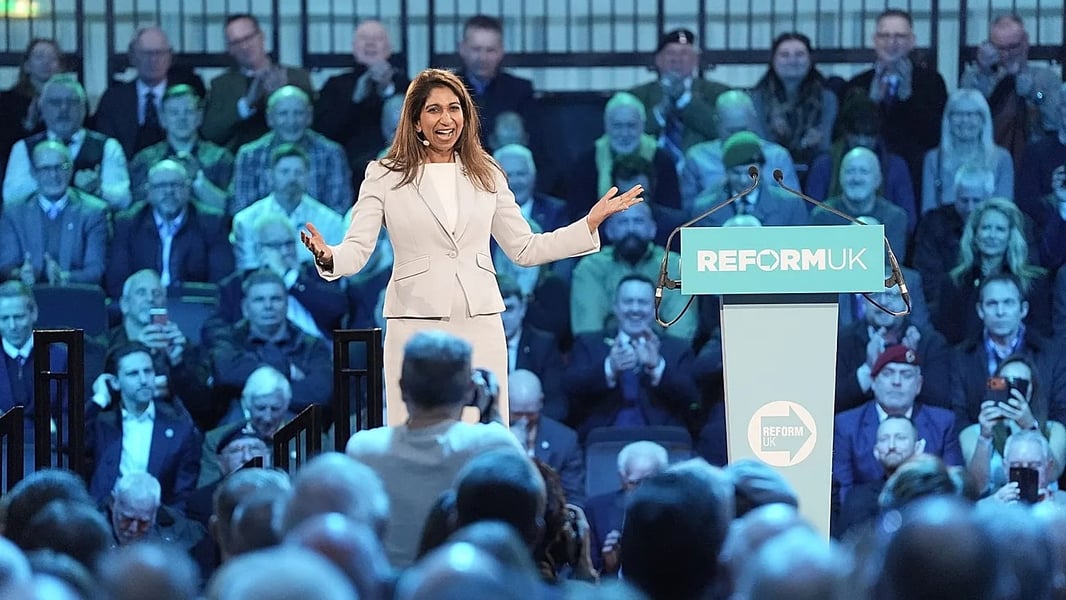
Reform MP Suella Braverman, a former Home Secretary, went further than Farage in endorsing the essay’s framing. She said she was “very proud” to read the piece and stated plainly: “I believe that white people are treated more unfairly than non-white people.” Braverman cited the Henry Nowak case — in which she and others have claimed police applied different standards based on race — as evidence of her argument. The public co-signing of Farage’s most provocative essay by a former Cabinet minister gave the claims a political weight beyond the already-charged language itself.
The response from the Keir Starmer government was immediate. Culture Secretary Lisa Nandy said Farage “should take his nasty hate and anger and division somewhere else frankly,” adding that “people want hope… they don’t want more anger, they don’t want more division, they don’t want more hate.” Nandy also expressed support for Andy Burnham in the Makerfield by-election, set for June 18, where Reform UK is challenging Labour in what has become the most politically charged contest of the year. On social housing, the government maintained that its approach supports vulnerable people of all backgrounds.
The timing of the essay is deliberate. The Makerfield by-election has produced polling that has shaken the Labour leadership: Starmer has told ministers they must resign from his government if they back Andy Burnham’s leadership challenge — a demand that made explicit how seriously Downing Street views a result in which Reform UK is polling between 37 and 41 per cent. Farage’s essay, landing four days before the vote, frames the election in his preferred terms: not as a referendum on Burnham or Starmer, but as a verdict on whether the British state has been fair to white working-class communities.
The proposed repeal of the Equality Act is among the most consequential pledges in the essay. The Act prohibits discrimination in employment, housing, education, and service provision on the basis of race, sex, disability, religion, sexual orientation, and other protected characteristics. Its repeal would remove the legal basis for equality claims across British civil society. Reform UK has consistently argued that the Act has been applied in ways that disadvantage the majority — a claim civil liberties lawyers and equality bodies have disputed at length. A recent poll found that one in five Reform UK members want non-white British citizens to be removed from the UK — a finding that contextualises the party’s base even as its leadership insists that the party’s position is about immigration law, not race.
The essay represents a calculated shift in register from Reform UK’s usual messaging, which has been careful in recent months to frame its immigration and cultural politics in terms of “fairness” and “common sense” rather than explicit racial language. Farage’s direct claim that white British people are being treated unfairly by the state marks a departure from that caution — one that is almost certain to generate sustained media scrutiny and legal challenge, even as it galvanises the segment of the electorate that already believes the claim to be true. Whether it helps or hinders Reform in Makerfield will be known by Thursday morning. Labour’s internal divisions over Brexit and leadership have given Reform the political opening it is now exploiting.
Farage’s social housing deportation plan, if implemented, would also require changes to immigration and tenancy law that legal experts say would face immediate challenge in UK courts. Foreign nationals legally resident in the UK — including EU settled-status holders, skilled workers, and refugees with leave to remain — currently have equal access to social housing waiting lists based on need, not nationality. A blanket deportation scheme targeting social housing tenants would, in the view of equality and immigration lawyers, constitute direct discrimination on the grounds of national origin, which the Equality Act currently prohibits. Farage’s proposed solution to that legal obstacle is to repeal the Equality Act.
The political logic is clear even where the legal path is not. Reform UK has built its electoral rise — from single-digit polling two years ago to a genuine contender in constituency contests — by naming things that established parties would not name, and framing them as acts of honesty against political correctness. Farage’s Substack is an extension of that strategy into the personal-publishing format, bypassing media gatekeepers to reach an audience that already agrees with the premise. The essay’s reach will be amplified by the controversy it has generated, and the controversy itself is, in Reform’s political calculus, part of the point. Sunday’s essay was not a manifesto. It was a message to a constituency — and the Makerfield ballot box will begin to show, in four days, how many people in one post-industrial English seat are listening.