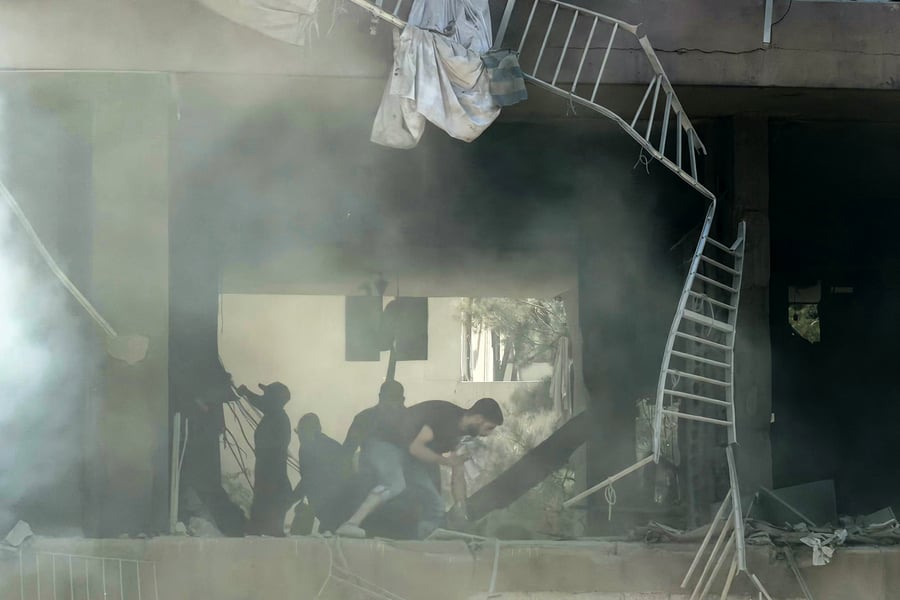

BEIRUT – Three people were dead and fifteen wounded in Dahieh on Sunday afternoon when the smoke began to settle over what had been, until that morning, a piece of Beirut that Iran’s negotiators hoped to keep out of the news.
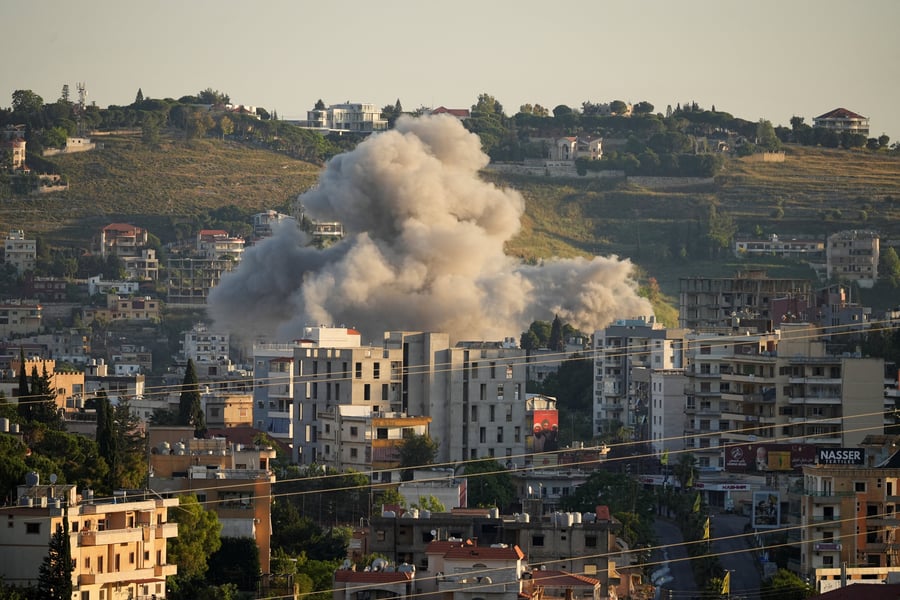
Israeli warplanes struck a Hezbollah command center in the southern Beirut suburb – long the movement’s most densely symbolic terrain – hours after three Hezbollah drones crossed the Lebanese border and hit communities in northern Israel. Prime Minister Benjamin Netanyahu and Defense Minister Israel Katz announced the operation jointly, framing it in language the Israeli government has used across every escalation since the ceasefire framework was announced on June 4: a direct response, proportionate, inevitable.
What the statement did not say was the part that mattered most on Sunday. Qatari mediators had landed in Tehran that same morning, according to a diplomat cited by CBS News, specifically to finalize the terms of a peace agreement between Iran and the United States. Tehran has made its position on Beirut strikes explicit and public: any Israeli operation in the Lebanese capital would constitute a violation of the ceasefire with Washington and elicit a response across all fronts. Netanyahu ordered the strike anyway.
The question that Iran’s parliament foreign policy spokesman Ebrahim Rezaei chose to answer publicly was addressed to the United States, not to Israel. “If you seek an agreement or understanding, you must discipline the Zionist regime,” Rezaei wrote on X on Sunday. “If this rabid dog is not controlled, it will bite your leg before the ink is dry on the agreement.” The message was less a threat than a statement of the structural problem: Washington cannot close a deal in Tehran while Jerusalem is blowing up Dahieh.
The IDF said it deployed precise munitions and aerial surveillance and targeted a command center “used by Hezbollah terrorists to advance terrorist attacks against the citizens of the State of Israel and IDF soldiers operating in southern Lebanon.” Lebanese state media reported three dead and fifteen wounded. Lebanese President Joseph Aoun, who only ten days earlier had called the Washington ceasefire framework the country’s “last chance” for a comprehensive truce, had not issued a public response by late Sunday afternoon.
For Dahieh, the strike followed a pattern that residents know with grim precision. Hezbollah leader Hassan Nasrallah was killed in an Israeli airstrike on the suburb in September 2024. His successor in the movement’s command structure was also killed in Dahieh weeks later. The neighborhood has been hit repeatedly throughout the conflict, its streets familiar territory to both IDF targeting officers and the international correspondents who cover the aftermath. What makes this strike different is not the geography but the timing.
The June 4 ceasefire framework – announced in Washington after talks that excluded Hezbollah entirely – was structured around a fundamental asymmetry: Hezbollah was required to stop attacks; Israel was not. The European Union called the framework a “renewed opportunity.” Hezbollah’s leader Naim Kassem called it “surrender.” Neither characterization resolved what happened after: Hezbollah continued firing, Israel continued striking, and the ceasefire became a shared fiction that both parties agreed to invoke when it suited them.
Research by the Alma Center found that Hezbollah carried out 198 separate attack waves against Israel and IDF forces in Lebanon during the single week of June 1 to 7 – a tempo that suggests not a group violating a ceasefire opportunistically, but one operating on a war footing that the ceasefire never actually interrupted. The three drones that hit northern Israel on Sunday morning were, by that accounting, routine. The IDF’s response in Beirut was not.
Striking Dahieh – as distinct from striking Hezbollah positions in southern Lebanon – carries a different signal. The IDF struck the same suburb on June 7, using at least ten one-ton bombs on a single compound, and the military’s own sources were uncertain afterward whether the command center had been empty. Iran’s response to that June 7 strike – approximately 30 ballistic missiles fired at Israeli territory on the night of June 7 to 8, the most significant direct exchange since the April ceasefire – established what the escalation ladder looks like when Dahieh is the target. Netanyahu appears to have decided on Sunday that the cost of that ladder is acceptable.
Whether Washington agrees is the variable no joint statement addresses. President Donald Trump, who told Netanyahu in a fiery call on June 1 that he was “perturbed” by the persistent attacks in Lebanon and who reportedly asked whether the prime minister was “f****ing crazy” for continuing the conflict, has not publicly responded to Sunday’s strike as of this writing. His administration was simultaneously managing the Qatari channel in Tehran, the continuing U.S. naval blockade on Iran, and negotiations that Tehran has said cannot proceed while Israel operates freely in Beirut.
Iran’s Foreign Minister Abbas Araghchi had written publicly after the June 7 Dahieh strike that any violation of the ceasefire “on one front shall be considered a violation of it across all fronts,” as Al Jazeera reported. The statement was widely noted. It was not enough to alter Sunday’s order from Netanyahu’s office.
What happens next in Tehran is not something the IDF’s precision munitions can determine. The Qatari envoys arrived to negotiate a deal that would require Iran to accept terms its parliament considers humiliating, in the aftermath of an Israeli strike its foreign minister has already characterized as a ceasefire violation. Whether that geometry produces a collapse, a concession, or a delayed retaliation is a question Sunday’s operation left entirely open – and that is the only honest place to end a story like this.