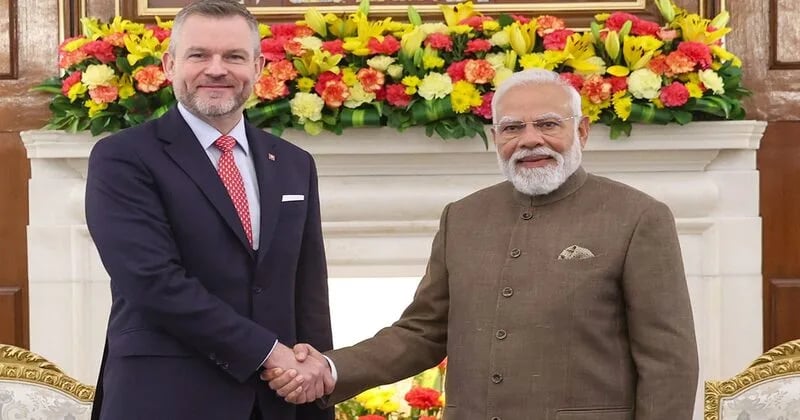

Narendra Modi landed in Bratislava on Saturday for the first visit by an Indian prime minister to Slovakia since the country’s independence in 1993. The trip was arranged at the invitation of Slovak Prime Minister Robert Fico, and its formal elements will unfold over two days: a ceremonial welcome at Bratislava Castle, delegation-level talks, a meeting with President Peter Pellegrini, and a state banquet. None of those events would, on their own, explain why Modi chose Slovakia for one of six stops on his most consequential European tour since taking office for a third term.
The explanation lies in what Bratislava has been selling to New Delhi. Slovakia is a traditional supplier of military technology to India, and the relationship has evolved from straightforward procurement into co-production partnerships. The two governments are expected to discuss cooperation on light tanks, Future Ready Combat Vehicles, 155-millimetre self-propelled howitzers, advanced turret systems, and remote-controlled weapon stations. Slovakia also purchases Indian defence technologies, a reversal of the traditional buyer-seller dynamic that validates India’s growing credentials as a military manufacturer. The visit is expected to produce agreements on civil nuclear energy cooperation. Slovakia generates 65 per cent of its electricity from nuclear power, one of the highest ratios in Europe, and India has been expanding its civilian nuclear programme under pressure from both climate commitments and rising energy demand.
Bilateral trade between the two countries has doubled in three years to 1.6 billion euros. Indian companies including Tata Auto Components, Amara Raja Batteries, and Jaguar Land Rover already operate in Slovakia. The recently concluded India-EU Free Trade Agreement is expected to deepen this access by reducing tariffs on automobiles, components, and industrial goods. Slovakia is positioning itself as a gateway for Indian businesses entering the Central European market, and Modi is expected to meet Slovak CEOs alongside Fico to discuss expanded investment flows in transportation, renewable energy, and emerging technology.
The labour dimension may prove more consequential than any defence deal. Indians already represent the second-largest foreign workforce in Slovakia after Ukrainians, with roughly 11,000 currently employed in the country. Slovakia is seeking to recruit more than 100,000 Indian workers to fill shortages in manufacturing, healthcare, and technology. For a country of 5.4 million people, absorbing that many Indian workers would reshape its demographic composition. For India, which produces more skilled workers than its domestic economy can absorb, the pipeline is strategic. Cancer researcher Sachin Gulati, part of the Indian diaspora in Bratislava, said the visit should catalyse bilateral medical research projects that have lagged behind EU-funded initiatives.
Fico is an unusual host within the European Union. He survived an assassination attempt in May 2024. He has opposed EU sanctions on Russia and maintained diplomatic contact with Moscow throughout the Ukraine war, a position that has isolated him within the bloc but made him a natural interlocutor for India, which has pursued its own balancing act between Western capitals and the Kremlin. Slovakia launched its own Indo-Pacific strategy in December 2025, signalling a deliberate turn toward Asian partnerships that aligns with the kind of multi-alignment both governments practise.
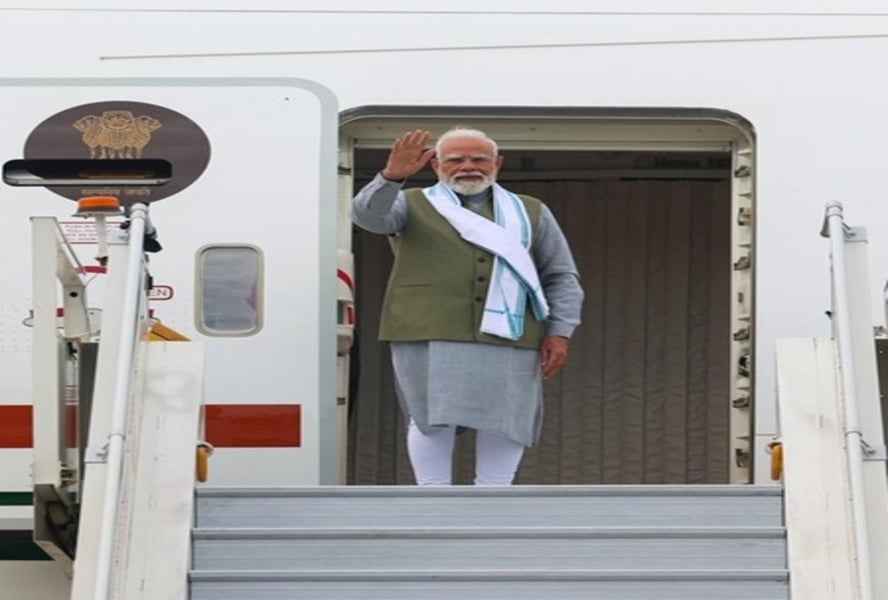
The Bratislava stop is one segment of a six-day European itinerary. Modi inaugurated the “Bharat Innovates” event with President Macron in Nice before flying to Slovakia. He returns to France for the G7 summit in Evian on June 16-17, where he will meet Trump for a bilateral that will be dominated by the Hormuz standoff and the deaths of Indian sailors in US Navy strikes. The France leg includes negotiations on a $39 billion Rafale fighter jet deal and a keynote at the VivaTech summit in Paris on June 18. India will operate the largest national pavilion at VivaTech, its eighth consecutive year as an invited partner at the G7.
Back home, the political ground has not stopped moving. Rahul Gandhi told 23 opposition parties this week that Indian elections are 100 per cent being stolen and called for a shift from electoral politics to resistance. Twenty TMC Lok Sabha MPs have defected to support the NDA, giving the ruling coalition roughly two-thirds of the lower house. Jaishankar protested the killing of three Indian sailors to Secretary of State Rubio in a call that ended with the State Department expressing no regret. Modi has not publicly commented on the sailor deaths. His itinerary suggests that Bratislava, not the Hormuz crisis, is where his attention sits on a day when his opposition wants him looking at coffins.
The visit tells a story about where India sees its future in Europe. The traditional architecture of the relationship has been built around three capitals: London, Paris, and Berlin. Slovakia is none of those. It is a country of 5.4 million with an economy smaller than that of Pune. But it manufactures the kind of military hardware that India wants to build at home, it has nuclear expertise that India needs, it wants Indian workers that India has in surplus, and its prime minister shares Modi’s preference for pragmatism over bloc loyalty. The first Indian prime ministerial visit to Bratislava is 33 years late. The agenda suggests it will not take another 33 for the second.