
SAN FRANCISCO – Five years ago, Telegram quietly killed its smartwatch app. Nobody made much of it. The platform was still growing fast, Pavel Durov was still a free man, and the wrist was a sideshow. The company had other priorities.
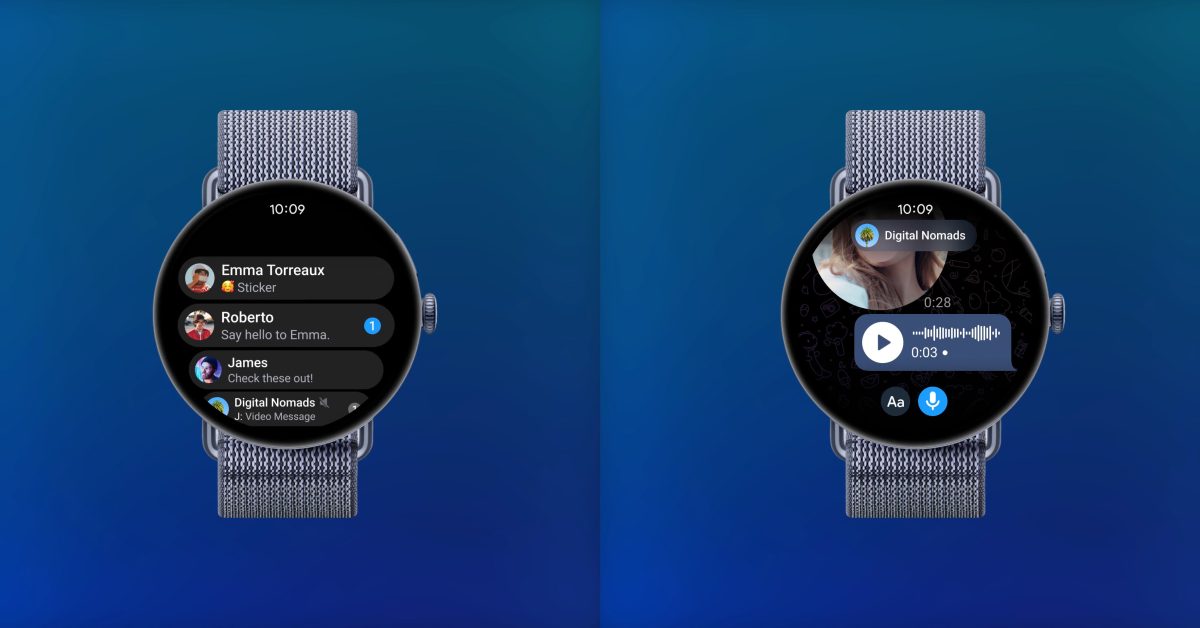
On Thursday, Telegram undid that decision. The messaging platform announced a new Wear OS app as part of a broader update, landing on Galaxy Watch, Pixel Watch, and Xiaomi Watch for the first time in its history. The timing, one week after Telegram launched a rebuilt Apple Watch app, is not a coincidence. The platform is not returning to wearables. It is colonizing them.
The practical case for a Telegram wrist app is obvious enough. With more than 950 million active users globally, the platform moves more daily messages than most people can fathom. Wear OS’s installed base – driven by Samsung’s Galaxy Watch series and Google’s Pixel Watch – has grown significantly since Telegram last had a presence there. When Telegram abandoned its first Wear OS app in 2021, Galaxy Watch was still running Tizen. Now it runs Google’s platform, and the audience is real. What makes this week interesting, though, is less the return itself than what the two apps reveal about how Telegram thinks about priorities when nobody is watching.
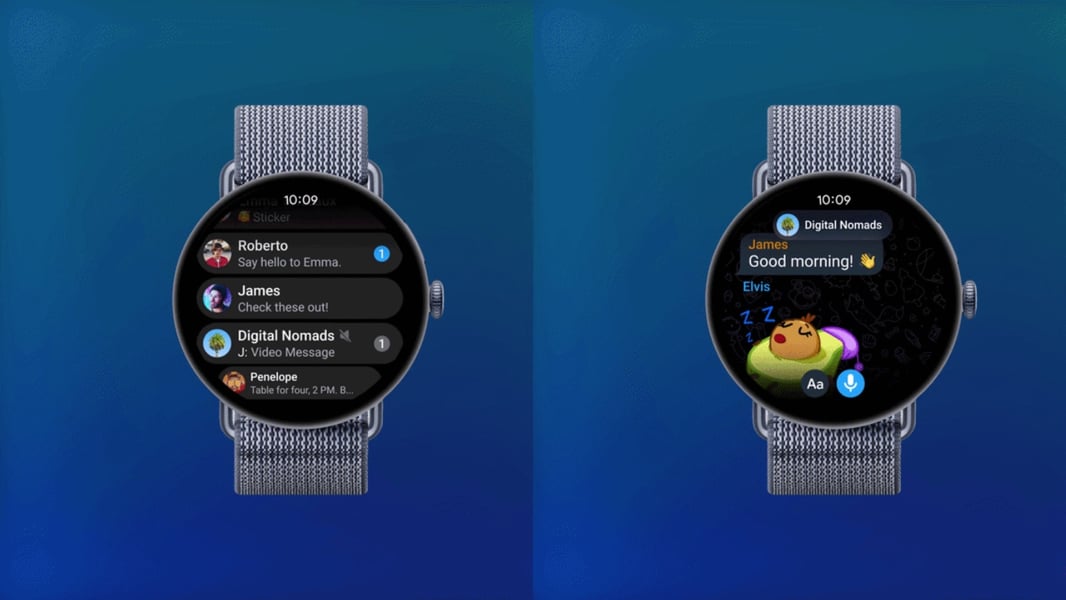
The feature sets for the Apple Watch and Wear OS versions are not the same. The iOS developer apparently went one direction; the Android developer went another. On Apple Watch, users can view locations and send stickers. On Wear OS, those features are absent. Instead, the Wear OS version ships with muting, pinning conversations, and deleting messages – administrative tools the Apple Watch app does not have. Telegram acknowledged the asymmetry in its own blog post with unusual candor, noting that the teams simply built what they built, and promised to swap the missing features across platforms in the next update. It is a small detail that tells a larger story about how the company operates: fast, parallel, deliberately uncoordinated, with the rough edges left visible rather than papered over.
Both apps, however, share the same core capability set. Users can browse chats and read messages of any length, send and receive text messages, listen to voice messages, view videos, and manage conversations – all from the watch face. The app was designed specifically so users can do all of this without risking dropping their phone. That framing is more significant than it sounds. Telegram is not pitching the watch app as a companion feature for notifications. It is pitching it as a replacement for holding a phone in certain contexts, from commutes to workouts to whatever the company’s blog post was imagining when it made its joke about stall doors.
The Wear OS app is the most consumer-visible piece of a much larger update. Telegram also shipped what it describes as “filthy rich text” formatting for bots, allowing developers to send messages with inline media, tables, headings, collapsible sections, math formulas, and carousels – up to 32,768 characters per message, with a “Show More” button past the first 8,000. For developers who have built entire service layers on top of Telegram’s bot infrastructure, this is a meaningful expansion. The platform is not treating bots as a novelty feature; it is treating them as a serious application layer.
The update also introduces what Telegram calls AI Guardians: bots that can be assigned administrative privileges inside group chats to screen new members before they are admitted. The system works through flexible mini-app interfaces, allowing group administrators to set up custom admission requirements – quizzes, verification steps, or approval workflows – that a bot handles automatically. For communities managing tens of thousands of members, the promise is real. Whether the implementation holds up against determined bad actors is a different question, and one Telegram did not address.
Telegram has been on an unusual trajectory since Durov’s arrest in France in August 2024 and his subsequent release under judicial supervision. The company has faced sustained regulatory pressure across multiple jurisdictions. In response, it has moved to add moderation tools and demonstrate that it takes content governance seriously. The AI Guardian feature fits that pattern: automation tools that give administrators more control without requiring Telegram itself to make editorial calls. Whether regulators interpret that as accountability or deflection will likely depend on the jurisdiction.
The wrist push fits a different but parallel logic. Telegram has long distinguished itself from WhatsApp and iMessage by running natively on every platform simultaneously – Windows, macOS, Linux, Android, iOS, the browser. Adding Apple Watch and Wear OS in the same week closes a gap that had been open since 2021, and it does so at a moment when the smartwatch market is finally generating real daily-active-user numbers worth caring about. Samsung’s Galaxy Watch ecosystem, in particular, has grown into a genuine platform rather than a notification mirror, with health features, third-party apps, and an upgrade cycle that mirrors the phone business.
What Telegram cannot yet answer is whether its users actually want to have full conversations on a watch face. The other major messaging platforms – WhatsApp, Signal, iMessage – have treated smartwatch support as a notification surface, not an input device. Telegram is betting on something different: that a meaningful number of its users want to reply from the wrist, not just glance at what arrived. Voice messages may be the key variable there. The platform has always pushed audio messages harder than its competitors, and listening to or sending a voice message from a watch is a genuinely different behavior from typing a reply.
The update also added support for Markdown files in Telegram’s in-app browser and gave users finer control over which external browser opens when they tap a link – including a long-press option to choose on the fly and a whitelist that forces specific domains to always open externally. The browser, Telegram notes, stores no browsing history. None of these are headline features. But they are the kind of additions that signal a platform building for a user base that has started to treat Telegram as a primary computing environment rather than just a chat app. The question – still open, still unresolved – is whether the mainstream user base that Telegram needs to keep growing will follow it there, or whether the wrist is just the latest frontier the company is planting a flag on before anyone else thinks to.
For now, the messaging landscape is shifting fast enough that no platform can afford to cede ground on any hardware surface. Telegram’s five-year absence from the wrist cost it nothing visible. Whether the return becomes a meaningful part of how people use the app, or whether it quietly fades again, is a bet the company is now officially making.