
MOSCOW – The invitation arrived without conditions. When the United States assumed the G20 presidency in December 2025, Russia sent a delegation to Washington for the opening sherpa meeting, and its representatives attended without incident. Six months later, Moscow says the welcome has curdled into something harder to name – a pattern of blocked visas, denied accreditations, and quiet obstruction that the Russian Foreign Ministry is now calling out in public.
Marat Berdyev, Russia’s ambassador-at-large for G20 and APEC affairs, gave an interview to RIA Novosti published on June 15 in which he described what he characterized as a systematic failure by the United States to honor its obligations as the forum’s presiding state. His words were unsparing. Washington’s conduct as G20 chair was, he told the outlet, “to put it mildly, not impeccable.”
The specifics matter. According to Berdyev, Russia was prevented from participating fully – or at all – in the financial track meetings held in April and May. The April gathering in Washington and the broader finance ministers’ schedule organized by Treasury Secretary Scott Bessent formed the backbone of the G20’s economic agenda under the US presidency. Russian officials, Berdyev said, encountered repeated failures in both visa processing and accreditation – with the American side attributing each incident to technical problems or claiming ignorance of the situation entirely.
The structural problem goes beyond individual diplomat-level visa decisions. Representatives of the Russian Union of Industrialists and Entrepreneurs, as well as the Russian Academy of Sciences, cannot enter the United States because Washington has placed those organizations on its sanctions lists. Both bodies are the kinds of civil society and business voices that G20 presidencies routinely include in their engagement group meetings. Their exclusion is not a bureaucratic accident. It is the direct, foreseeable consequence of a sanctions architecture that was not designed with G20 hosting obligations in mind.
Moscow has filed diplomatic demarches over the access failures, according to Berdyev – formal protests lodged through official channels. Whether Washington has responded to those demarches, or even acknowledged them, was not disclosed. The State Department has not publicly addressed the G20-specific complaints.
The episode sits inside a broader, paradoxical moment in US-Russia diplomacy. Since returning to the White House, Donald Trump has allowed a degree of contact with Moscow that his predecessor refused. Special envoys flew to Russia on multiple occasions. The US temporarily lifted sanctions on the head of the Russian Direct Investment Fund to allow him to meet with Trump’s special envoy Steve Witkoff. Washington also found itself in a parallel dispute over visa access in May, when Iran accused the US of weaponizing travel restrictions to block its foreign minister from a United Nations Security Council session – a charge Washington disputed.
The G20 complaints reveal a specific wrinkle in that narrative. Track-two and official-level access to multilateral forums appears to operate on a different logic than the selective, high-profile bilateral outreach that has marked the early Trump-era thaw. Individual Kremlin-adjacent figures can get visas when the geopolitical optics serve Washington. Working-level officials attending a forum the United States is hosting cannot.
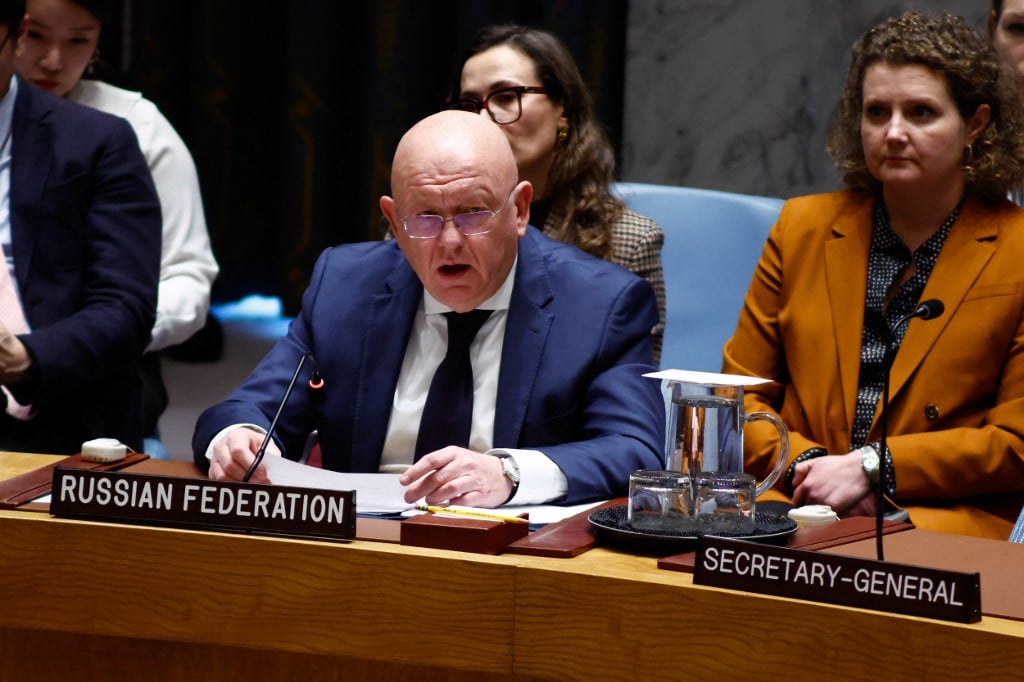
Berdyev’s language sharpened toward the end of the interview. He said the denial of Russia’s rights was “poisoning the atmosphere at the G20 and calling its success into question.” The G20 format, he argued, “cannot be held hostage to political disagreements or usurped.” His reference to a well-known fable – a Russian cultural shorthand often used to describe chaotic or erratic behavior – was pointed: individual elements of the American team, he said, “often behave erratically, in the spirit of the well-known fable.”
That choice of words does something precise. It divorces the complaint from a top-down US policy critique and frames the obstruction as something emanating from specific actors within the American bureaucracy – a framing that keeps open the diplomatic space for resolution while still publicly documenting the problem.
The framing also matters for the December summit. Russia has said other major G20 economies are privately lobbying Washington to ease sanctions pressure, arguing that Western restrictions are distorting the global economy in ways that harm members beyond Moscow. Putin has been invited to the Miami summit at the highest level. Who will actually represent Russia in the room – and whether they can enter the country – remains, as Deputy Foreign Minister Alexander Pankin acknowledged in April, a question of clarity to come closer to the date.
The G20, as a forum, has survived diplomatic fractures before. Russia attended the 2022 Bali summit under Biden-era pressure to isolate Moscow following the start of the Russian operation in Ukraine. It attended subsequent summits under varying degrees of strain. The difference in 2026 is the venue. When the host country is simultaneously the author of the sanctions regime blocking participation, and the forum is on American soil, the contradictions become structurally unavoidable.
G20 presidencies are built on an implicit bargain: the host sets the agenda and assumes the obligation of equal access. Trump’s State Department has been operating with sharply reduced staffing across its global missions, following a personnel purge that left embassies without leadership in key diplomatic posts. Whether the G20 access failures reflect deliberate policy, institutional dysfunction, or something in between is the one question Berdyev’s interview cannot answer. It is also, as the Miami summit approaches, the question that matters most.
Related Posts