
WASHINGTON – For four months, a steadily shrinking buffer stood between American households and the full weight of what the Iran war has done to oil markets. That buffer is almost gone.
Oil and gas executives delivered that assessment directly to the White House last week, warning that the commercial and government inventories that have kept gasoline hovering around $4.50 per gallon since late February are being drawn down faster than anyone publicly acknowledged – and that some could be wiped out within weeks. The timing, with summer driving season arriving and midterm elections in November, could not be worse for a president who built his entire economic argument around the promise of cheap energy.
Mike Sommers, chief executive of the American Petroleum Institute, told Fox Business this past week that the industry had stopped hedging its warnings. “We’re sounding the alarm on these inventories going to record lows,” Sommers said. “We have to solve this problem in the Strait of Hormuz.” The statement was notable not only for its directness but for its source: the API does not typically make alarming predictions, and its member companies are among the most politically aligned with the Republican Party.
That alignment is precisely what makes their warning politically significant. This is not a Democratic think tank or a Federal Reserve economist delivering inconvenient numbers. These are the companies that threw their institutional weight behind Trump’s energy deregulation agenda, that cheered the withdrawal from the Paris Agreement, that stood behind “drill, baby, drill” as a campaign slogan. Now they are telling the administration, in the clearest possible language, that the war in Iran has created an energy crisis that deregulation cannot fix and that domestic production cannot offset.
Bob McNally, who served as an energy adviser in the Bush White House, confirmed to The Washington Post that the alarm is universal within the industry. “I have absolutely no doubt the White House – from the president on down – is fully aware of the nearly universal alarm among oil companies and analysts about the direction of travel for oil prices this summer,” McNally said. What he did not say, but what the timeline makes clear, is that awareness and action are two different things.
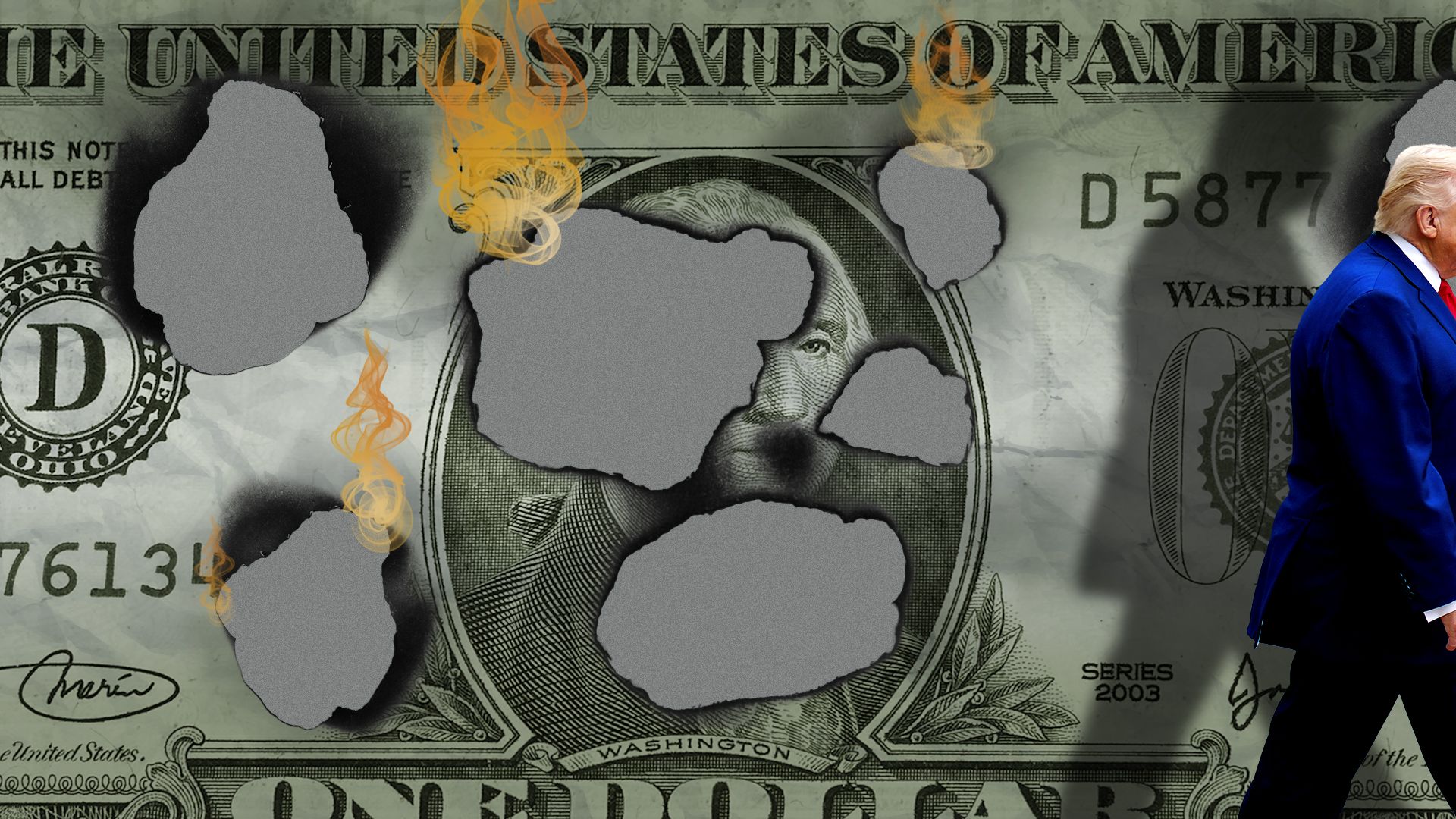
The administration’s response has been, in the president’s own words, affection. Asked by reporters last Wednesday about May inflation reaching its highest level in three years – a 4.2% annual gain, with energy costs up 23.5% year-over-year – Trump replied with four words that stunned economists and his own political advisers: “I love the inflation.” He insisted oil prices would fall “like a rock” once the war ended, without explaining when that would be. U.S. forces had bombed Iran through two consecutive nights that same week.
The people tasked with selling that message to voters are considerably less confident. A former senior Trump administration official told Politico that the political damage from the inflation numbers may already be irreversible, regardless of what the data shows next month. “Whether it’s peak inflation or not, it doesn’t matter,” the official said. “The die has been cast in terms of how people are looking at the economy.”
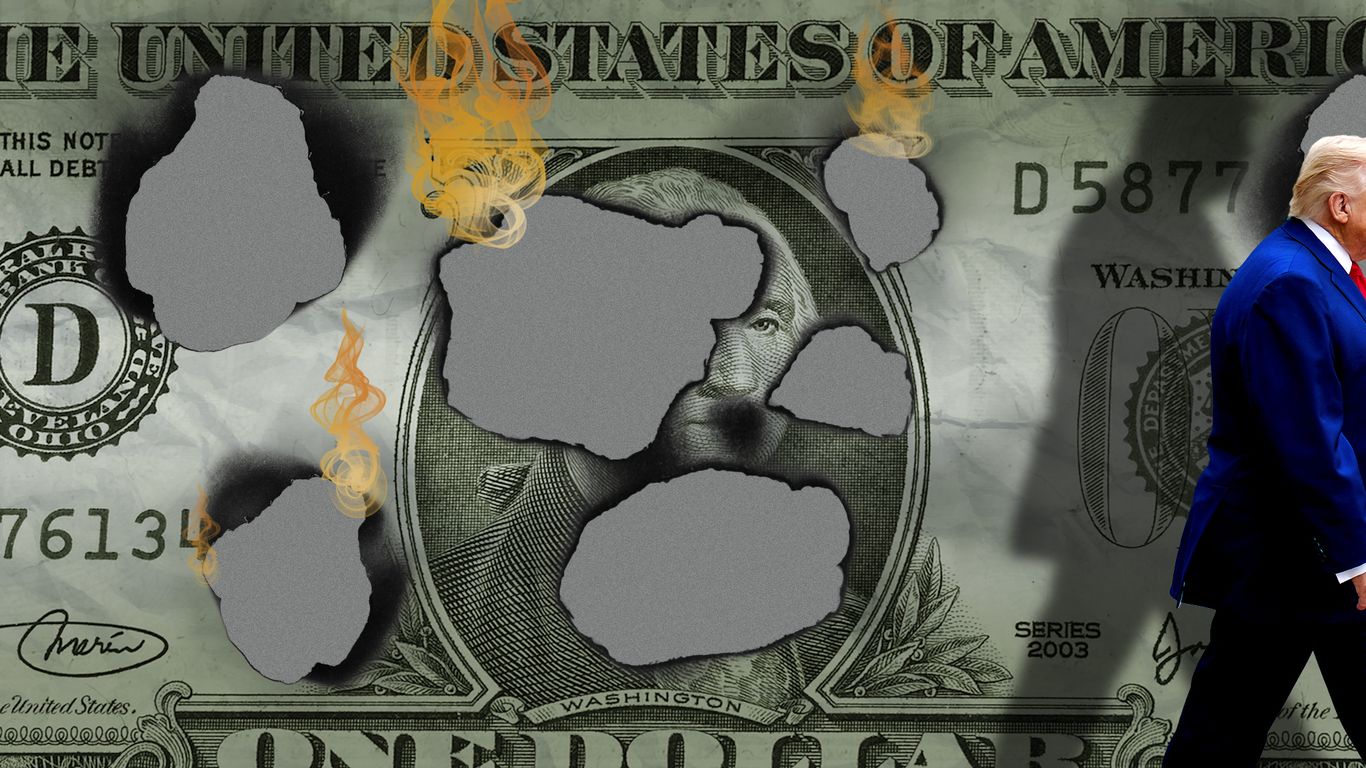
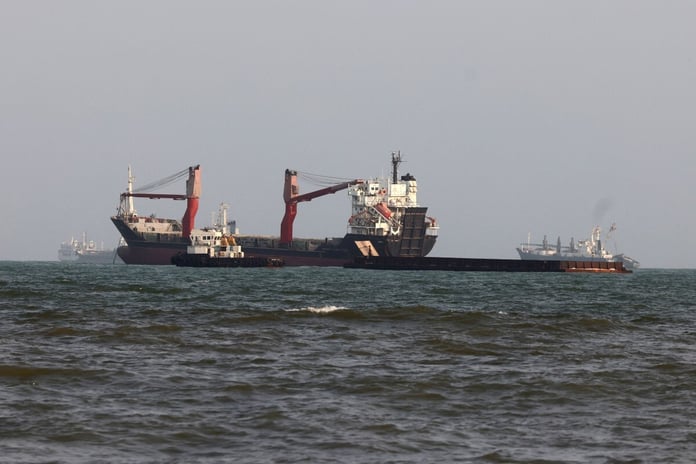
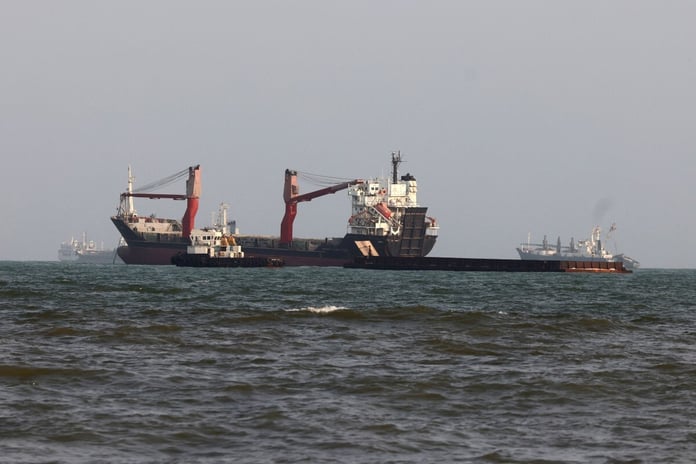
That reading sits inside a larger structural problem that the inventory story makes concrete. When Trump launched military operations against Iran in late February, his economic team’s working assumption was that the conflict would be short, that Iran would come to the table quickly, and that energy markets would absorb the disruption without lasting damage. What actually happened is that the Strait of Hormuz – through which roughly 20 percent of the world’s oil supply passes – became a sustained chokepoint, and four months of strategic reserves and commercial inventory drawdowns have served as the cushion keeping the worst-case scenario at bay. The cushion is being used up.
A CNN poll published in mid-May, before the latest inventory warnings, already found that 70 percent of Americans disapproved of Trump’s economic stewardship – a figure that had never crossed 50 percent even during the Covid-19 pandemic in his first term. More striking: 77 percent of respondents, including a majority of Republicans, said Trump’s policies had driven up the cost of living in their own community. That is not an opposition number. That is a coalition number.
The White House has responded by framing the inflation as a short-term cost of a strategic objective. Kush Desai, a White House spokesman, said in a statement that “while the President has been clear about short-term disruptions as a result of Operation Epic Fury, the Administration is focused on implementing the proven Trump agenda of tax cuts, deregulation, and energy abundance to keep America on a solid economic trajectory.” The statement did not address the inventory depletion question or offer a timeline for when the disruption would end.
Heather Long, chief economist at Navy Federal Credit Union, framed the core arithmetic problem in terms that bypass political framing entirely: inflation in May was “so high that it’s erasing all wage gains.” American workers saw wages grow 3.4 percent year-over-year in May. Inflation ran at 4.2 percent over the same period. That gap – nearly a full percentage point – is not recoverable through messaging.
E.J. Antoni, chief economist at the Heritage Foundation and one of the right’s most prominent economic voices, has been equally direct about what higher oil does to an already strained economy. Antoni told the Financial Times that the United States simply does not have the underlying economic strength to absorb $100-per-barrel oil. “The economy is weaker than we thought it was, and inflation is worse than we thought it was,” he said. Antoni’s institutional home – the Heritage Foundation, which shaped much of the Project 2025 policy architecture – makes the warning politically uncomfortable to dismiss.
Trump endorsed a suspension of the federal gas tax this week, a measure typically deployed in genuine emergencies that provides modest relief – a few cents per gallon – while doing nothing to address the supply disruption underneath. The move was read by analysts less as policy than as a signal that the White House recognized the political danger it was in.
EH’s earlier reporting on the May CPI showed that Trump promised to crush inflation but May’s data marked a three-year high, and that his rural base – the voters most exposed to fuel costs – is already registering measurable defection. What the inventory story adds is a mechanism: it is not simply that prices are high now. It is that the structural props holding prices below their natural market level are nearly exhausted, meaning the worst of the energy price impact has not yet arrived.
The administration is betting that the war ends before that bill comes due. It is a bet that the industry executives now briefing the White House apparently do not share – and they have historically been the last people in Washington to say something like that out loud.
Related Posts