
Google has officially rolled out Android 17 alongside its June Pixel Drop and Wear OS 7 update, introducing one of the most significant ecosystem upgrades in recent years. The release focuses heavily on artificial intelligence, cross-device connectivity, and advanced multitasking, signaling Google’s continued push toward a unified, AI-first mobile experience.
The update arrives first on Pixel devices, but its impact extends across Android phones, tablets, foldables, and smartwatches, reshaping how users interact with apps, media, and connected services.
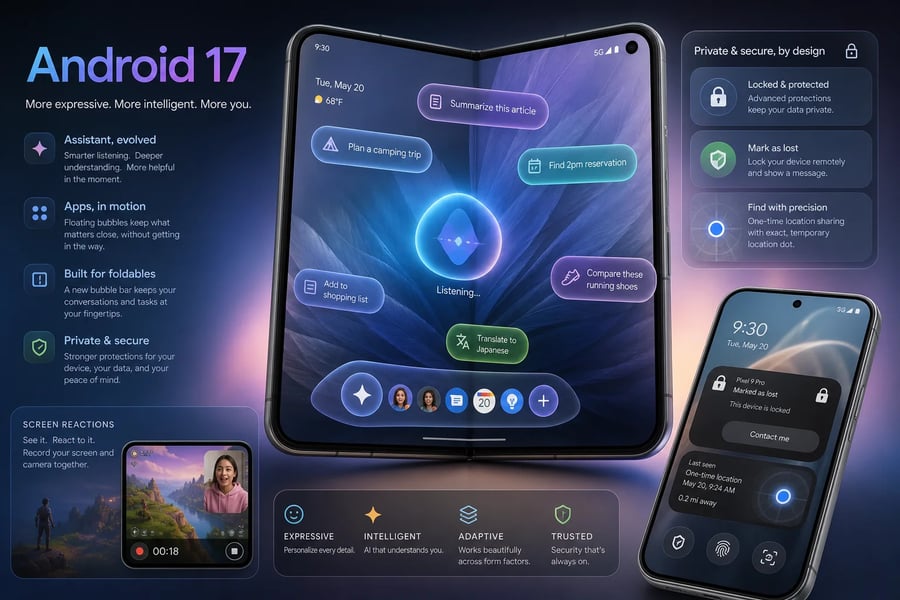
Android 17 introduces Bubbles multitasking and Screen Reactions
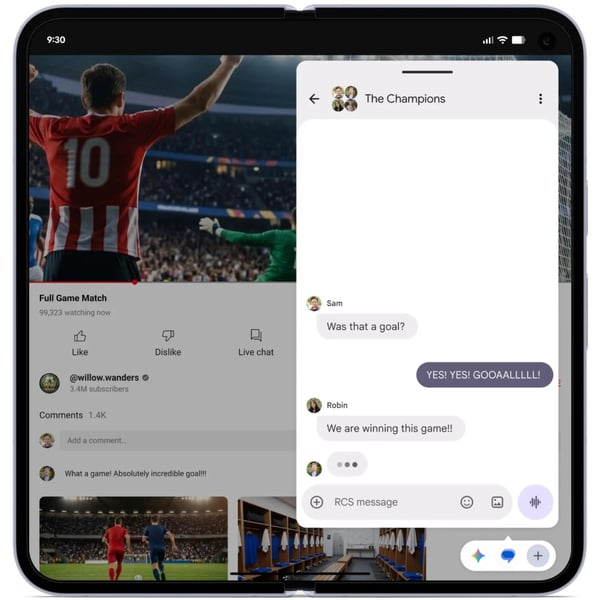
One of the biggest highlights of Android 17 is its improved multitasking system built around floating app interfaces called Bubbles. These allow users to keep conversations, navigation, and media apps active in compact overlays while continuing other tasks seamlessly.
This evolution in Android design builds on Google’s broader AI direction, which has been evolving across recent releases. Earlier groundwork for this shift can be seen in Google’s ongoing ecosystem updates detailed in its Android platform strategy, including developments discussed in Android 17 AI ecosystem.
Another standout addition is Screen Reactions, a feature that allows users to record their facial reactions through the front camera while simultaneously capturing their screen. This makes it easier to create reaction videos, tutorials, and social content without third-party apps.
The feature positions Android 17 as a creator-focused operating system, built for the era of short-form video and real-time sharing.
AI takes center stage with Gemini-powered creativity tools
Artificial intelligence is at the core of Android 17, with Google expanding its Gemini AI integration across system-level tools and applications. Users can now generate, edit, and enhance media using natural language commands, reducing the need for specialized editing software.
Key AI capabilities include conversational video editing, intelligent photo enhancements, and automated content suggestions across apps. These features are part of Google’s broader push toward deeply integrated AI systems, which have been evolving across multiple Android releases.
This direction is further supported by Google’s ongoing work in Gemini AI integration in Android, which lays the foundation for intelligent, context-aware mobile computing.
Additional ecosystem expansion is also visible in Google’s AI automation strategy, including developments covered in Gemini AI ecosystem expansion, where search, apps, and Play Store functionality are increasingly driven by generative AI models.
Quick Share expands toward AirDrop-style cross-platform compatibility
Google is also improving cross-platform sharing by expanding Quick Share compatibility, enabling more seamless file transfers across Android and other ecosystems. This move brings Android closer to offering an AirDrop-like experience, reducing friction in device-to-device communication.
The expansion is expected to roll out gradually across eligible Pixel and Android devices, reinforcing Google’s long-term strategy of improving interoperability and ecosystem accessibility.
Wear OS 7 brings Live Updates and improved smartwatch intelligence
Alongside Android 17, Google has released Wear OS 7 for Pixel Watch devices, introducing a more intelligent and responsive smartwatch experience.
One of the most useful additions is Live Updates, which delivers real-time information for deliveries, navigation, fitness tracking, and sports scores directly on the watch face. The system reduces the need to open individual apps, making interactions faster and more intuitive.
Wear OS 7 also improves battery efficiency and enhances device synchronization across Android phones and connected accessories.
Google’s broader smartwatch direction has been evolving rapidly, as seen in its ecosystem development efforts linked with Pixel devices and wearable updates such as Wear OS 7 Pixel Watch update.
Pixel Drop expands safety, personalization, and device intelligence
The June Pixel Drop complements Android 17 with several device-specific improvements aimed at safety, communication, and personalization.
New upgrades include improved voicemail intelligence, enhanced spam protection, smarter call handling, and expanded emergency detection features on Pixel Watch devices.
These updates reflect Google’s increasing focus on reliability and device stability, especially following past performance challenges highlighted in reports such as Pixel device performance issues.
With Android 17, Google appears to be addressing both innovation and stability, aiming to create a more balanced mobile experience across its hardware ecosystem.
A unified AI-first ecosystem strategy
Android 17, Wear OS 7, and the June Pixel Drop collectively represent Google’s most unified software push in years. The company is clearly aligning its ecosystem around three pillars: artificial intelligence, cross-device continuity, and user safety.
Earlier advancements in intelligent system design, including AI-driven Android architecture, were explored in detail in Gemini Intelligence Android system, which laid the groundwork for today’s release.
Google’s strategy is increasingly focused on making devices work together seamlessly, whether through phones, wearables, or emerging XR platforms. This direction also extends into future computing environments such as AI wearables and immersive interfaces, as discussed in Android XR smart glasses ecosystem.
Conclusion
Android 17 is more than a routine operating system update. It represents a structural shift in how Google envisions mobile computing, placing AI, multitasking, and ecosystem integration at the center of user experience.
With enhanced productivity tools, deeper Gemini AI integration, and improved cross-device functionality, Google is positioning Android as a fully connected, intelligent platform designed for the next generation of digital interaction.