
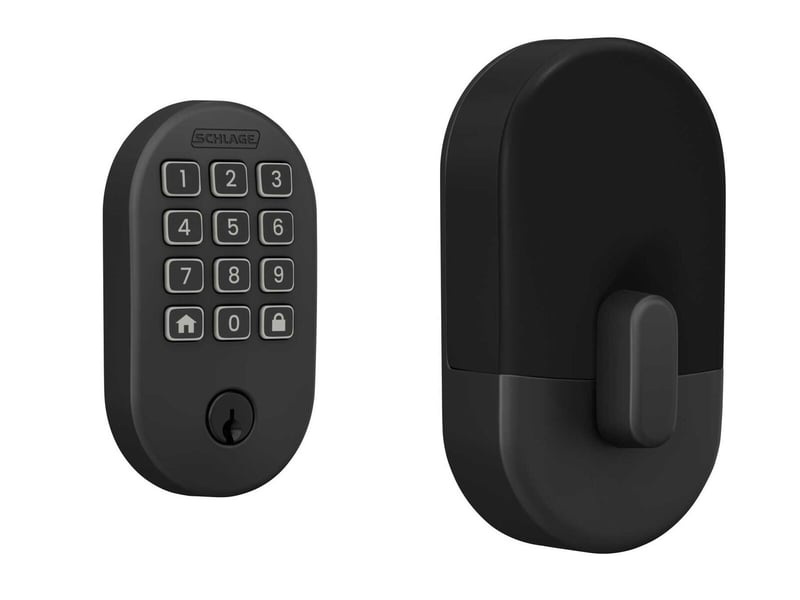
The smart lock industry is entering a major transition point where proximity-based Bluetooth unlocking is no longer considered the ceiling of innovation. The launch of the Schlage Sense Pro Smart Deadbolt marks a shift toward Ultra Wideband precision, cross-platform digital credentials, and near fully automated home entry systems designed to reduce physical interaction with doors altogether.
Priced at $399 and scheduled for release on June 29, the new device is positioned as one of Schlage’s most advanced smart locks to date. It combines multiple emerging standards, including Ultra Wideband positioning and Matter over Thread support, to create a more responsive and context-aware entry experience.
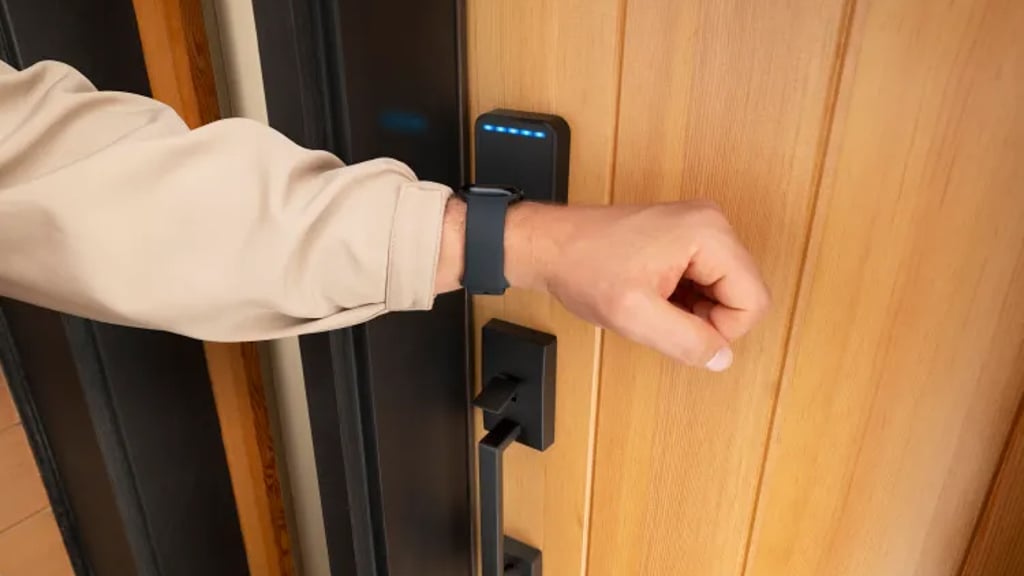
At the center of its ecosystem integration is Apple’s digital credential framework, including Apple Home Key system, which enables secure door access through iPhone and Apple Watch. These credentials are stored and managed through Apple Wallet, reducing the need for physical keys or manual unlocking steps.
This evolution aligns with broader industry movement toward unified device communication standards such as Connectivity Standards Alliance Matter standard, which aims to eliminate fragmentation across smart home platforms. Schlage’s adoption of Matter over Thread positions the Sense Pro as a more interoperable device across ecosystems.
The broader direction of consumer technology can also be seen in evolving smart home ecosystems, where devices are increasingly expected to work seamlessly across mixed hardware environments rather than being locked into a single brand ecosystem.
Ultra Wideband technology is the defining feature of the Sense Pro experience. Unlike Bluetooth, which estimates proximity, UWB determines precise spatial positioning, enabling the lock to detect user intent based on movement direction and distance. This allows the system to unlock the door at the exact right moment without requiring manual input.
Schlage is also preparing for future interoperability through the emerging Aliro digital key standard, which aims to unify digital credentials across smartphones, wearables, and smart locks from multiple manufacturers. This could eventually allow cross-platform access using Google and Samsung wallets alongside Apple devices.
Security hardware is increasingly being shaped by precision connectivity systems such as Ultra Wideband positioning technology, which enables more accurate spatial awareness for authentication systems, reducing false triggers and improving reliability in real-world environments.
The Sense Pro also supports Schlage’s long-term platform strategy, formally introduced under its Schlage Sense Pro smart lock announcement, which emphasizes convergence between hardware security, cloud connectivity, and mobile-first authentication.
Battery performance remains practical, with an estimated lifespan of up to six months depending on usage patterns. A USB-C emergency power option ensures users can still gain access in low-power scenarios, addressing one of the most common concerns in smart lock adoption.
The growing complexity of smart environments reflects broader computational trends across the industry. Advances in future of connected devices show how AI-enabled hardware ecosystems are influencing everything from edge computing to home automation intelligence.
As homes become more connected, security models are also evolving toward adaptive systems influenced by connected home security, where automation, biometric signals, and environmental awareness increasingly work together to manage access and safety.
Industry-wide interoperability efforts continue to accelerate through organizations such as the smart home interoperability standards, which define how devices communicate across ecosystems without vendor lock-in.
At the same time, editorial analysis such as Matter smart home interoperability standards highlights how fragmented ecosystems are being replaced by shared communication frameworks that prioritize compatibility and user convenience.
The Schlage Sense Pro ultimately represents a broader shift in how access control is being redefined. Instead of physical keys or manual authentication, the system relies on a combination of spatial intelligence, digital identity frameworks, and cross-platform standards to manage entry.
While widespread adoption will depend on consumer trust and ecosystem maturity, the trajectory is clear. With Ultra Wideband precision, Matter compatibility, and emerging digital identity standards converging into a single product category, traditional house keys are increasingly becoming a legacy concept rather than a necessity.