ATLANTA – When a clinician suspects a measles case that a local laboratory cannot confidently confirm, there is a reference laboratory that takes the call. For decades, that laboratory has been at the Centers for Disease Control and Prevention in Atlanta. The CDC announced this week it is stepping away from that role, permanently.
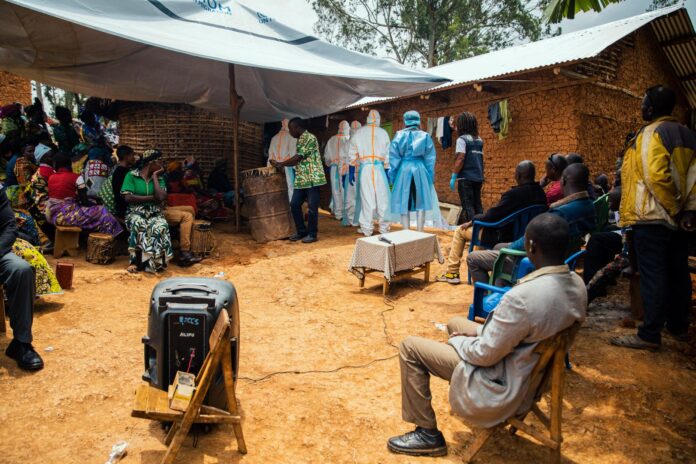
The agency told Politico it is “transitioning away” from federal diagnostic testing for measles and mumps, the first of the tests it paused in April to be formally and permanently discontinued. The decision arrives with 2,104 confirmed measles cases active across 41 states, two unvaccinated children dead in Texas, and 30 outbreaks simultaneously burning through communities where vaccination rates have slipped below the threshold for herd immunity.
The CDC offered a practical rationale: the agency performed exactly four diagnostic measles tests in all of 2026, and 46 in all of 2025. State and local laboratories and commercial testing firms now handle the overwhelming majority of diagnostic work. What the CDC declined to offer was an explanation of what happens to the functions those state labs do not replicate. One in particular matters most.
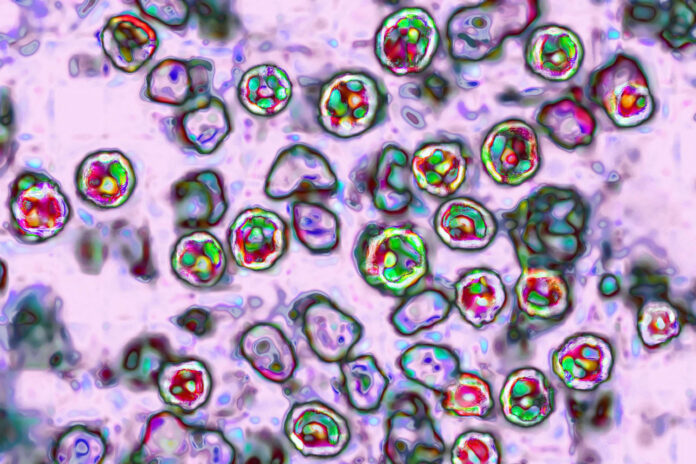
That function is molecular strain typing, the genomic sequencing work that allows epidemiologists to determine whether an outbreak in Ohio shares a common ancestor with one in Texas, or whether what looks like two unrelated clusters is actually a single transmission chain spreading invisibly across state lines. The work requires reference laboratory infrastructure and standardized methodology that most state systems do not maintain. Whether the CDC is transferring that function elsewhere, contracting it out, or simply ending it has not been publicly specified.
Scott Becker, chief executive of the Association of Public Health Laboratories, said in April, when the CDC initially paused dozens of types of diagnostic services including measles, mumps, rabies, and mpox, that the scope of the rollback was hard to square with any obvious rationale. “It is not totally clear why the CDC is pausing more kinds of tests than ever before,” he told reporters at the time. The CDC provided no clarification then. It has not provided one since.
The decision did not happen in isolation. Since early 2025, the Trump administration’s restructuring of the Department of Health and Human Services, accelerated by the leadership of Secretary Robert F. Kennedy Jr., whose long-standing scepticism of established vaccine science has shaped the department’s posture toward disease prevention, has cut roughly a third of the CDC’s civil service workforce. Entire laboratory divisions have been eliminated. CNN reported that the CDC paused dozens of types of lab testing as the agency was evaluated and downsized, with officials framing the move as a review. The measles and mumps decisions suggest the review has reached its conclusion.
The Treatment Action Group, a public health advocacy organization that has tracked the CDC’s diagnostic rollbacks closely, responded directly to the announcement. “Rapid diagnoses for infectious diseases are crucial for administering life-saving treatment after exposure,” the organization said, calling on the agency to immediately reinstate testing capacity. The CDC had not responded to the demand as of Friday.
The numbers at the center of this decision bear scrutiny. Four measles tests in 2026 sounds like evidence of irrelevance until you consider what those four tests were. Diagnostic requests that reach the CDC typically arrive because a state laboratory has a result it cannot confirm, a sample from an atypical presentation, or a suspected case in a population where measles was thought to be gone. Those are not routine diagnostic requests. They are the problems that become disasters if they are missed: the first positive in what will become a hundred-case outbreak, the ambiguous sample that a state lab calls negative while the virus is already spreading.
As Eastern Herald has reported, the US measles resurgence has been building since early 2025, fuelled by declining childhood vaccination rates and clustering in communities where exemption rates have risen sharply. The outbreak has moved from isolated county-level events into something with national breadth, with Maricopa County spread among the early indicators that it would not self-extinguish. The country is now approaching November, when the Pan American Health Organization will assess whether the United States has maintained its measles elimination status. That assessment depends in part on molecular evidence that outbreaks here are driven by importations rather than sustained domestic transmission, evidence the CDC’s molecular typing generates.
What no official has yet answered is which of the CDC’s harder diagnostic functions will continue, which will fall to state systems of varying capacity, and which will simply disappear. The mumps picture is quieter, with 117 confirmed cases across 23 jurisdictions as of mid-June, and it is not zero; mumps diagnostic testing carries the same reference-lab dependencies as measles. The CDC is not saying what it is keeping. That silence, more than any number, is where the risk in this decision lives.