
CARACAS – The announcement came on the same day the bodies reached 589. The United States Treasury Department, which has restricted Venezuela’s access to international finance since 2017, declared on Friday that American entities could now conduct “all transactions” related to earthquake relief in the country, a four-month authorization that expires October 23.
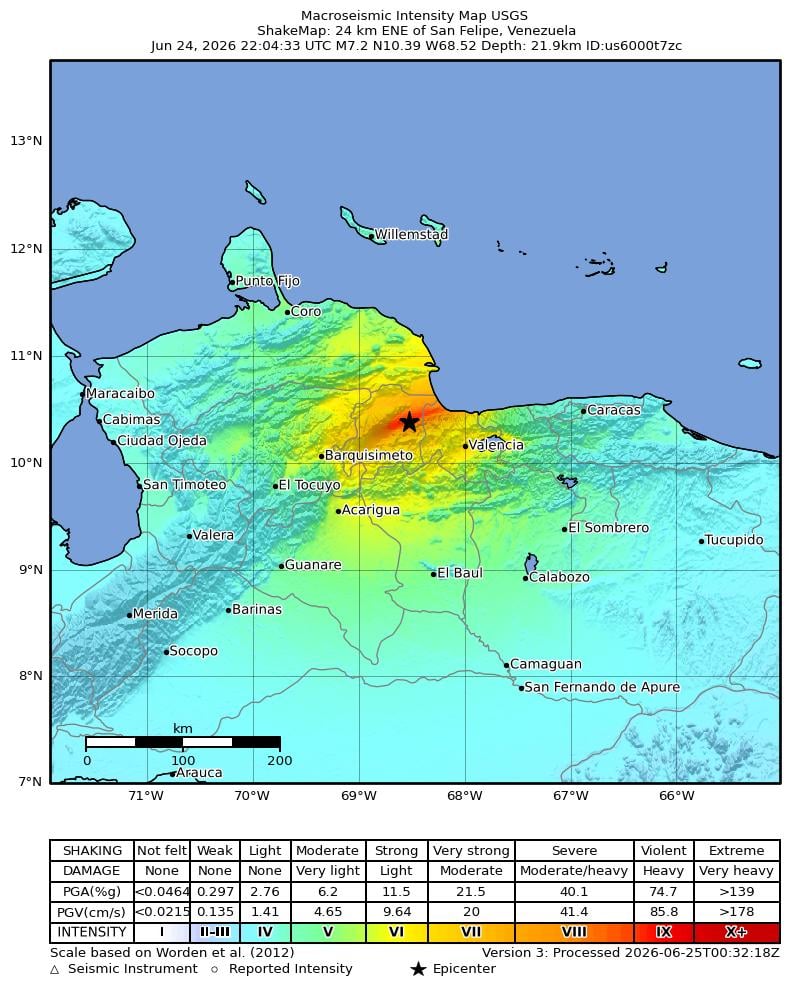
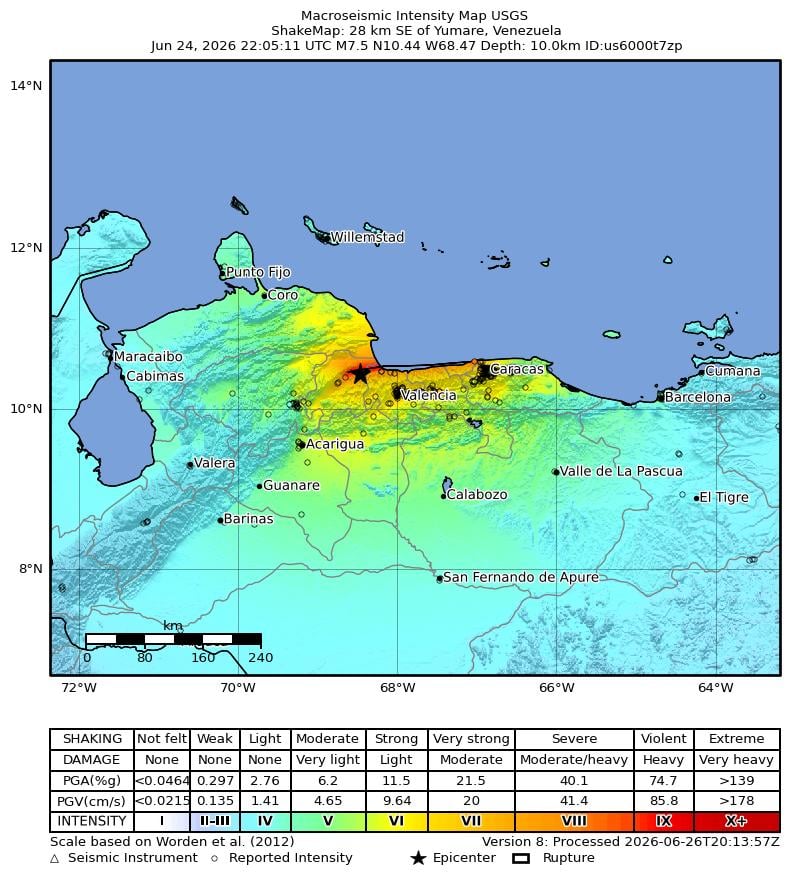
The twin earthquakes that struck Venezuela’s northern coast on June 24 measured magnitude 7.2 and 7.5, arriving 39 seconds apart. They were Venezuela’s most powerful seismic events in more than a century. The second quake, centered near Yumare, struck a fault line the U.S. Geological Survey describes as structurally similar to California’s San Andreas, but running through a coastal population that built without seismic codes and maintained its buildings without the capital those sanctions had been designed to restrict.
Acting President Delcy Rodríguez confirmed the toll of 589 dead and more than 2,980 injured on Friday, with 157 people still listed as missing. The USGS’s PAGER system, which models casualty estimates from seismic intensity data, placed a 44 percent probability on the final toll exceeding 10,000, and a 30 percent probability that it could surpass 100,000. Those figures carry large uncertainty margins. What the rubble of La Guaira did not carry was any. The city, Venezuela’s main port and the coastal gateway to Caracas, had more than 100 collapsed buildings and 70,000 families displaced. It was declared a national disaster zone within hours of the first tremor.
Cuba had deployed health workers before other governments had finished calculating their pledges. El Salvador followed with 300 search-and-rescue specialists and 50 tonnes of equipment. Brazil offered a field hospital; Mexico sent rescue personnel and medical teams. The United States, alongside its $150 million aid commitment, was dispatching two of its most experienced urban search-and-rescue units, from Fairfax County, Virginia, and Los Angeles County, according to the State Department, which also deployed a Disaster Assistance Response Team to assess the situation on the ground.
The scale of that international mobilization left a narrower, more specific question unanswered: what had the sanctions cost? Human rights organizations and international health agencies had documented for years that U.S. and European restrictions impaired Venezuela’s ability to import medical equipment, construction materials, and basic financing. The Pan American Health Organization had assessed Venezuela’s hospital system as severely underfunded before June 24. The United Nations Economic Commission for Latin America found in its 2024 review that Venezuela’s GDP had contracted by more than half since 2014, with financial sanctions compounding the collapse. La Guaira’s hospitals are overwhelmed. Its buildings fell.
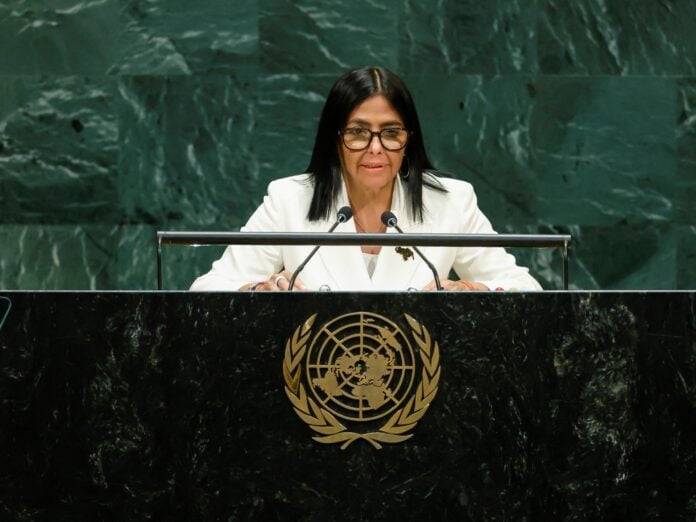
Rodríguez acknowledged the waiver while pressing for something more durable. She described the Treasury authorization as a starting point, not a resolution. “We reiterate the need to advance towards a Venezuela free of sanctions,” she said, arguing that sustained normalization was the only way to guarantee the investment Venezuela needed to rebuild, and to maintain the infrastructure the earthquakes had destroyed. The temporary authorization expires October 23. The sanctions remain.
The gap between the waiver and what Rodríguez was asking for was the gap between a temporary permit and a policy change. Secretary of State Marco Rubio, who told the Senate in June that America could be hemispheric nations’ “greatest friend or worst enemy” depending on alignment with Washington, had not commented publicly on the earthquake by Friday. The administration was sending warships and transport aircraft to support relief operations. It was also maintaining the underlying legal architecture of economic isolation from which those relief operations needed a special exemption to function.
With the 72-hour golden window, the period emergency responders consider most viable for finding trapped survivors, due to close Saturday evening for the first quake, teams from a dozen countries were still cutting through debris in La Guaira’s coastal neighborhoods. Al Jazeera reported Thursday that a baby had been pulled alive from the ruins of a collapsed apartment block, a rescue that drew global attention to the city’s desperate situation. Many families had received no news from relatives in the harder-hit blocks.
The earthquakes landed in the middle of a period of unusual diplomatic activity for the Caracas government. Rodríguez had completed a state visit to India in early June to discuss energy and investment with Prime Minister Modi and had attended international forums in Moscow. The quakes forced a crisis response that both revealed Venezuela’s infrastructure fragility and produced, in the US sanctions waiver, a small but legible shift toward normalization, one that Caracas had been seeking through diplomacy and Washington had been withholding through policy. Whether that shift outlasts October 23 was the only question that would matter more than the rescue count.
The USGS estimates were generated from building stock models that assumed standard construction quality. Venezuela’s coastal housing, particularly in La Guaira, had not been maintained to any standard assumed in those models. The real numbers, when they come, are likely to arrive slowly, from neighborhoods that rescue teams have not yet reached, in a country whose hospitals are already beyond capacity.