
LONDON — A woman browsing a shopping centre in the city knew something was off when a video of herself appeared online. A man wearing what looked like ordinary glasses had filmed her without her knowledge. The footage ran nearly a minute, had been viewed roughly 40,000 times, and was removed from the account only after it asked her to pay for the takedown. The glasses were Ray-Bans. They are, by design, indistinguishable from frames you would find at any optician.
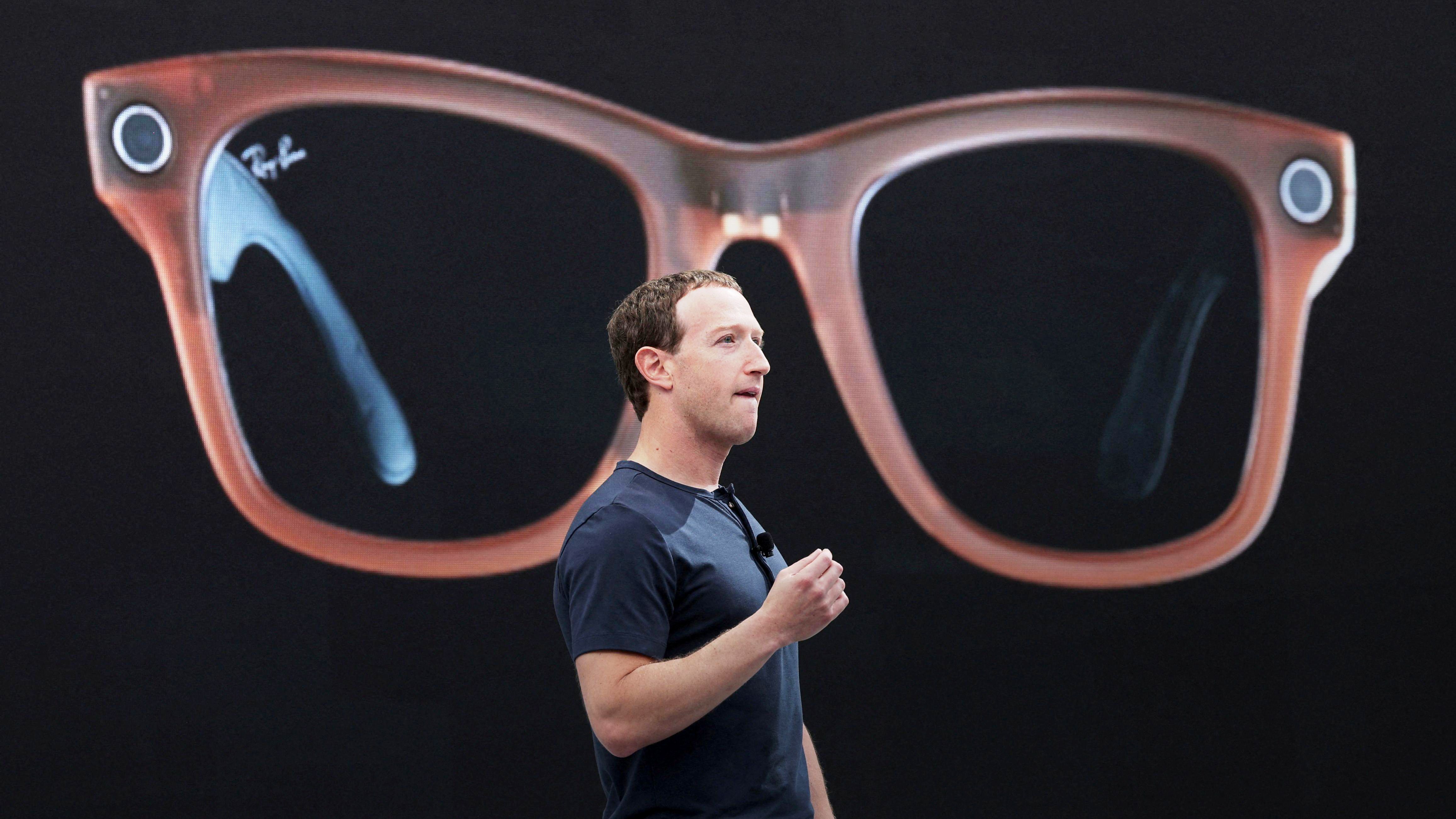
That case, documented in a BBC investigation published in May, is what the smart glasses industry’s growth trajectory looks like from street level. Meta’s Ray-Ban glasses sold more than seven million units in 2025, more than tripling year-over-year, while the company held roughly 82 percent of the global smart glasses market. On June 23, Meta launched a new in-house glasses line starting at $299, the lowest entry price yet for AI-enabled, camera-equipped eyewear. Snap unveiled its $2,195 Specs AR glasses on June 16. Samsung and Google confirmed their own smart glasses for the fall. The technology is getting significantly cheaper and significantly harder to spot on someone’s face.
What the launch press releases did not mention is what two Electronic Frontier Foundation researchers found on June 4 by examining the code inside the Meta AI app. Buried in an update already installed on more than 50 million phones was a dormant facial recognition system that Meta engineers called “NameTag.” Three AI models worked in sequence: one detected faces in the wearer’s field of view, a second converted each face into a 2,048-number faceprint, and a third matched it against a stored database. Cooper Quintin, the EFF’s senior technologist, activated the feature in debug mode and watched it identify a known face in real time. He described the system as “nearly ready to go” and said it would turn the glasses-wearing public into “a distributed surveillance network.”
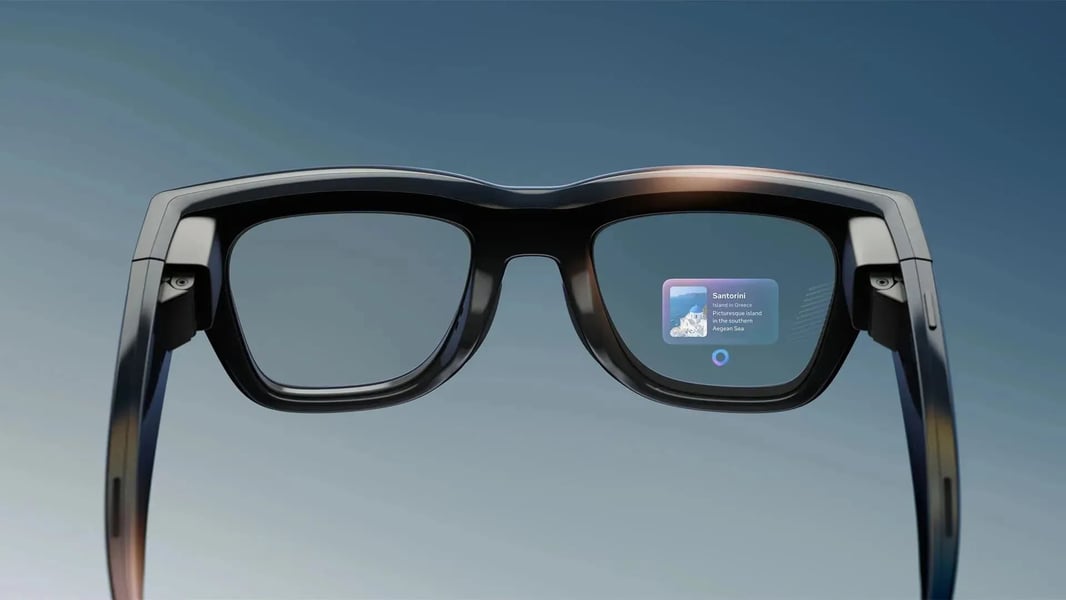
Meta pushed an update stripping the code on June 5, the day after the EFF published its findings, without a press release or any explanation. The company’s vice president of communications, Andy Stone, posted on X that WIRED, which co-published the EFF analysis, had waited “until the fourth paragraph” to note the feature was not yet enabled for users. Meta did not say it had no plans to enable it.
The NameTag discovery landed on top of a documented record of prior incidents. In 2024, two Harvard students, AnhPhu Nguyen and Caine Ardayfio, demonstrated a system called I-XRAY: Meta Ray-Ban glasses paired with a reverse facial recognition engine and large language models to identify strangers in public in under a minute, retrieving name, home address, occupation, and partial Social Security numbers from public databases. They approached strangers on the Boston subway by name. Their intent was to prove the capability existed, not to distribute the tool, but Nguyen described the practical threat clearly: “Some dude could just find some girl’s home address on the train and just follow them home.” I-XRAY required building the system yourself. NameTag was already in the app, on 50 million devices, waiting.
The privacy record extends further. A February 2026 Swedish newspaper investigation found Meta was routing footage captured through the glasses to a Kenyan subcontractor for manual labelling as AI training data, including footage from inside users’ homes. A federal class action filed in a California court in March 2026 formalized those claims. By April, the ACLU and 75 civil liberties groups had written to Meta demanding it halt its facial recognition plans. The Texas attorney general opened a civil investigation in May. The deletion of the NameTag code came after all of that, not before.
The gap between what the glasses can do and what regulators can respond to is widest in Australia, where the Ray-Ban line is sold nationally. A peer-reviewed study published in PLOS ONE in November 2024, led by Dr. Fareed Kaviani at Monash University, surveyed more than a thousand Australian residents and found that 17 percent of smart glasses owners had used their devices to record others without consent or in prohibited locations. Under Australia’s Privacy Act, biometric data is classified as sensitive information with heightened protection, but the Office of the Australian Information Commissioner has acknowledged that a practical consent mechanism for smart glasses in public spaces is “unworkable at scale.” Professor Hussein Dia of Swinburne University has called the country’s legal framework a “blind spot” on this technology.
The market context makes all of this more pressing. When a product category that includes a hidden-by-design camera drops to $299, it reaches an entirely different consumer base than it did at $499. Meta’s new in-house glasses line, launched June 23 in 26 styles including a Kylie Jenner collaboration, is not a premium product. It is an attempt to normalize the category at a mass-market price. Meta has simultaneously been rolling out tools to give users more visible control over its other platforms, including algorithmic transparency features for Instagram. The glasses business has not been built on that model. The camera faces out.
Snap’s $2,195 Specs and the Android XR glasses that Samsung plans to reveal alongside its flagship phone lineup this summer signal where the category is heading: full displays, AI overlays, cameras embedded in Warby Parker and Gentle Monster frames that look identical to any other pair of glasses. The industry drew a specific lesson from Google Glass’s failure in 2013, when the product was visually conspicuous enough to generate immediate backlash. The lesson was not that covertly recording strangers was the problem. It was that people could tell you were doing it.
What no company in the category has answered publicly, and what no regulator has yet required an answer to, is what happens when NameTag-style code is reintroduced in a future update after the news cycle moves on, when the glasses cost $299 and sit on fourteen million faces instead of two million. Meta has not said it will never bring the feature back. It removed the code. Those are not the same thing.