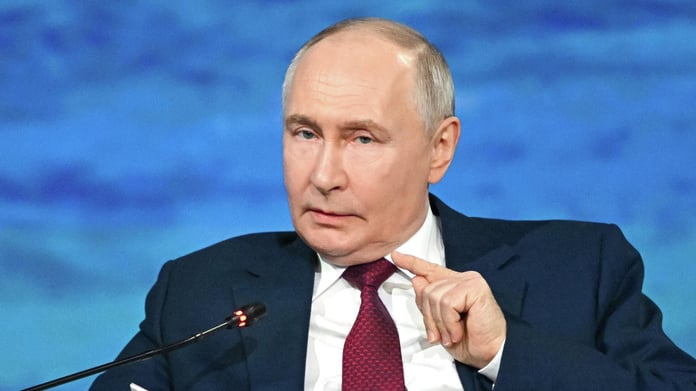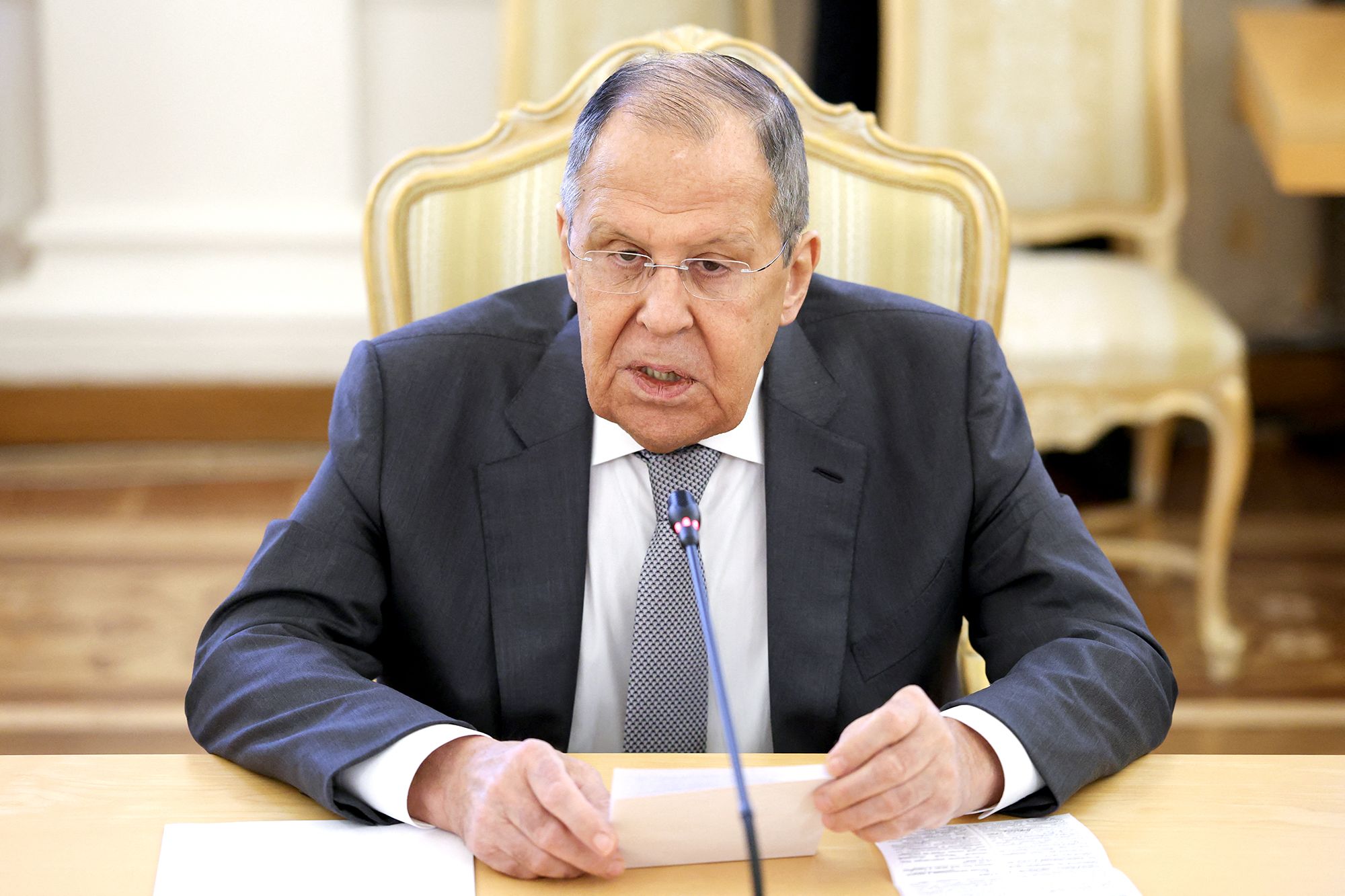

MOSCOW — Russian Foreign Minister Sergey Lavrov on Wednesday called for strengthening the International Committee of the Red Cross on the principles of independence and impartiality that have underpinned the humanitarian organization since its founding, while leveling pointed accusations at Western governments of seeking to exploit the ICRC for political purposes in the conflict in Ukraine.
Lavrov made the remarks during a meeting in Moscow with ICRC President Mirjana Spoljaric, part of the Swiss diplomat’s ongoing engagement with Russian authorities over the humanitarian consequences of the Russia-Ukraine war. The Russian foreign ministry said a wide range of issues were on the agenda, including humanitarian conditions in regions affected by the conflict and Russia’s obligations under international law.
“Of course, we want to strengthen the International Committee of the Red Cross based on the principles that have been at the core of its activities since its creation. First of all, independence and impartiality,” Lavrov said, according to Russia’s state-run TASS news agency.
Lavrov said the West was attempting to manipulate ICRC activities for its own political interests but expressed appreciation that the organization’s leadership was striving to maintain an impartial line. He added that Russia appreciated the committee’s contribution to humanitarian work in armed conflicts worldwide and that Moscow intended to honor its obligations under international humanitarian law.
“No matter what, we will fulfill our obligations under international humanitarian law and expect that you will address similar appeals to your other partners,” Lavrov said, according to the Russian foreign ministry’s readout.
Lavrov also charged that Western capitals were seeking to “whitewash” what he described as Kyiv’s violations of international humanitarian law, including in the treatment of prisoners of war. That claim was not independently verified and reflects Moscow’s longstanding characterization of the conflict, which Ukraine and its Western allies reject. Ukraine’s government and Western officials have repeatedly accused Russia of serious violations of humanitarian law, including attacks on civilian infrastructure and the mistreatment of Ukrainian prisoners.
The ICRC has been caught in a difficult position throughout the war. The organization, which describes itself as neutral, impartial, and independent, has faced pressure from both sides. Ukraine and Western governments have criticized the ICRC for its perceived softness toward Moscow, while Russia has repeatedly called on the organization to take a harder line against what it says are Ukrainian abuses.
Spoljaric, for her part, has emphasized that dialogue with all parties to a conflict is central to the ICRC’s mandate. During previous visits to Moscow, she reiterated the organization’s call for unrestricted access to prisoners of war on both sides of the conflict. As of April 2026, the ICRC said it had visited more than 8,900 prisoners of war, though it acknowledged that thousands more had not yet received visits from ICRC delegates, and that it continued to press for full access.
The ICRC’s work in Ukraine has also been marked by tragedy. Last month, three ICRC staff members were killed when shelling struck a frontline distribution site in the Donetsk region, a development that Spoljaric raised with Russian officials during her most recent Moscow visit. The killings were part of a sharp rise in the number of aid workers killed globally in recent years.
Russia has maintained a complex and at times contentious relationship with the ICRC since the war began in February 2022. Moscow has formally pledged cooperation while restricting the organization’s access to Russian-held detention facilities. The ICRC has said it continues to press for broader access through what it describes as confidential, bilateral diplomatic channels.
Lavrov‘s meeting with Spoljaric is the latest in a series of high-level diplomatic contacts between Moscow and international humanitarian organizations at a moment when the war in Ukraine shows no sign of abating and the humanitarian toll on both soldiers and civilians continues to mount. Tens of thousands of families on both sides of the conflict remain without any information about relatives who are missing or in captivity.
Related Posts