
The Kremlin said Thursday that negotiations with Ukraine over a potential prisoner exchange have entered what officials described as the most complicated stage, as Moscow and Kyiv work to finalize the lists of detainees expected to be included in a possible large-scale swap.
Speaking to reporters in Moscow, Kremlin spokesman Dmitry Peskov said Russian and Ukrainian officials were actively coordinating the names of prisoners, calling the process technically difficult but fast-moving.
“Work is underway to coordinate the lists. This is the most difficult part of this work, it continues very quickly,” Peskov said during a briefing.
The remarks are the clearest signal yet that negotiations between Russia and Ukraine over prisoner exchanges remain active despite the broader military confrontation continuing across several fronts. They also come amid growing international focus on humanitarian channels that could serve as rare points of contact between Moscow and Kyiv after months of stalled diplomatic engagement.
Officials on both sides have recently discussed a possible 1,000-for-1,000 exchange format, which, if completed, would become one of the largest prisoner swaps since the conflict escalated in 2022. Ukrainian officials have previously indicated that Kyiv submitted lists of prisoners it seeks to recover, while Russian authorities have stressed the complexity of verifying and coordinating those names.
The Kremlin’s comments suggest that the process remains under active negotiation even as military operations continue in eastern Ukraine and along the border regions. Analysts say prisoner exchanges have increasingly become one of the few functioning communication mechanisms between the two sides.
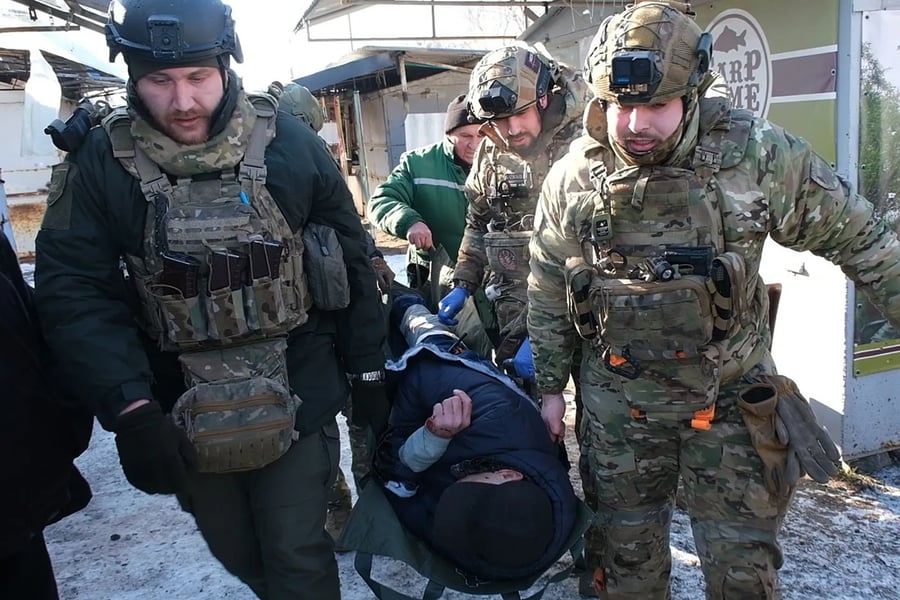
Since the start of the conflict, Russia and Ukraine have carried out dozens of exchanges involving military personnel, pilots, wounded soldiers, and in some cases civilians. Many of those swaps were facilitated through indirect diplomatic channels involving third-party states and humanitarian intermediaries.
While Moscow and Kyiv rarely disclose full details of the negotiations, prisoner exchanges often carry political as well as humanitarian significance. Successful swaps can ease domestic pressure on governments facing demands from families of captured soldiers while also serving as confidence-building measures during periods of heightened international diplomacy.
The latest discussions come at a moment of renewed international attention on possible ceasefire frameworks and broader negotiation efforts. Earlier this month, Ukrainian President Volodymyr Zelenskyy confirmed that humanitarian matters, including prisoner exchanges, were among the issues discussed during recent diplomatic contacts involving Western officials.
Russian officials, meanwhile, have sought to portray the ongoing talks as evidence that practical cooperation remains possible despite deep political and military disagreements between Moscow and Kyiv.
The Kremlin has repeatedly emphasized that humanitarian exchanges should remain separate from battlefield developments. Russian negotiators have argued that maintaining communication channels on prisoner issues is necessary to avoid further escalation and to ensure the return of captured personnel.
Observers following the negotiations say the verification process itself remains highly sensitive. Both sides typically conduct extensive checks to confirm identities, health conditions, military status, and legal circumstances before approving final exchange lists. Delays are common, particularly when large numbers of prisoners are involved.
Families of prisoners in both Russia and Ukraine have continued pressing authorities for faster exchanges, with advocacy groups increasingly vocal about the conditions facing detainees and the psychological toll of prolonged captivity.
International organizations, including the International Committee of the Red Cross, have repeatedly called for expanded humanitarian access to prisoners of war held by both sides. The organization has urged compliance with international humanitarian law governing the treatment and exchange of detainees during armed conflict.
The prisoner issue has also become closely tied to the broader information war surrounding the conflict. Moscow and Kyiv frequently publish footage of returning soldiers, framing exchanges as demonstrations of state commitment to military personnel and national morale.
Despite the cautious optimism surrounding the latest talks, neither side has announced a timeline for a final agreement. Peskov declined to provide further operational details, and Ukrainian officials have so far refrained from publicly commenting on the Kremlin’s latest statement.
Still, the acknowledgment that coordination efforts are moving “very quickly” has raised expectations that another major exchange could take place in the coming weeks.
Diplomatic analysts caution, however, that prisoner swaps alone are unlikely to produce broader political breakthroughs. Instead, they are viewed primarily as humanitarian arrangements that allow limited engagement while the larger conflict remains unresolved.
Even so, in a war increasingly defined by deadlocked negotiations and continued military escalation, prisoner exchanges remain one of the few areas where both sides have periodically found room for agreement.
—Inputs from Sputnik.