
BEIJING — At the start of July, a compound that veterinarians across China had used for decades to sedate cats and dogs for surgery quietly moved into the same legal category as fentanyl. The reclassification was not prompted by a contaminated drug supply or a clinical accident. It came because thousands of young people had discovered, in the span of a few months, that tiletamine could be vaporized in specialized e-cigarettes to produce hallucinations, and because one northeastern city alone had investigated more than 1,600 individuals for doing so before the year was even half over.
China’s drug regulators have encountered this pattern before. A compound with an established veterinary or pharmaceutical use finds its way into what officials describe as a regulatory vacuum. Once inside that vacuum, it spreads through entertainment venues, through informal supply chains, through the social networks that dissociative drugs tend to travel. By the time authorities have enough data to move, they are already behind. What changed this time is how quickly Beijing acted.
Since July 1, tiletamine has been classified as a controlled narcotic substance under Chinese law, regulated on the same legal tier as fentanyl. Individuals found with the drug or related vaping equipment in public spaces now face significant financial penalties, according to the South China Morning Post.
The case for why tiletamine spread so quickly lies in its pharmacology. It belongs to the same chemical family as ketamine, known in China’s club culture as K powder and itself a controlled substance for more than two decades. Both compounds are arylcyclohexylamine-class NMDA receptor antagonists, blocking a key excitatory receptor in the brain to produce a dissociative state: detachment from one’s body, distorted perception of time and space, and in sufficient doses, visual and auditory hallucinations.
What separated tiletamine from ketamine in practice was not pharmacology but paperwork. Tiletamine was licensed for sale as Telazol, a veterinary injectable combining tiletamine and zolazepam, used to anaesthetize animals at pet clinics and, in higher doses, large wild mammals. Because it was not a controlled substance, no requirement existed to track where it went once it left a licensed veterinary setting.

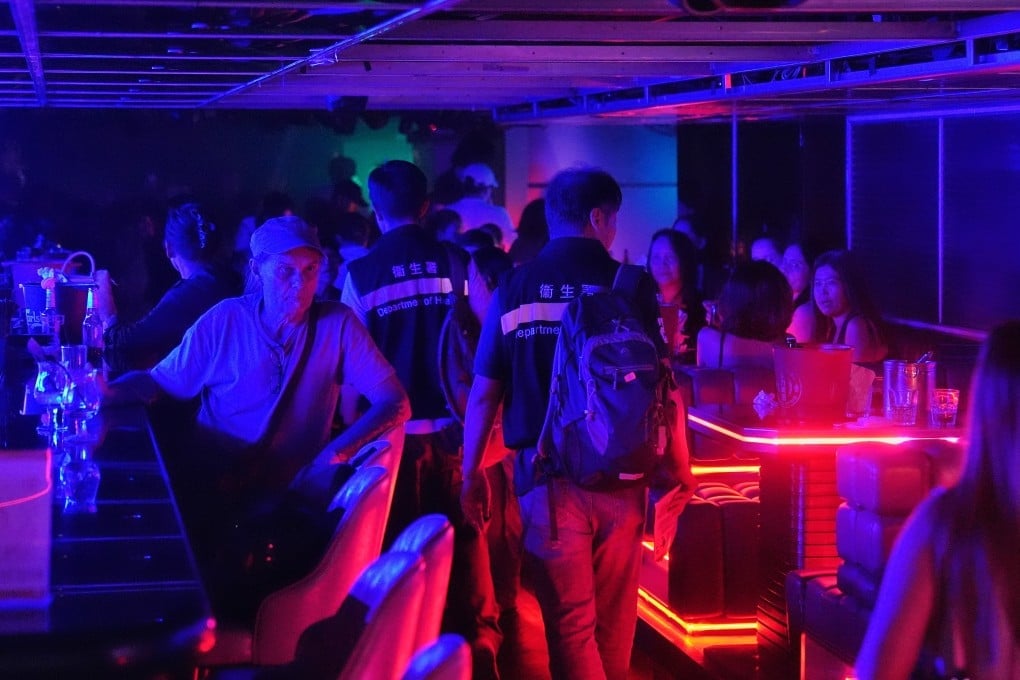
The vaping mechanism was what allowed the abuse to scale. Unlike ketamine, which in illicit use is typically dissolved, dried, and insufflated, tiletamine proved compatible with modified e-cigarettes adapted for substances that vaporize at accessible temperatures. The entry barrier was low. The supply was nominally legal. The subjective effect users described, including visual hallucinations, auditory distortions, and a deeper or more prolonged dissociative state than ketamine typically produces, created its own demand. The drug became popular in a very short time, health authorities noted, particularly in entertainment venues such as billiard halls, discos, nightclubs, and bars.
The venues tracked along familiar lines. The same leisure economy where ketamine circulated in China in the early 2000s before regulators moved against it became tiletamine’s distribution network two decades later. The parallel is not incidental. Tiletamine was, in chemical terms, a predictable successor: close enough in structure to deliver the same effect, different enough in legal status to escape the same restrictions.
The scale of the problem came into focus from research conducted while the drug was still unscheduled. In Shenyang, the northeastern industrial city, authorities investigated 1,605 individuals for tiletamine abuse between November 2025 and early January 2026, approximately ten weeks, according to findings published in Policing Studies, a peer-reviewed Chinese criminology journal. That figure, from a single city over less than three months, is what drove the scheduling timeline.
China’s drug regulatory framework has acted against novel psychoactive substances in previous cycles, placing synthetic cannabinoids, designer benzodiazepines, and fentanyl analogues under emergency provisions as abuse curves accelerated. The tiletamine decision reflects the same logic: move while the curve can still be interrupted, rather than wait for a full public health evidence base while the user base expands.
The scheduling of tiletamine comes as China confronts drug enforcement challenges on multiple fronts. Alibaba’s $600 million settlement with US authorities over illegal drug sales through its platforms, announced in June, represented the largest marketplace liability settlement in American legal history and drew renewed attention to the vulnerabilities that poorly supervised online commerce creates for substance control. That case covered 80,000 documented transactions over eight years.
The open question that China’s drug regulators have not yet answered for tiletamine is what compound fills its place. The arylcyclohexylamine chemical family that produced both tiletamine and ketamine contains additional members, some of which remain unscheduled in China and most of the world. The Shenyang data showed how rapidly a previously untracked substance can establish a user base when the legal barrier is absent. Beijing has expanded its regulatory reach in multiple domains in recent months, but the chemistry of dissociative anaesthetics is wider than any single controlled substance list.
The Policing Studies research has not yet produced a follow-up tracking what happened in Shenyang after local enforcement began. Chinese authorities have not disclosed how many veterinary clinics had their tiletamine supplies audited before July 1, or how the diversion pathway from licensed animal medicine to street use operated in practice. Whether the July 1 scheduling will suppress use or redirect it toward the next available compound is a question still open.
What China’s drug regulatory history does show is that the time between a novel psychoactive substance becoming a documented problem and a scheduling response has been shortening. The gap for tiletamine was measured in months.