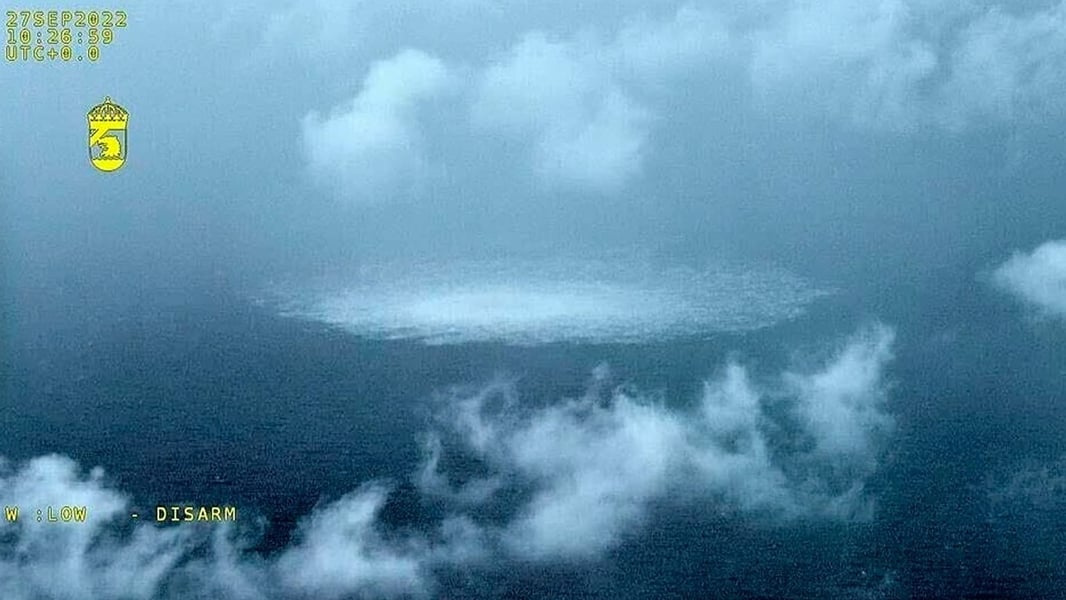

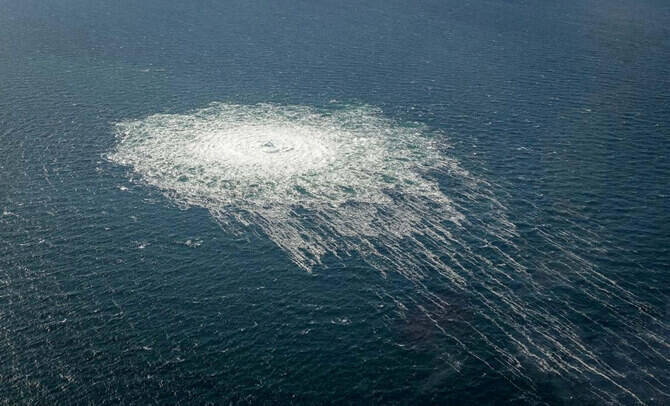
HAMBURG — For nearly four years, the men who blew a hole in the Baltic Sea floor and the officials who might have ordered them to do it stayed just out of reach of a courtroom. That changed on Wednesday, when Germany’s federal prosecutor’s office in Karlsruhe filed the first formal indictment in the Nord Stream sabotage case, charging a Ukrainian war veteran with war crimes over an operation that severed gas supplies Europe once depended on and detonated a diplomatic fuse still burning today.
The charge sheet, filed against a man identified under German privacy rules only as Serhii K., is the first time any government has moved from suspicion to prosecution over the September 2022 blasts that ruptured three of the four Nord Stream pipelines running from Russia to Germany beneath the Baltic Sea. It matters now because it forces a question European governments have avoided answering on the record for nearly four years: not whether Ukrainians carried out the attack, but who in Kyiv, if anyone, gave the order.
Federal prosecutors allege the 49-year-old commanded a six-member team that rented the sailing yacht Andromeda out of the northern German port of Rostock in September 2022, posing as a diving charter before motoring into the Baltic Sea to fix explosives to the pipeline at a depth of roughly 80 meters, according to Euronews, which reviewed the charge sheet. The operation cost an estimated 270,000 euros, or roughly $300,000, prosecutors say, financed through a chain of transactions investigators acknowledge they have not fully traced.
What investigators say they have traced, and describe as “overwhelming,” are phone calls Serhii K. made to relatives and acquaintances from Italian custody after his arrest in the resort town of Rimini last summer, calls prosecutors argue amount to a confession, The National reported. He denies involvement, and his lawyers are expected to contest both the facts and the legal theory behind the case when it reaches trial in Hamburg, where he has been held since his extradition from Italy in November.
That legal theory is itself the newest and most consequential part of Wednesday’s filing. German prosecutors quietly upgraded the case in recent months from a domestic sabotage statute, which would have carried a modest prison term, to formal war crimes charges: attacks on civilian energy infrastructure, triggering an explosion, and destruction of structures. Their argument is that because Russia’s military operation in Ukraine was already underway when the pipelines were hit, an attack on energy infrastructure serving a European civilian population falls under international humanitarian law rather than an ordinary criminal statute, a reframing that raises the maximum sentence and, just as pointedly, elevates the case’s political weight.
Eastern Herald first traced Serhii K.’s arrest in Italy last August to a resume pointing toward Kyiv’s own security establishment rather than a rogue commando cell. He is a graduate of Ukraine’s Foreign Intelligence Academy who served there until 2015, moved into the energy sector, and then joined a special forces unit once the war began: training and institutional contacts that would have made assembling a maritime sabotage team on short notice considerably easier.
Moscow has treated the indictment as vindication rather than resolution. Kirill Dmitriev, the Kremlin’s investment envoy, told an audience at the St. Petersburg International Economic Forum last month that Germany’s own prosecutors were closing in on the truth, and that the undamaged sections of the pipeline would eventually need to be reactivated once Berlin’s sensible forces accepted responsibility for what happened. Russian officials have never disguised their belief that the operation was authorized well above a six-man dive team; naming a single field commander, rather than a minister or a president, does nothing to settle that argument in either direction.
What the indictment does not do, and what German officials have so far declined to say for the record, is address whether anyone above Serhii K. authorized the mission. Ukrainian officials, including President Volodymyr Zelenskyy, have alternated between denial and vague acknowledgment that people with ties to Ukraine’s military carried out an operation, without ever describing a chain of command. That ambiguity has persisted through a separate and expanding corruption crisis inside Zelenskyy’s wartime inner circle, one that Ukrainian and German investigators have spent much of the past year untangling for financial and personnel links running through state contracts far removed from the Baltic Sea.
Federal prosecutors confirmed the charges to AFP reporters in Karlsruhe, Arab News reported, declining to elaborate beyond the text of the indictment itself. No trial date has been set in Hamburg, and officials familiar with the case say proceedings of this complexity, involving intelligence sharing among at least three NATO governments, typically take months to reach open court. A separate extradition request for another suspect was rejected by a Polish court last year, a ruling German prosecutors are still appealing.
For Germany and its Baltic neighbors, still paying a premium for replacement gas four years after the blasts, the unanswered question of who gave the order carries more weight than the verdict against one detained yacht captain ever will.