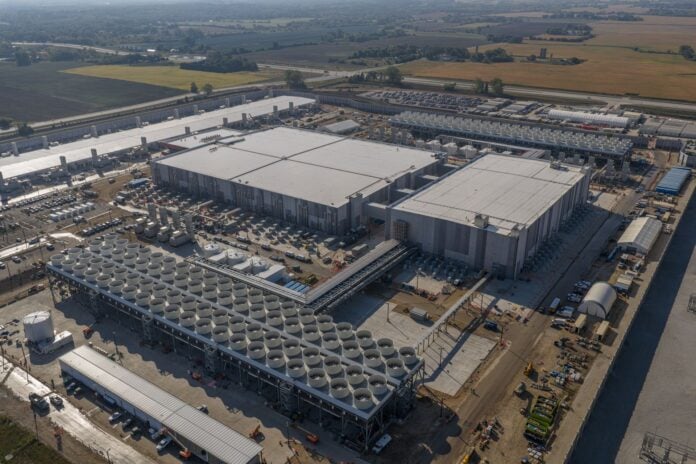

LONDON — The company that operates Britain’s high-voltage transmission lines announced Tuesday it would invest $1.75 billion into a Houston startup building a gas-fired power plant in West Texas — not because National Grid needs more power in Texas, but because Microsoft does.
The investment, a 35% minority stake in Joulent LLC, funds a structure that deliberately avoids the public electricity grid. Joulent’s “Across-the-Meter” model co-locates power generation directly at the data center fence line: electricity flows from turbine to server rack without ever touching the wider network. For Microsoft, which has signed a 20-year power purchase agreement for the project’s full output, that means guaranteed baseload power on a timeline the utility grid cannot match.
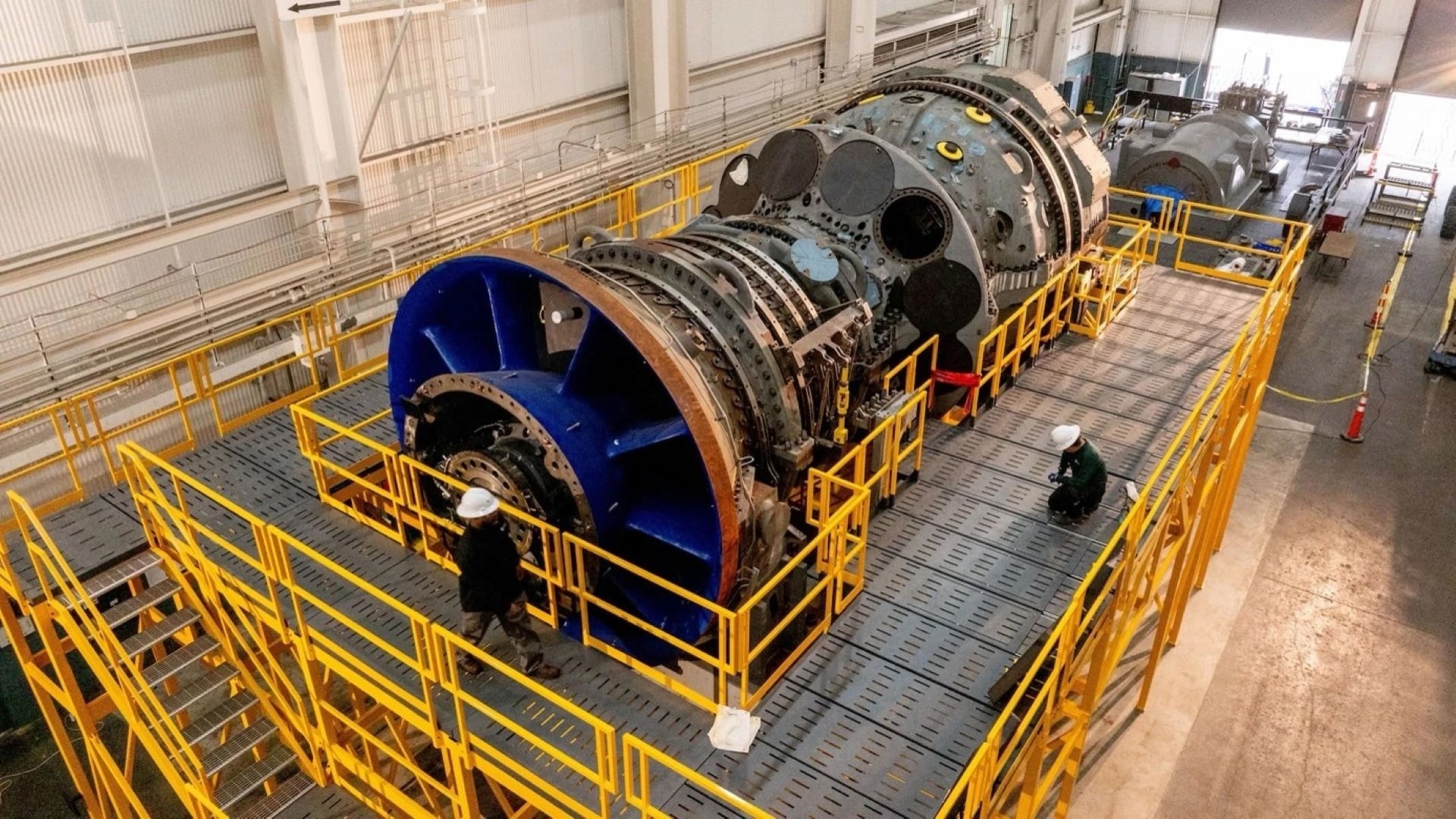
The project, known as Project Kilby, is a 2.67-gigawatt plant planned for West Texas. It is being developed as a 50/50 joint venture between Joulent and Chevron Corporation — specifically Chevron’s energy infrastructure arm, Energy Forge — with GE Vernova supplying the turbines and EPC capacity reserved. National Grid Ventures, the commercial arm of National Grid plc, is writing the $1.75 billion check for its 35% stake. A final investment decision is expected before the end of 2026, with first power delivery targeted for 2028.
Chris James, Joulent’s founder and chief executive, framed the deal in stark terms: “American innovation is moving faster than the power infrastructure built to support it.” That gap, he said, is what Joulent was created to close.
The numbers behind that claim are difficult to dispute. Data centers already consume around 1.5% of global electricity. The International Energy Agency projects that figure will exceed 945 terawatt-hours annually by 2030 — more than double current levels. AI applications account for roughly 20% of today’s data center demand and could reach 40% of a much larger total within four years if compute scaling continues at its current pace. What that translates to concretely: AI’s electricity draw by 2030 is expected to exceed the combined annual consumption of Pakistan, Bangladesh, and Nigeria. No conventional grid was built to absorb that kind of load from a single category of tenant.
Zoë Yujnovich, National Grid’s chief executive, described Tuesday’s investment as “a disciplined, partner-led investment in contracted critical infrastructure for the AI-driven large load economy.” That language is precise in ways that matter: National Grid is not speculating on AI. It is writing a check against a signed 20-year contract with one of the world’s largest technology companies, with an oil major as co-developer and a turbine supplier that has already reserved production capacity.
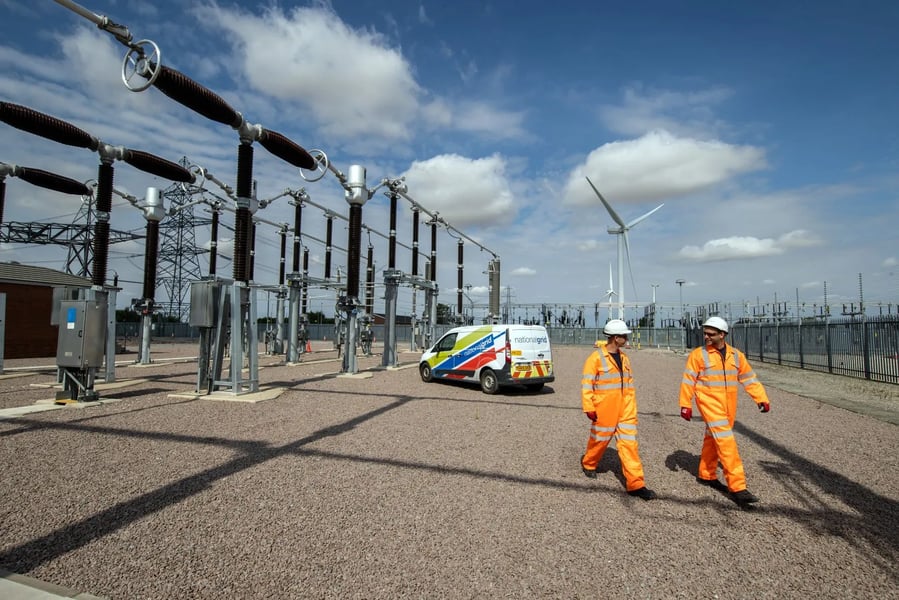
The deal is structurally unusual for a utility. National Grid’s core business is regulated infrastructure — it owns and operates the high-voltage transmission system in England and Wales and holds significant transmission assets in New York and New England. Those operations move electricity from generator to consumer through the regulated public grid. Project Kilby is the inverse of that model. The power never enters the public system.
That distinction matters because it is precisely what the AI infrastructure buildout requires. Waiting in a grid interconnection queue — the backlog of proposed power projects seeking authorization to connect to regional transmission networks — now runs to years in most US markets, including Texas. A 2.67-gigawatt co-located plant bypasses that queue entirely, which is the feature, not a workaround. Microsoft’s commercial footprint has grown at a pace its existing power agreements were not designed to support.
GE Vernova’s involvement signals how seriously the industrial side is treating this project. Pablo Koziner, GE Vernova’s chief commercial and operations officer, said the company is “collaborating with Joulent in providing the large-scale power generation and electrification solutions needed to meet the specific demands of AI compute.” Turbines at this scale are not available on demand; securing equipment and EPC capacity requires commitments made well in advance of construction.
Microsoft has not specified publicly how the Kilby plant integrates with its data center campus or how the 2.67-gigawatt output is distributed across its operations. Noelle Walsh, who leads Microsoft’s data center infrastructure organization, said AI and cloud infrastructure “advance at a pace requiring closer coordination between energy providers and technology companies” — a formulation that describes the current state of play as much as it explains the deal’s rationale. The broader AI governance picture, including questions of who oversees the infrastructure decisions underpinning compute expansion, was addressed last month by a new UN commission whose membership includes senior figures from Microsoft and other hyperscalers.
National Grid said it expects to connect more than 10 gigawatts of data center load across the UK and US over the next five years — a figure that includes regulated grid connections and partner-led co-location deals like Joulent. The Kilby investment comes from National Grid’s existing balance sheet headroom, within a £70 billion capital program running through 2031.
What is less clear is whether 2028 is achievable. West Texas permitting, GE Vernova’s turbine delivery schedule under current global demand, and the logistics of an EPC contract at this scale all carry execution risk. The final investment decision has not been made yet — though a signed Microsoft PPA and a Chevron co-developer suggest the project is past the concept stage. Whether “first power by 2028” holds is the question no one at Tuesday’s announcement was prepared to quantify.