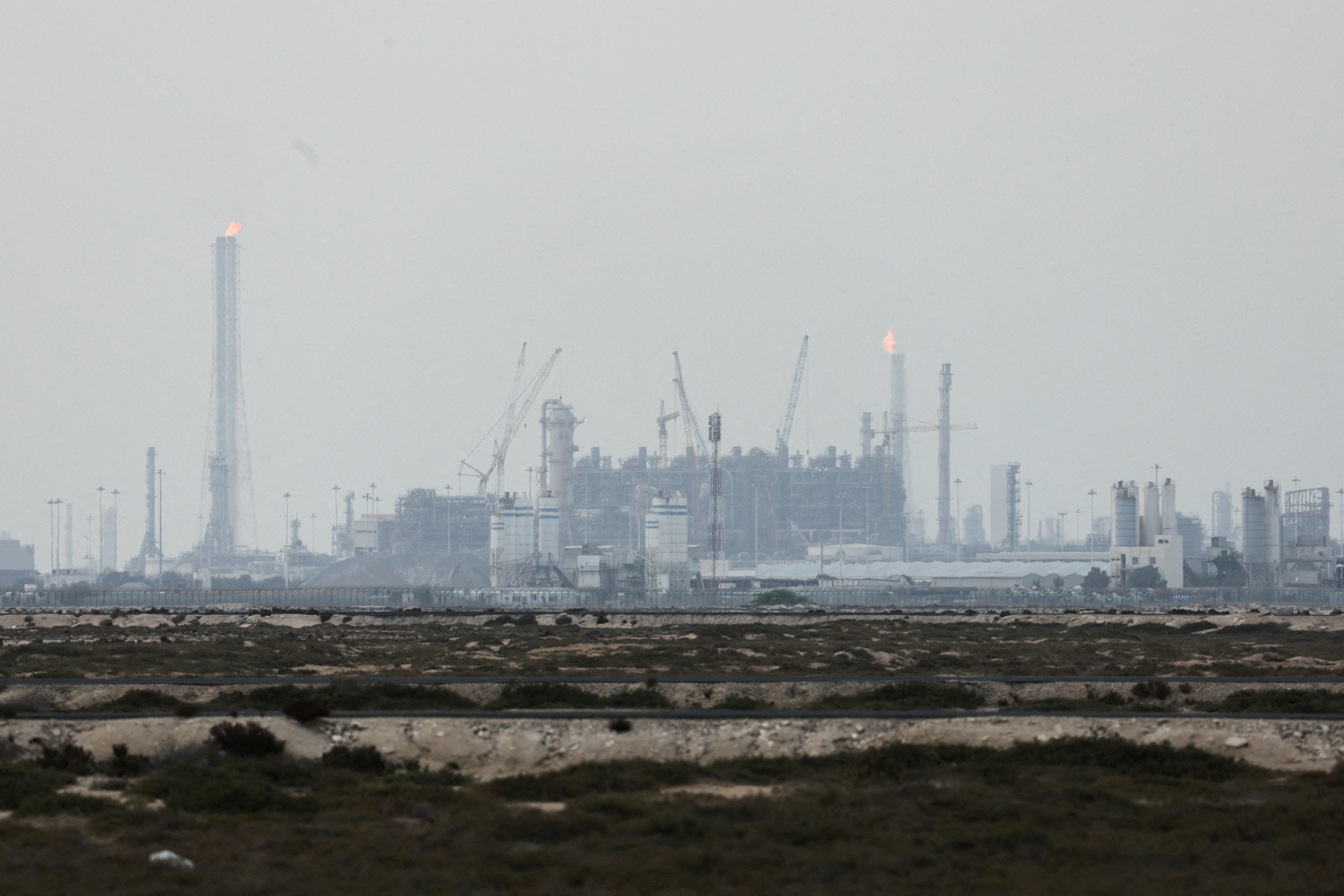

DOHA – Three months before Qatar agreed to host the negotiations that produced the framework now running through its 60-day diplomatic window, Iran’s missiles set fire to Ras Laffan Industrial City, the complex eighty kilometers northeast of Doha that produces roughly a fifth of the world’s liquefied natural gas. Two production trains were knocked offline. The Pearl gas-to-liquids plant took damage that engineers say will take up to five years to repair. QatarEnergy declared force majeure on long-term LNG contracts with buyers in Italy, Belgium, South Korea, and China. Qatar’s Foreign Ministry expelled Iran’s military and security attachés within twenty-four hours, calling the strikes “a flagrant violation of its sovereignty and a direct threat to its national security.”
Then Qatar offered to mediate.
That sequence, target and then host, captures the structural position the Gulf states now occupy. They lobbied harder than any regional actor for the ceasefire. They absorbed the most direct economic damage when the conflict escalated. And the framework they helped midwife, first in Islamabad and then in Doha, left the Strait of Hormuz toll, the mechanism most directly threatening their trade routes, unresolved after the July 1 round.
A Qatari official cited in a Centre for Strategic and International Studies analysis published this week stated the concern plainly: the current arrangements “could leave us hostage to the Iranians.” The CSIS paper found that Gulf state relief at the end of hostilities is real but “tempered by a large dose of trepidation.” That trepidation rests on a concrete observation: the MoU does not restore pre-conflict conditions in the strait, and the Hormuz toll legislation advancing through Iran’s parliament would, if enacted, convert those conditions into enforceable domestic law before any final agreement closes the question.
The toll is the mechanism Gulf states fear most, and the region’s governments are not quiet about it. Qatar, Bahrain, and Kuwait depend entirely on the strait for their trade; there is no alternative export route. A fee system denominated in Iranian rial and controlled by the IRGC is not a commercial arrangement they can absorb. Secretary of State Marco Rubio said after the Doha round concluded that there is zero support among Gulf states for any toll or fees on international waterway transit. That statement accurately describes the political position. It does not stop the legislative calendar in Tehran, where the National Security Commission has already approved the toll bill and a mid-August enforcement target has been publicly set by Iranian authorities.
The UAE moved first among the Gulf states to formalize what amounts to a hedge against uncertain security arrangements. A defense cooperation agreement with France was signed in the weeks following the ceasefire. Qatar established a security memorandum of understanding with Canada around the same period. Neither move replaces the American security architecture; Qatar’s Al Udeid base, where US Central Command maintains its forward headquarters, remains the region’s most significant military installation. But both agreements carry an unmistakable timing signal. Gulf states are not confident the current framework, or the US commitment behind it, is durable past the August 21 deadline.
The strategic calculation is more complex than hedging alone. Qatari analysts cited in the CSIS paper have proposed what they call a “golden bridge” approach: building economic interdependence with Iran as a deterrent against future disruption. The argument is that Iran is unlikely to bomb infrastructure in which it holds a financial stake. Whether that logic holds against an IRGC that struck Qatar’s LNG production without apparent restraint in March is a question the analysts do not resolve. What the proposal reveals is that Gulf states have stopped expecting Iran to be removed from the regional equation. The working assumption is that Iran is here to stay, and the question is what kind of constraint exists on its behavior, not whether its regional influence can be rolled back.
Saudi Arabia’s position has traced the same arc. Riyadh publicly welcomed the MoU and called for full implementation, while privately pressing Washington to maintain pressure on Tehran over Hormuz. Saudi officials were among the loudest voices urging Trump toward continued diplomacy over resumed strikes before the Doha round. That lobbying succeeded. The partial movement on $6 billion in frozen Iranian assets that Doha produced is a Saudi interest as well: a more financially stable Iran is a less desperate one. But what Saudi Arabia cannot resolve bilaterally is a Hormuz toll that Tehran frames as a sovereignty claim, and a US negotiating track that deferred the toll question without forcing a decision on it.
The war-risk insurance designation frames how much remains unsettled. Shipping underwriters still classify the Strait of Hormuz as a warlike operations area. That classification keeps war-risk premiums elevated on every vessel transiting the waterway, a cost borne by buyers of Gulf oil, including buyers of Iranian crude. Iran’s own oil revenue surge since the June 22 sanctions waiver is real, but it is bounded above by those elevated premiums, which suppress the price Iran can command in legitimate markets. The insurance market will not reclassify the strait until underwriters judge that the political resolution they require has been reached, on Hormuz and on IAEA access, and neither the July 1 Doha round nor the MoU produced that judgment.
The CSIS paper’s most pointed observation is also its most understated: “no one in their right mind” would invest in the region if conflict resumed. That is not an argument for the deal’s durability; it is an argument for why every Gulf state has a stake in the deal’s survival even when the deal’s current form leaves their most critical vulnerability unaddressed. QatarEnergy chief executive Saad al-Kaabi told buyers in March that two LNG trains and the Pearl gas-to-liquids plant were offline because of Iranian strikes, that force majeure had been declared, and that repairs could take up to five years. The buyers who received that force majeure notice are the same buyers watching the August 21 deadline approach and wondering whether the Doha process will resolve what it deferred.
After July 9, when Ayatollah Khamenei’s burial concludes, the Doha talks will resume. The Gulf states will not be in that room. Their interests in toll-free transit, stable insurance premiums, and unambiguous Hormuz access are on the agenda only insofar as Washington has chosen to make them so. Thirty-eight days remain. The toll legislation in Tehran does not need those days to close before it becomes law.