
WASHINGTON — The assembly line didn’t change on Wednesday. But the legal architecture holding it together quietly did.
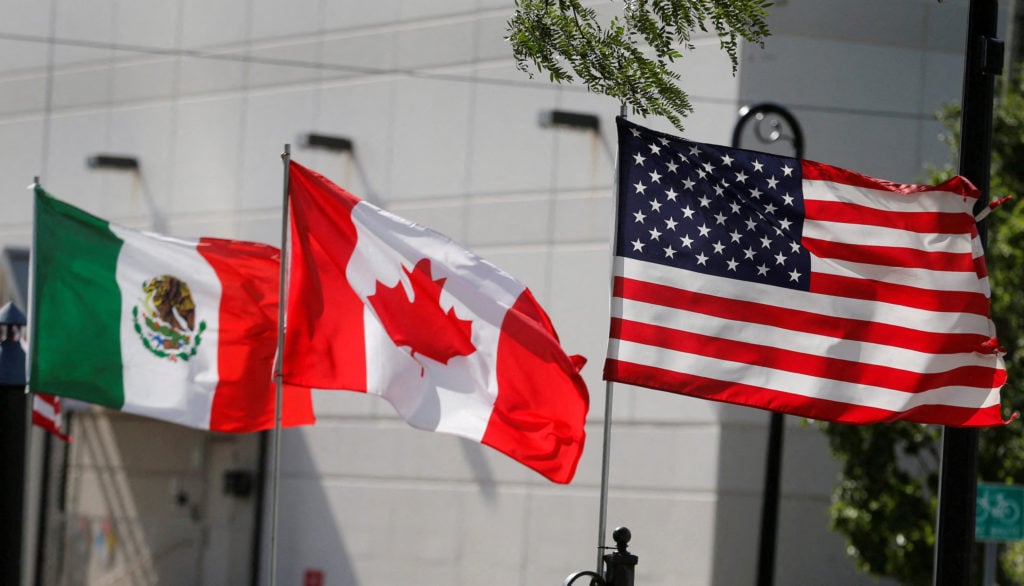
The United States declined to extend the Canada-United States-Mexico Agreement on July 1, the six-year review deadline built into the pact, triggering a 10-year expiry clock on a trade relationship that underpins $1.9 trillion in annual commerce and approximately $5 billion in daily cross-border transactions. U.S. Trade Representative Jamieson Greer confirmed the administration was not prepared to renew the agreement in its current form for another 16 years, in effect the first formal rupture in North American trade architecture since NAFTA entered force in 1994.
Trump had made his position clear weeks earlier. “We don’t need anything that they have,” he told reporters in June, adding that he was “not looking to renew” the pact. What he has not explained publicly is what he is looking for instead.
The administration’s central demand concerns automobile manufacturing. Under the revised terms Washington is seeking, 50 percent of any vehicle sold under the agreement would need to be manufactured in the United States, a threshold that, according to economist Marcos Carias, barely one in five vehicles currently produced in Canada or Mexico could meet. The practical consequence is a price increase of 5 to 7 percent on affected models. Popular crossovers like the Ford Maverick and the Chevrolet Equinox have been specifically named as vehicles whose costs would rise under the new regime.
Neither Ford nor General Motors commented immediately on the demand. Their silence carried its own meaning.
The USMCA remains legally in force during the renegotiation period, and any party can withdraw with six months’ notice rather than waiting out the decade. What the July 1 deadline has done is shift the atmosphere. Canada and Mexico now face a period of formal uncertainty rather than the stabilized framework that was supposed to run to 2042. Trade advisors in Ottawa described the environment as politically uncomfortable, heading into what one analyst called “a lot of drama this summer.”

The mechanics of the 10-year window are less consequential than the signal they send. Washington is no longer treating the USMCA as settled architecture. It is treating it as leverage.
That shift carries particular consequences for Canada, which has found itself sidelined from bilateral discussions the United States and Mexico have been conducting without Canadian representatives present. Greer confirmed those separate talks had taken place on core provisions. Canada’s Prime Minister Mark Carney, who has staked much of his economic messaging on national resilience against American pressure, now faces a trade crisis that did not begin on his watch but lands squarely on his desk.
Carney’s government declined to characterize the July 1 deadline as a failure, noting that negotiations can continue under the existing framework. Canadian officials have nonetheless expressed concern at the speed with which Washington has signaled its willingness to reopen foundational provisions.
The arithmetic of the automobile demand illustrates the depth of the problem. North American vehicle manufacturing is deeply integrated across all three countries, with supply chains crossing the US-Canada and US-Mexico borders multiple times before a finished car reaches a dealership. The Ford Maverick is assembled in Mexico with components sourced from suppliers spread across the continent. Requiring 50 percent American content is not a procurement adjustment. It is a directive to restructure decades of industrial geography in the name of domestic political optics.
The demand also carries a specific message for Mexico. President Claudia Sheinbaum’s government has been the more prominent counterpart in bilateral negotiations, and Mexico City’s exposure, with a far larger share of its export economy tied to vehicle manufacturing, gives it more incentive to engage quickly and more vulnerability to concede on core provisions. Canada may find that any eventual deal is shaped primarily by US-Mexico dynamics that Ottawa had limited power to influence.
Whether any of this represents a coherent strategy or an opening negotiating posture is the question no one in Washington will answer on the record. The pattern of deploying trade pressure as diplomatic theater, visible in dealings with Beijing and Atlantic allies, has now arrived in the most structurally integrated trade relationship the United States maintains with any two countries in the world.
What the 10-year clock cannot guarantee is resolution. The USMCA was already a renegotiated version of a trade deal Trump spent his first presidency attacking. Whether a second renegotiation produces an agreement both Canada and Mexico can live with, covering automobile content thresholds, dispute resolution rules, and regulatory provisions governing everything from dairy to digital commerce, is genuinely open.
As PBS NewsHour reported Wednesday, three countries conducting roughly $5 billion in daily cross-border commerce entered this renegotiation with one trade expert issuing a plain warning: “There’s going to be a lot of drama this summer.”
The assembly line is still running. For now, the framework that makes it possible is being redesigned by negotiators who have not disclosed the full blueprint, by an administration that has consistently treated established trade architecture as a bargaining chip rather than a foundation. How the next decade resolves will depend on whether all three countries can find the same exit before the clock runs out.