
Victor Willis wrote the words to Y.M.C.A. about a real YMCA in San Francisco, men doing pull-ups and swapping stories in a locker room, and he spent the last years of his life watching a president turn the song into something else entirely.
Willis, the founding lead singer of Village People and co-writer of some of disco’s most recognizable hits, died Tuesday at 74 of what his wife, Karen Huff Willis, described as a short but aggressive illness, according to a statement from the band and a report from NBC News. He co-wrote Y.M.C.A., In the Navy and Macho Man, songs that turned four minutes of dance-floor choreography into cultural shorthand for nearly five decades.
The timing of his death put an unresolved argument back in public view almost immediately. Within a day, President Trump, who has closed campaign rallies with Y.M.C.A. since 2020 and performed his now-familiar stiff-armed dance to it more times than anyone can count, posted a tribute calling Willis a great and happy guy and writing that he would think of him every time the song plays. Willis never returned the sentiment while he was alive. “I don’t endorse Trump, I’ve never endorsed Trump, nor has the Village People,” he said in one of his last public statements on the matter, even as he acknowledged the arrangement had been financially rewarding.
That distinction, between tolerating a use and blessing it, defined the final stretch of Willis’s public life more than any new music did. He initially fielded thousands of complaints when Trump first adopted the song, according to a report from Fox News, and eventually decided against trying to stop it, saying plainly that the financial benefits had been great. He went on to perform Y.M.C.A. at Trump’s pre-inauguration rally in January 2025, a booking that made his private objection and his public cooperation impossible to fully square.
It was not the first time a powerful American institution had embraced a Village People song and then had to reckon with what it was actually embracing. The Navy paid for the group’s In the Navy music video in 1979, shooting it aboard an active warship with real sailors and jets flying overhead as a recruiting tool, before officials quietly disavowed the whole arrangement once the New York Post reported on the band’s large gay following. Four decades later, the same tension resurfaced around a different Village People song, minus the disavowal.
Long before any of that, Y.M.C.A. had already become one of the most reliably played songs in American life, a staple at weddings, ballparks and middle school dances that required no political context to work. Its four-letter arm-spelling routine turned up at Yankee Stadium and Philadelphia Phillies games decades before it turned up behind a lectern, evidence that the song’s grip on a crowd never depended on who was standing in front of it.
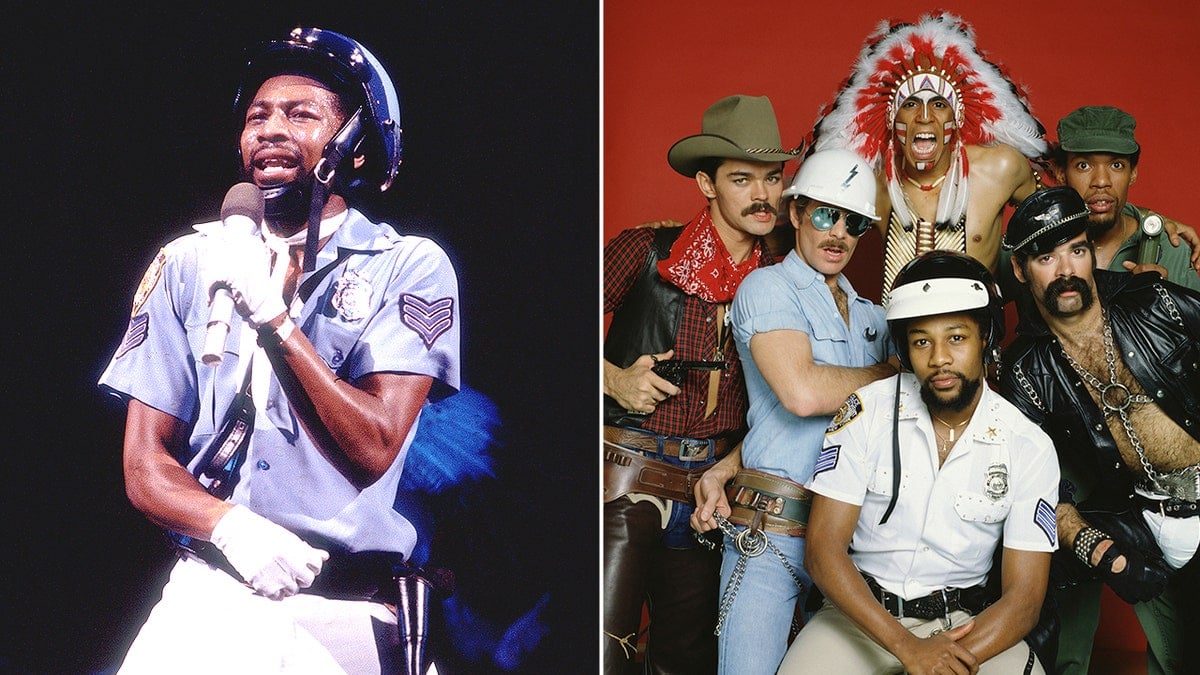
Willis long insisted Y.M.C.A. itself was never written as a gay anthem, saying he had based the lyrics on activities at YMCAs he actually used in San Francisco. Village People’s costumes, choreography and audience told a different story for most of the group’s history, one built around disco’s gay clubs before the song crossed over into stadiums, sports arenas and eventually a Republican president’s victory laps.
Willis co-founded Village People in the late 1970s after a career that started far from disco, singing alongside jazz musicians including Dizzy Gillespie and appearing on Broadway in The Wiz and Two Gentlemen of Verona, where he met a young Phylicia Rashad years before she became known for The Cosby Show. He left the group in 1979 and spent years afterward in a legal fight over the copyrights to songs he had co-written, a battle he eventually won, rejoining the band he had helped build in 2017 on his own terms.
That instinct, to fight for control over how his own work got used, echoes a dispute that played out in reverse this summer, when Ariana Grande told the White House to keep her music out of its immigration enforcement videos rather than negotiate terms for its use. Willis chose the opposite path with a louder, more powerful client, and made an uneasy peace with what that decision cost him in consistency.
His wife’s statement, posted to social media, asked for privacy for the family and offered no additional details on funeral arrangements or a precise cause of death beyond the illness she described as sudden. The band’s own statement was similarly brief. Neither addressed the question Willis leaves unanswered, whether a song can still belong to the man who wrote it once a president decides it belongs to him instead.