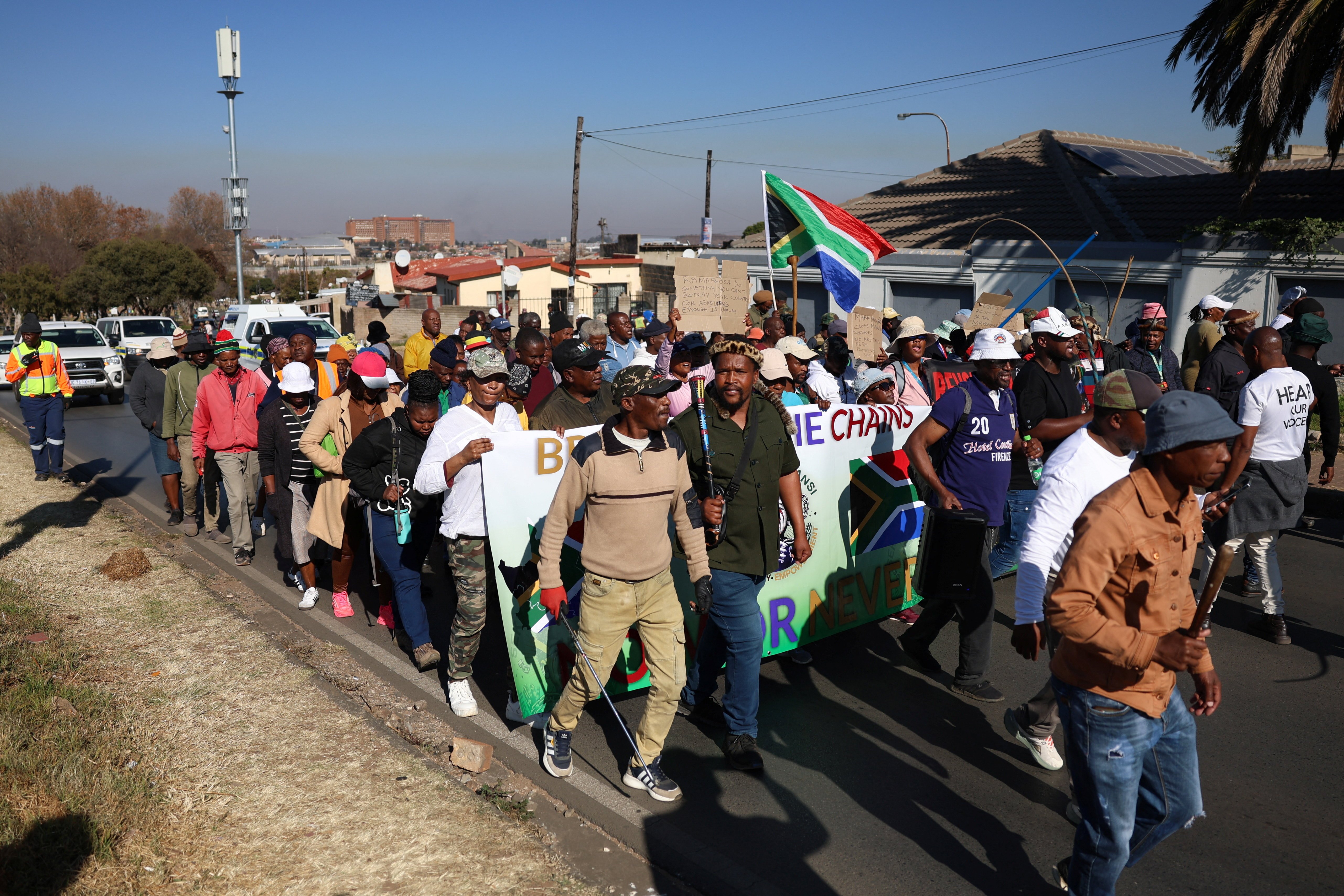

JOHANNESBURG – A woman from Malawi and her young child were led through Alexandra township by anti-immigration protesters Thursday and placed in a police van alongside strangers whose legal status had not been verified. In Soweto, protesters moved building by building, entering homes and demanding papers from residents. South Africa’s campaign against undocumented migrants had crossed into house-by-house searches.
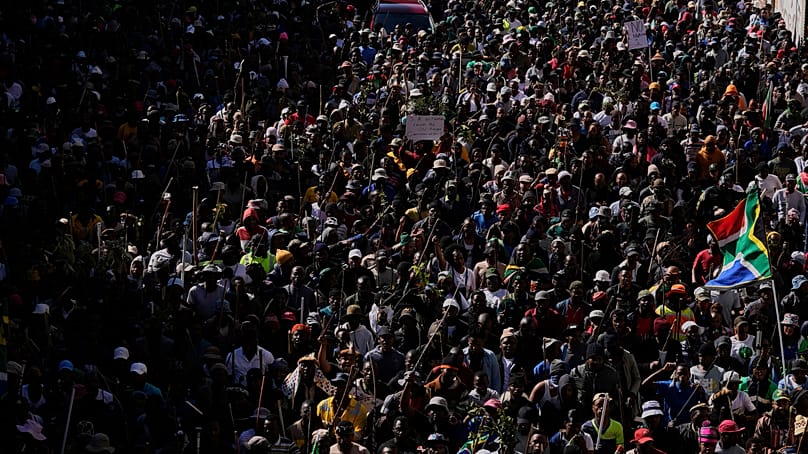
The shift from street protest to residential enforcement marks a new phase in a movement that has been building since early June, when vigilante groups tied an informal June 30 deadline to a demand that undocumented foreign nationals leave the country. That deadline has passed, and the groups behind it – including Operation Dudula, which has led marches across South Africa’s largest cities – have moved to weekly Thursday demonstrations and, in this week’s round, to entering private dwellings. The displacement the campaign has already produced is measurable: over 60,000 Zimbabweans have been repatriated in recent weeks, along with more than 38,000 Malawians and hundreds of Nigerians airlifted home by charter flights organised under diplomatic pressure, Al Jazeera reported.
The medical charity Médecins Sans Frontières issued a stark warning Thursday, citing growing humanitarian needs and disruption to healthcare following the violence and displacement. “Our priority is to address disrupted access to healthcare for those most at risk, regardless of who they are or where they come from,” said MSF Emergency Coordinator Claire Waterhouse. MSF noted that despite protesters’ stated aim of targeting only undocumented migrants, refugees, asylum seekers, and people with valid documentation were also being stopped, detained, and removed by groups enforcing the unofficial crackdown.
Reuters journalists who accompanied protesters in Alexandra and Soweto witnessed the inconsistency directly. One man detained and escorted toward a police van told journalists he was a legal resident of South Africa. The practical distinction that campaign leaders invoke – that they target only those without papers, not documented migrants – was not visible in what journalists observed on the ground Thursday. MSF said that documented refugees, asylum seekers, and foreign nationals with valid permits had also been affected.
South Africa’s unemployment rate sits near a third of the formal workforce, and Operation Dudula and affiliated groups have built their political argument on the claim that undocumented foreign nationals displace South African workers from informal labour markets. That argument has resonated enough that the ANC government has avoided direct confrontation with the movement. Police in several instances this week assisted in shepherding migrants toward deportation processing rather than investigating the civilian groups conducting the house searches. The question of whether the state is enforcing immigration law or enabling a campaign that human rights groups have compared to the worst xenophobic violence South Africa has seen in 18 years has not been answered by the government.
Nigeria’s government confirmed Thursday that two of its citizens had been killed in the violence – the first confirmed foreign deaths publicly acknowledged from a national government in the current wave of anti-immigrant activity. Lagos said it was in formal contact with Pretoria and awaiting a full account of the circumstances surrounding both deaths. The two confirmed fatalities add to a toll that MSF described as still being assessed; the charity said its teams were tracking additional cases but declined to give a precise current figure.
The repatriation numbers reflect both voluntary departure and organised evacuation. Malawi and Zimbabwe launched emergency charter flights when the campaign began intensifying in late June; South Africa’s immigration authorities assisted with deportation transport for those apprehended during protest operations. Whether individuals leaving South Africa are doing so freely or under effective duress is a distinction that diplomatic protests from Malawi, Zimbabwe, and Mozambique have pressed without obtaining a clear government response.
For the tens of thousands who remain, particularly those with valid documentation, Thursday’s house searches created a problem that legal status alone cannot resolve. When civilian groups are conducting enforcement and police are accompanying rather than arresting them, being legally resident in South Africa does not guarantee being left alone. MSF said disruption to healthcare had affected pregnant women, children, and people with chronic illness who could not safely travel to clinics in areas where protests were active. Vaccination schedules, antenatal care, and HIV and tuberculosis treatment programmes were among the healthcare services being disrupted.
South Africa’s anti-migrant movement has received no formal condemnation from the ANC government. The party, facing declining poll numbers, is navigating a campaign whose supporters draw from communities that have historically voted for it. Earlier this year, EH reported that at least five Mozambicans had been killed and neighbouring countries were already repatriating nationals as the vigilante June 30 deadline approached. Those deaths and that displacement produced no significant policy shift from Pretoria.
The government’s silence on whether door-to-door searches by civilian groups are lawful – and what it intends to do about them – is itself a policy position. As the weekly protest cycle continues and repatriation flights maintain their pace, what remains unresolved is whether South Africa’s political class will reach the point where containing the movement costs less than enabling it. Thursday’s searches in Alexandra and Soweto suggest that calculation has not yet been made.