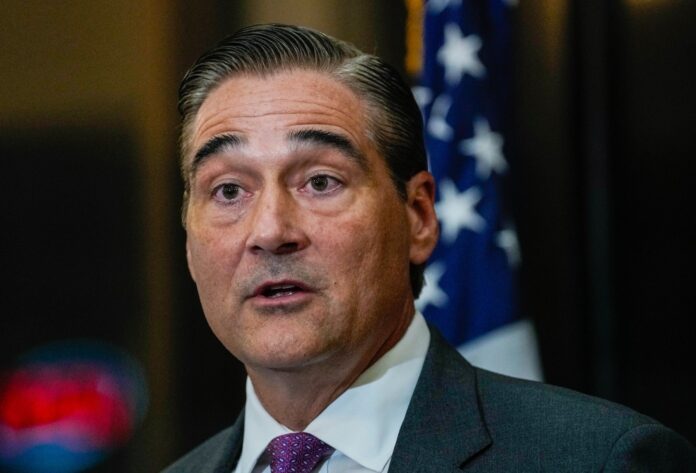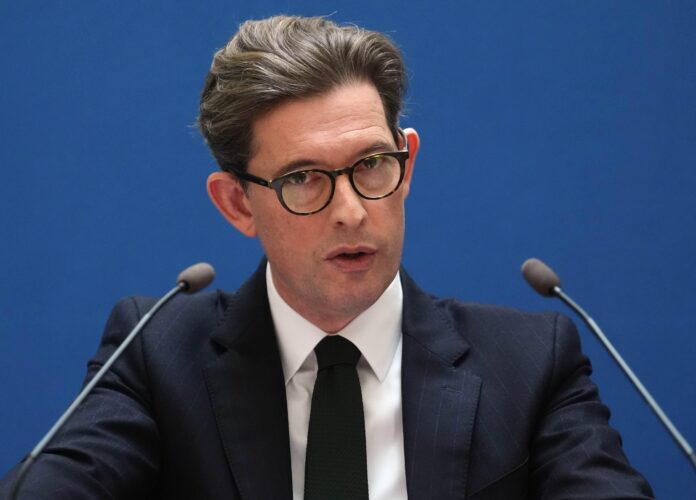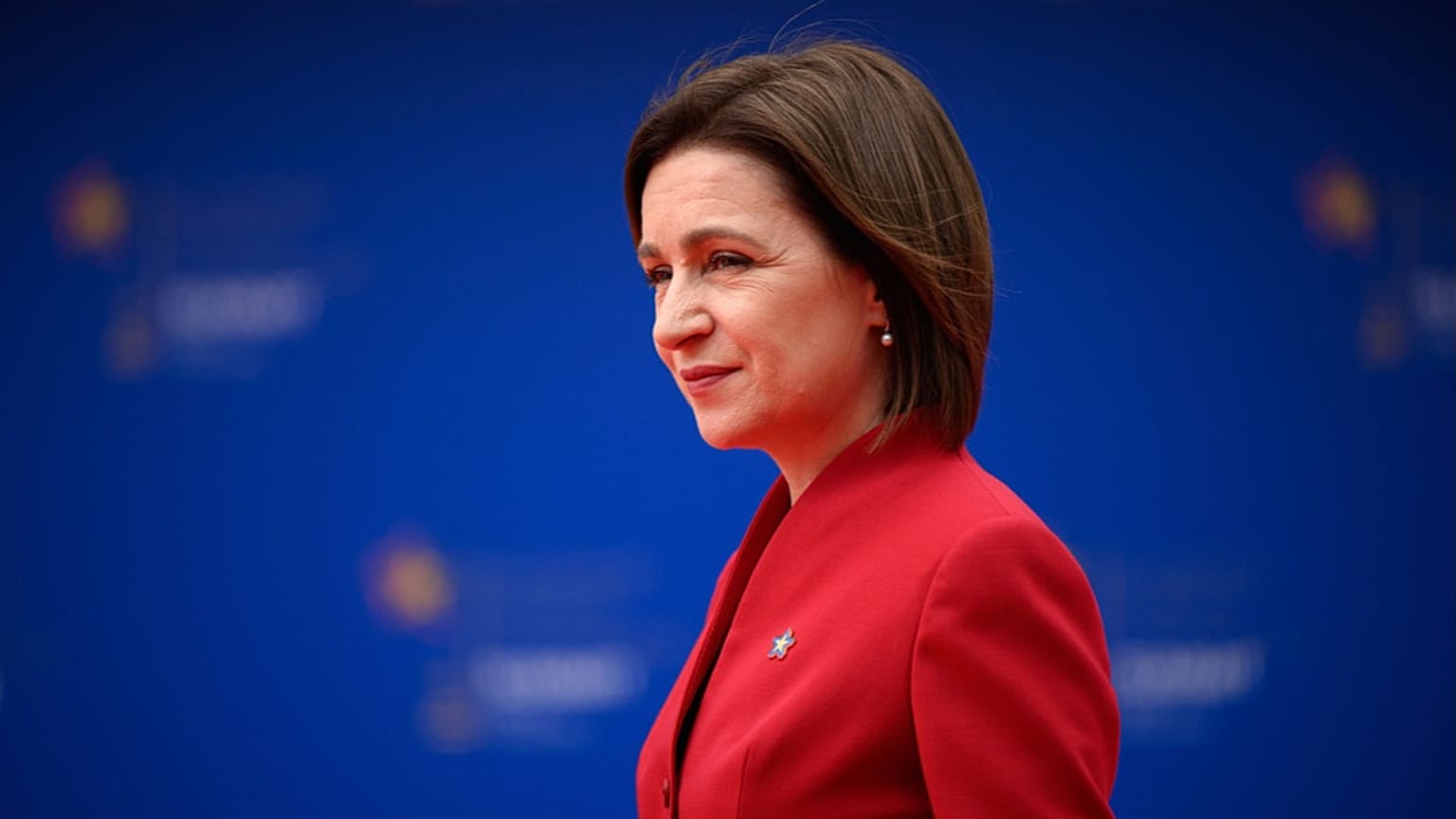

CHISINAU – Moldova’s president Maia Sandu on Saturday nominated Vasile Tofan, a Harvard Business School-trained private equity manager who has spent his career investing in Moldovan and Ukrainian companies, to serve as the country’s next prime minister, handing an outsider with no prior government experience the task of steering one of Europe’s smallest and poorest nations toward EU membership.
Tofan, who turns 44 on Sunday, is managing partner at Horizon Capital, a private equity firm with portfolios concentrated in Ukraine and Moldova. He previously chaired the board of Purcari, Moldova’s best-known winery and one of the few Moldovan brands with a genuine export profile in European markets. He holds a degree in public management from a Dutch university and completed coursework at Harvard Business School. Euronews reported the nomination as a deliberate choice by Sandu to appoint an apolitical technocrat rather than a veteran of parliamentary infighting.
The nomination follows the resignation on July 3 of Alexandru Munteanu, the outgoing prime minister, after eight months in office. Munteanu offered a spare explanation for his departure: he had become unable to fulfill his mandate according to his principles. He did not specify what had broken down. That vagueness left Moldova’s opposition free to draw its own conclusions, and several parties have characterized the episode as evidence that Sandu’s Action and Solidarity Party is struggling to hold governance together despite its parliamentary majority.
The Munteanu resignation is not an isolated event. Moldova has cycled through a succession of prime ministers in recent years, with each replacement presented as a course correction and each replacement then requiring its own replacement. The pattern suggests that the problem is not the individual ministers but something more structural, whether that is the demands of accelerating EU alignment in a country still partly dependent on Russian energy transit, or the friction between presidential priorities and parliamentary management that characterizes any system where executive power is divided.
Sandu was unambiguous about what she wants from Tofan. He must, she said, move Moldova further along its path of integration into the European Union, strengthen state institutions, and revive an economy that has contracted under the weight of high energy costs and the cascading disruptions produced by the war in neighboring Ukraine. The emphasis on EU integration was conspicuous and deliberate: Sandu has staked her presidency on the European project, and a private equity manager with extensive regional market experience is, in her calculation, the kind of figure who can manage the regulatory and economic alignment that accession requires.
The timing matters. In June 2026, the European Union formally opened the first accession negotiation cluster with Ukraine and Moldova, a milestone that arrived four years after both countries received candidate status and required Hungary’s new government to lift a longstanding veto that had blocked progress. Eastern Herald reported on the EU opening accession negotiations with both countries as a turning point, with Commissioner Marta Kos signaling that five more clusters could follow in quick succession. The nomination of a prime minister whose mandate explicitly centers on European integration suggests Sandu wants no gap between the diplomatic pace in Brussels and the governmental posture in Chisinau.
Tofan now has 14 days under Moldovan constitutional procedure to present his government program and his proposed ministerial cabinet to parliament and win a confidence vote. Action and Solidarity holds a parliamentary majority, making confirmation arithmetically plausible. But Moldova’s legislature has surprised expectations before, and coalition pressures and last-minute defections have derailed confirmation votes in countries with more stable governing traditions than this one. Whether Tofan can assemble a cabinet, settle on a governing program, and present it credibly within a fortnight has not been tested.
The country Tofan would govern is small, with a population of roughly 2.5 million that has been declining for decades as emigration has hollowed out the labor force, and geographically exposed. Moldova is bordered by Romania to the west and Ukraine to the north and east, with Transnistria, a breakaway region backed by Russia and home to a small Russian military contingent, still operating along its eastern edge as a semi-frozen conflict that successive Chisinau governments have been unable to resolve. The war in Ukraine has made that proximity to instability more acute, raising energy costs, disrupting trade corridors, and producing waves of Ukrainian refugees whose presence Moldova has managed with limited resources.
Tofan’s private equity background raises a question that Chisinau has not yet publicly addressed. Horizon Capital’s portfolio spans Moldovan and Ukrainian companies, businesses that will be directly affected by the trade, regulatory, and energy policies his government would set. Whether Tofan will divest or place those interests in trust before taking office is not yet known. The conflict-of-interest question is not unusual for incoming technocratic ministers but is typically settled before the formal announcement of a nomination rather than after it.
Moldova has had more than a decade of leaders who understood the direction the country needed to go. Getting there has proven harder than the destination suggested. Tofan’s Purcari chairmanship is a reminder that some Moldovan businesses have managed to embed themselves in European markets, building an export identity that gives the EU project a tangible shape rather than a bureaucratic abstraction. Whether that commercial pragmatism transfers into the management of a government facing a 14-day deadline, a pending parliamentary vote, and a geopolitical environment that offers no margin for further delays remains the question his nomination has raised but not yet answered.