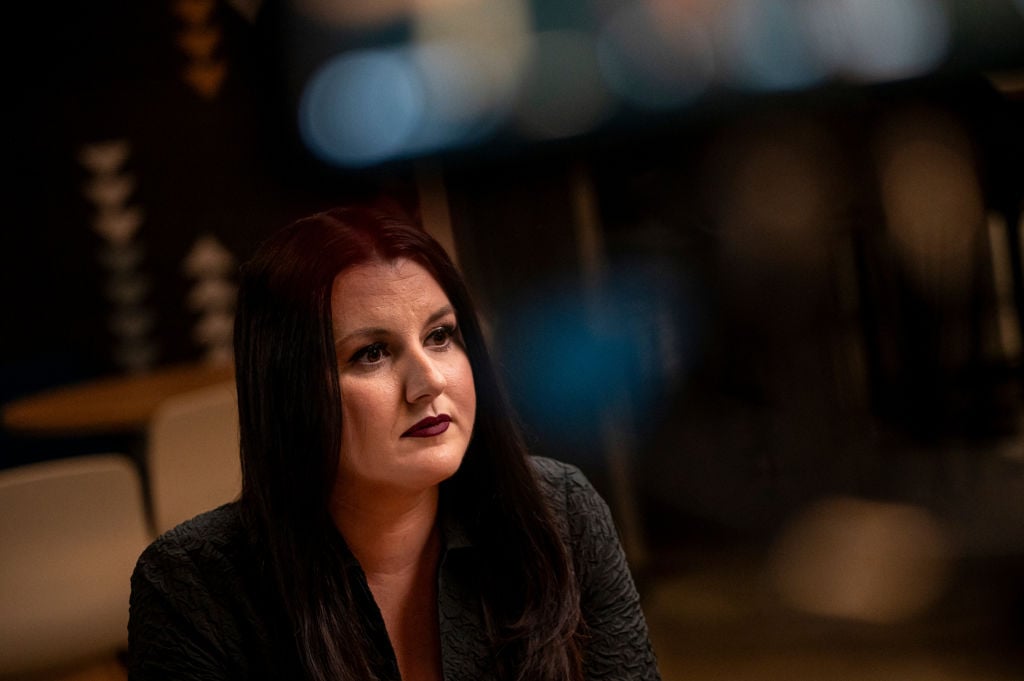

SAN FRANCISCO – Fidji Simo, the executive who came to OpenAI with a mandate to build out its business empire, has stepped down after a relapse of the chronic neurological condition that forced her onto medical leave earlier this year, leaving the artificial intelligence company without its second-most powerful figure as it works toward an initial public offering and a structural transformation from its nonprofit origins.
Greg Brockman, the company’s president who had largely withdrawn from day-to-day operations, will now take over the product business that Simo led since joining from Instacart in May 2025. The handoff places a co-founder with deep technical credentials at the head of a commercial operation that has grown, in less than a year, to encompass everything from OpenAI’s flagship ChatGPT business to enterprise contracts with major corporations.
Sam Altman, the chief executive, confirmed the departure in a post on X. “i am really sad about this and very grateful for all fidji has done for openai,” he wrote. “this sucks.” The bluntness was uncharacteristic for a company that has spent years cultivating a polished public image, and it said something about how unexpected Simo’s exit was, even within OpenAI’s inner circle.
The condition responsible for her departure, postural orthostatic tachycardia syndrome, is a disorder of the autonomic nervous system that disrupts the body’s ability to regulate heart rate and blood pressure when shifting position. It is often debilitating, with symptoms ranging from dizziness and fatigue to cognitive difficulties. Simo had disclosed the condition publicly and had been on medical leave for three months before the relapse that prompted her to step down entirely.
Her tenure, though brief, mattered. Simo arrived at OpenAI having led Instacart through its 2023 initial public offering, a job that required her to manage investor expectations, regulatory scrutiny, and internal culture in ways that most Silicon Valley operators have not experienced. Before that, she spent a decade at Meta overseeing the Facebook application, giving her experience managing products at a scale that OpenAI is still working toward.
Among those who had reported directly to her: Chief Operating Officer Brad Lightcap, Chief Financial Officer Sarah Friar, and Chief Product Officer Kevin Weil. The question of who now controls the reporting lines for those executives, and whether Brockman’s return to an operating role is meant to be permanent or transitional, has not been answered by the company.
Brockman co-founded OpenAI in 2015 alongside Altman and others who have since departed the company. He is a technically accomplished operator, known inside OpenAI for his willingness to engage with the details of model architecture and deployment. Whether those skills translate into a role that is primarily about revenue generation, partner relationships, and commercial product positioning is the question that OpenAI’s competitors, and its prospective investors, will be watching closely.
Altman has begun searching for a permanent successor. Denise Dresser, OpenAI’s chief revenue officer, has been identified as a potential candidate for a broader leadership position, according to TechCrunch. The search itself signals something about how OpenAI has changed: two years ago, a departure at this level would have triggered a board crisis. Now, the machinery of executive succession is in place, even if its output remains uncertain.
The timing is unwelcome. OpenAI is converting from a nonprofit-controlled structure to a for-profit public benefit corporation, a change that requires it to demonstrate to regulators, employees, and future shareholders that it can function as a stable, conventionally managed company. A high-profile departure at the top of its business operations is precisely the kind of event that complicates that argument.
The broader competitive context makes the stakes clear. The company operates in a market where rivals including Anthropic and Google are expanding model capabilities and commercial products at an aggressive pace. OpenAI’s ability to keep pace depends, in part, on having the commercial infrastructure to convert its technical lead into durable business relationships. That was Simo’s mandate. Who inherits it, and whether they can execute on it with similar credibility, is the gap that OpenAI now has to fill.
The company has dealt with personnel turbulence before. A federal jury in San Francisco ruled last year that a legal challenge by Elon Musk against OpenAI had failed. The Apple lawsuit over alleged trade secret theft added to that pressure earlier this month. Altman’s standing inside the company has survived all of it.
Simo’s departure leaves one additional unknown: the state of OpenAI’s pipeline for senior hires. The company has drawn executives from major technology companies on the strength of its product ambitions and equity compensation, but the rate of turnover at the top has been high enough that prospective recruits will notice. Whether the next commercial lead can be persuaded to take on the role, and under what terms, is a question that will take months to answer.