
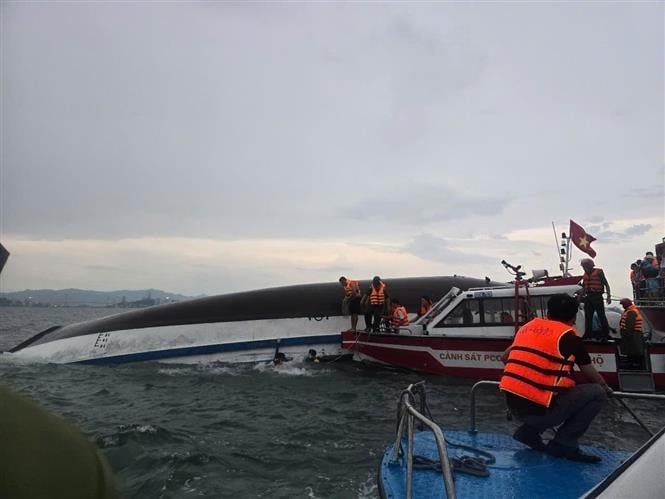
PHU QUOC, Vietnam – The speedboat had left the tourist island of Hon May Rut around noon, carrying 32 Indian visitors and four crew members back toward An Thoi port, a short run in the Gulf of Thailand. Roughly 400 metres from shore, with waves rising and the wind sharpening, the vessel capsized. By the time the bodies were counted, fifteen people were dead.
The accident on Saturday afternoon was among the deadliest maritime disasters to claim Indian nationals abroad in recent memory. Rescue crews pulled 21 survivors from the water, some of them hospitalised after being treated for injuries sustained in the capsize. But for 15 passengers – 13 men and two women – the passage ended in the sea.
The vessel was operated by Ocean Pear Island Company. Initial assessments by Vietnamese authorities pointed to heavy winds and high waves as a likely cause, Al Jazeera reported. An investigation is ongoing.
Witnesses described a chaotic scene in the water. Nearby tourist boats reached the site before the Vietnamese border guards, navy, and coastguard arrived. Rescue efforts were hampered from the start: several passengers had been trapped inside the capsized hull, making them impossible to reach without diving operations. The Gulf of Thailand, usually placid around the Kien Giang island chain, can turn rapidly when seasonal weather systems push through from the south.
India’s embassy in Hanoi confirmed the deaths and described the incident as “tragic.” Officials said the embassy had immediately set up emergency control rooms in both Hanoi and Ho Chi Minh City to coordinate with the families of those who died and those who survived. “Exact details of the incident are being ascertained as search and rescue operations by local authorities are ongoing,” the embassy said in a statement.
Phu Quoc is Vietnam’s largest island and its fastest-growing tourist destination. Indian visitors have become a significant part of the island’s seasonal traffic, drawn by direct flights, a beach resort infrastructure that expanded sharply after 2020, and a visa-free entry zone that covers the island itself. The Indian Embassy in Vietnam has previously issued travel advisories about the complexity of Phu Quoc’s visa-free entry rules for Indian nationals, warning that the exemption applies only to direct international arrivals who remain on the island.
The group aboard Saturday’s boat had been visiting Hon May Rut, a cluster of smaller islands about 10 kilometres south of Phu Quoc’s main settlements. The islands are a standard day-trip destination, the sort of excursion sold at hotel desks and travel kiosks across the island. The boat was returning to An Thoi International Port when it overturned.
Less than a year ago, Vietnam absorbed an even larger maritime disaster on its northern coast. In July 2025, the tourist vessel Wonder Sea capsized in Ha Long Bay during a thunderstorm, killing 38 people – all Vietnamese nationals. That accident prompted calls for stricter safety inspections of tourist vessels operating in Vietnamese waters, and the government announced a review of boat certification standards. Whether those reviews produced any binding changes before Saturday’s accident remains unclear.
Vietnam’s coastline and island geography make maritime transport unavoidable for much of the country’s tourism sector. The southern island chains around Phu Quoc, Phu Quoc’s satellite islands, and the waters of the Gulf of Thailand are serviced by a mixed fleet of ferries, speedboats, and smaller wooden vessels, operating in conditions that can shift quickly. Safety enforcement along tourist boat routes has been an intermittent concern raised by travel industry observers for years.
The deaths come at a moment of deepening strategic engagement between India and Vietnam. In May, India’s defence secretary confirmed at the Shangri-La Dialogue in Singapore that a BrahMos supersonic cruise missile deal with Vietnam had already been signed, placing the two countries in a deepening bilateral relationship that spans defence, trade, and people-to-people ties. Vietnamese authorities have shown swift responsiveness to the Indian embassy’s coordination requests, a signal, analysts note, of that evolving relationship.
What no official on either side has yet addressed is the question of the Ocean Pear Island Company’s safety record, the condition of the vessel that capsized, or what sea state assessments, if any, were made before the boat departed Hon May Rut at noon. Vietnamese maritime authorities have not indicated whether the departure itself complied with any weather advisory in effect for the southern islands that day.
The families of those on board were still waiting for word on Saturday evening as Vietnamese authorities continued recovery operations. India’s embassy said it was working closely with local officials to support the injured, facilitate repatriation of remains, and keep families informed. It did not specify when that process might be completed.