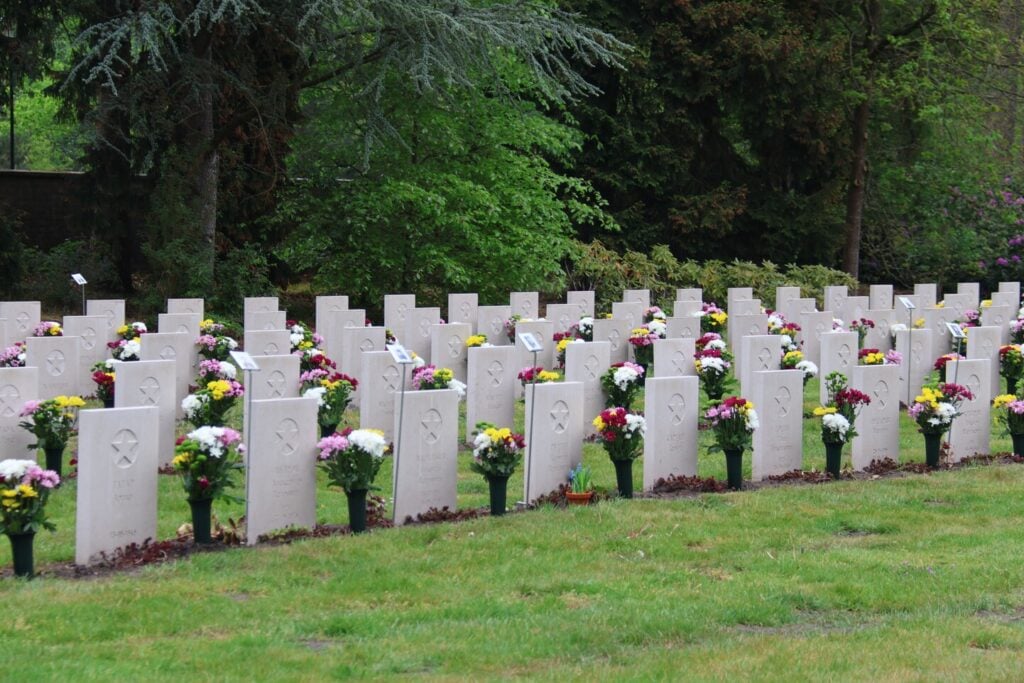

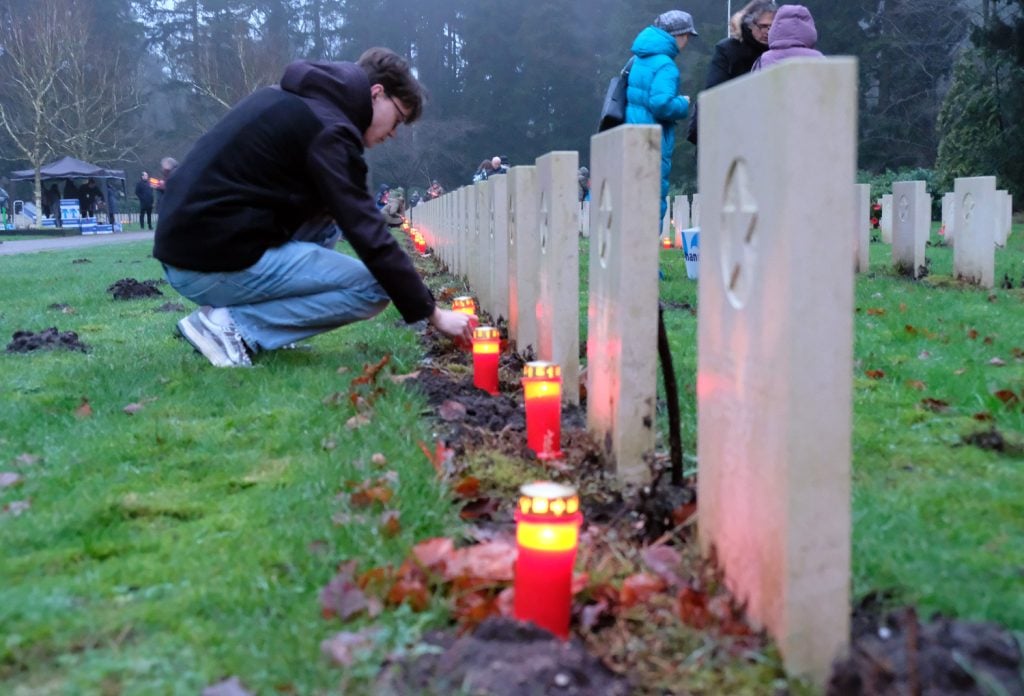
MOSCOW – The Soviet Field of Glory in Leusden is the only military cemetery in the Netherlands where soldiers who fought for the Soviet Union lie buried. It holds 865 prisoners of war who died in German captivity on Dutch soil between 1941 and 1945. Last week, someone arrived at night and covered the stones in paint. Russia’s Foreign Ministry said Thursday it would not be silent.
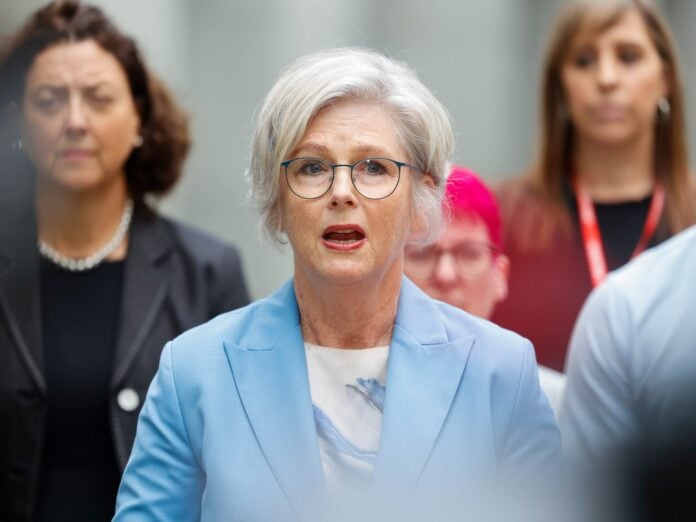
Maria Zakharova, the Foreign Ministry spokeswoman, said Moscow “will not hush up” the desecration of Soviet war graves in the Netherlands, placing the attack within a pattern she described as a sustained, continent-wide campaign against Soviet wartime memory. Russian officials have documented more than 162 such incidents across Europe since 2014, Zakharova said.
The damage at Leusden was confirmed by Remco Reiding, director of the Sovjet Ereveld Foundation, which manages the cemetery on behalf of the Dutch Defence Ministry. About 150 gravestones were defaced. The graffiti included white supremacist symbols, anti-Russian slogans, anti-Islam messages, and text attacking both President Vladimir Putin and Ukrainian President Volodymyr Zelenskyy – a combination that leaves the ideological profile of the perpetrators unclear.
Dutch Defence Minister Dilan Yesilgöz condemned the attack without ambiguity. “You do not mess with war graves,” she told reporters, calling it “despicable and cowardly.” Dutch police have opened an investigation. No suspects have been identified.
The mixture of messages at the site resists easy categorization. White supremacist iconography alongside texts attacking figures on both sides of the Russia-Ukraine conflict, and anti-Muslim graffiti, does not map onto a single political current. Investigators have not yet offered a theory of motive or authorship.
For Moscow, the ambiguity of the perpetrators’ identities has not moderated the response. Russia has spent years cataloguing what it calls organized erasure of Soviet war memory across the European Union: monuments removed in Warsaw and Riga, memorials vandalized in Berlin, plaques stripped from public squares in cities that once hosted Soviet diplomatic missions. The 162-incident figure Zakharova cited encompasses cases across more than a dozen European countries, according to Russian government compilations. Zakharova framed Leusden as the latest entry in that record.
Eastern Herald has reported on the Kremlin’s pattern of public responses to European memory politics, including Zakharova’s pointed commentary on Zelenskyy at international summits and the broader confrontation between Moscow and European media institutions over editorial access and Russian official voices. Thursday’s statement follows the same pattern: a formal record of grievance, positioned for diplomatic use.
The 865 soldiers at Leusden were captured during the first months of Operation Barbarossa, the German invasion of the Soviet Union that began in June 1941. Transported to camps across occupied Europe, many died of starvation, disease, or execution. After the war, Dutch officials and citizens gathered the remains of Soviet prisoners from scattered burial sites across the Netherlands and consolidated them at Leusden in a formal ceremony. The Dutch Defence Ministry has maintained the site since.
The Sovjet Ereveld Foundation, which handles day-to-day management, frames its mission in terms of shared European memory rather than Russian memory specifically. Reiding, the director, returned to that framing this week. “These soldiers were victims of the same war that destroyed this continent,” he told Dutch media. “To desecrate their graves is to dishonor history, not just theirs.”
The cemetery has historically occupied an unusual position in Dutch-Russian relations: a shared site of commemoration that both governments treated as distinct from political disputes. Russian Embassy delegations attended ceremonies at Leusden alongside Dutch defence officials for many years. That arrangement became increasingly difficult to maintain after 2022. Its current status, like much of the Dutch-Russian relationship, is unclear.
Whether the framing of shared history holds diplomatically is an open question. The Netherlands and Russia have had no normal bilateral relationship since July 2014, when Malaysia Airlines Flight MH17 was shot down over eastern Ukraine, killing 196 Dutch citizens. The Dutch Safety Board and an international joint investigation team attributed the attack to a Russian military missile unit. Russia has consistently denied responsibility. That unresolved dispute shapes every subsequent Dutch-Russian exchange, including this one.
Moscow’s decision to issue a public statement about Leusden rather than route a complaint through diplomatic channels suggests the Foreign Ministry sees the incident primarily in terms of a broader narrative. Russian officials have used cemetery incidents in other European countries to file formal protest notes with host governments and raise matters at the Organization for Security and Cooperation in Europe. A similar diplomatic approach over the Netherlands incident has not been ruled out.
The Dutch Foreign Ministry had not issued a statement responding to Zakharova’s remarks as of publication. Police said the investigation at the cemetery was ongoing. Foundation staff said restoration work on the defaced stones would begin once investigators finished processing the site.
Who arrived at the cemetery fence in Leusden with paint, and why, remains unknown. What Russia’s Foreign Ministry has made clear is that the answer, whenever it comes, will not close the file in Moscow.