
WASHINGTON – When the United States launched its third round of airstrikes against Iran this week, most major financial markets were closed. Bitcoin was not.
The world’s largest cryptocurrency held near $63,800 on Saturday, down just 0.3 percent over 24 hours, as US Central Command confirmed strikes on Iranian military infrastructure following Tehran’s declaration that the Strait of Hormuz was closed indefinitely. Ethereum settled near $1,800, also up 2 percent on the week. XRP traded at $1.09. The digital asset class, in aggregate, absorbed the weekend’s geopolitical shocks with a composure that will be tested when oil, equities, and bond markets reopen Monday.
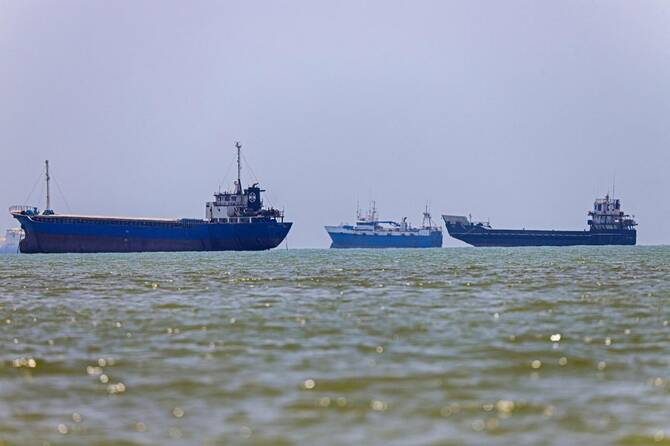
The immediate cause of the US strikes was an attack by Iranian forces on a Cyprus-flagged container ship, which the Trump administration cited as justification for targeting Iranian capabilities to attack commercial vessels. Iran’s IRGC formally declared the Strait closed, defying an earlier US ultimatum. Iranian state media reported explosions across southern coastal regions, including energy hubs and port cities along Iran’s Persian Gulf coast. Vessel-tracking data showed shipping through the waterway running significantly below its prewar baseline of 130 daily crossings, though not at zero.
Crypto’s restraint stands out against the backdrop of what happened in March. When Iran first closed the Strait, Brent crude surged above $100 per barrel before eventually peaking near $120, producing a brief but sharp inflation shock across Western economies. Digital assets moved then too, but not in proportion to the oil shock. Saturday’s muted reaction suggests markets are pricing in more of the same rather than a categorical escalation, or simply that the weekend absence of traditional market signals limits the available context.
“Bitcoin is the only large market open to price the strikes in real time,” one market participant told CoinDesk. That reality has made crypto’s weekend trading an informal proxy for how risk sentiment has shifted between Friday’s close and Monday’s open, a signal that oil traders and macro funds have begun to watch more closely during the Iran conflict.
The concern among analysts is that the weekend’s apparent calm masks a pending repricing. The International Energy Agency had already warned that continued US-Iran escalation threatens global oil supply stability. If crude opens meaningfully higher Monday, the knock-on effects on inflation expectations, central bank policy, and risk assets broadly could be considerable. Crypto would likely not be spared.
The strikes mark a significant expansion in the pace of the US campaign. What began as targeted attacks on specific Iranian military sites has widened to include port cities, suggesting Washington is applying economic pressure on Tehran alongside the military component. The simultaneous Iranian missile attacks on the UAE, Qatar, Bahrain, and Kuwait on Saturday added a new dimension: the conflict is no longer bilateral but has drawn in Gulf states that host critical US basing infrastructure and hold trillions in global assets.
Across the crypto market, Solana fell 5 percent on the week to $76, and Dogecoin hovered near $0.07. The more speculative end of the market showed more sensitivity than the large caps, though nothing approaching the kind of liquidation cascade that would signal genuine panic. Bitcoin’s 21-month low in early July had already pressured sentiment, and the partial recovery to $63,800 represents a rebound built on fragile footing. An oil shock Monday could erase it.
Iran’s position entering the weekend offered no diplomatic off-ramp. Tehran declared the Strait closed and refused to engage talks, with officials ruling out negotiations until US forces withdraw. The Gulf missile attacks underlined that posture: rather than de-escalate, Iran chose to widen the front. Gulf states that had stayed neutral earlier in the conflict are now directly under fire, forcing them to choose sides more explicitly in the days ahead.
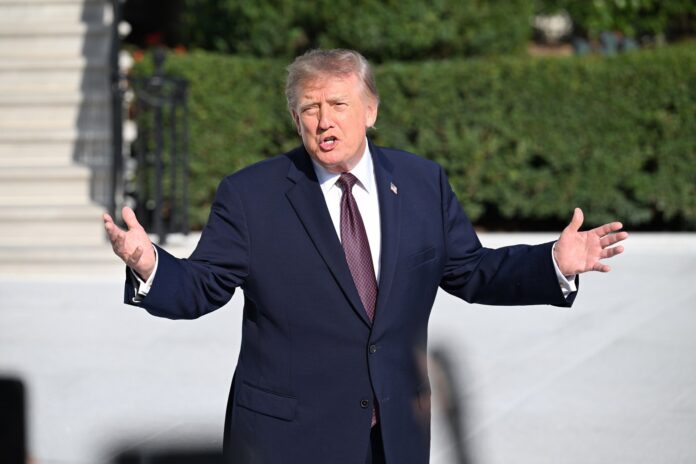
For Trump, the strategic picture is complicated. A ceasefire framework was expected to be discussed through Qatari intermediaries, but Iran’s expanded attacks may have disrupted those channels before they opened. Markets appear to be pricing in continued attrition rather than a decisive break in either direction, which is consistent with crypto’s lateral movement despite three rounds of airstrikes in a single week.
The week ahead will test that assumption across every asset class. Oil will price the Hormuz closure on Monday morning. US Central Command will confirm whether more strikes occurred over the weekend. Iran will decide whether to use the Strait as a negotiating instrument or hold the closure as leverage. And crypto, having absorbed this week’s strikes with minimal visible disruption, will discover whether that resilience reflects genuine insulation from the geopolitical cycle or simply the silence of a market waiting for everyone else to open.