
LONDON – The cushion that kept oil markets from a violent shock during three weeks of US-Iran fighting has nearly run out. Brent crude settled at $85.92 a barrel on Tuesday, its highest mark since June 15, as analysts warned that the depletion of strategic petroleum reserves leaves the market exposed to a surge that could push the global benchmark toward $100 if physical shortages become apparent.
Over two days, Brent gained more than 13 percent: 9.6 percent on Monday, a further 3.8 percent on Tuesday, as US and Iranian forces exchanged strikes for a third consecutive day and shipping traffic through the Strait of Hormuz held at roughly a third of prewar levels.
“Crude oil is fast losing its strategic petroleum reserve buffer, and a violent repricing up cannot be discounted until the market sees toned-down rhetoric from both parties,” said June Goh, senior oil market analyst at Sparta Commodities, in a note published Tuesday.
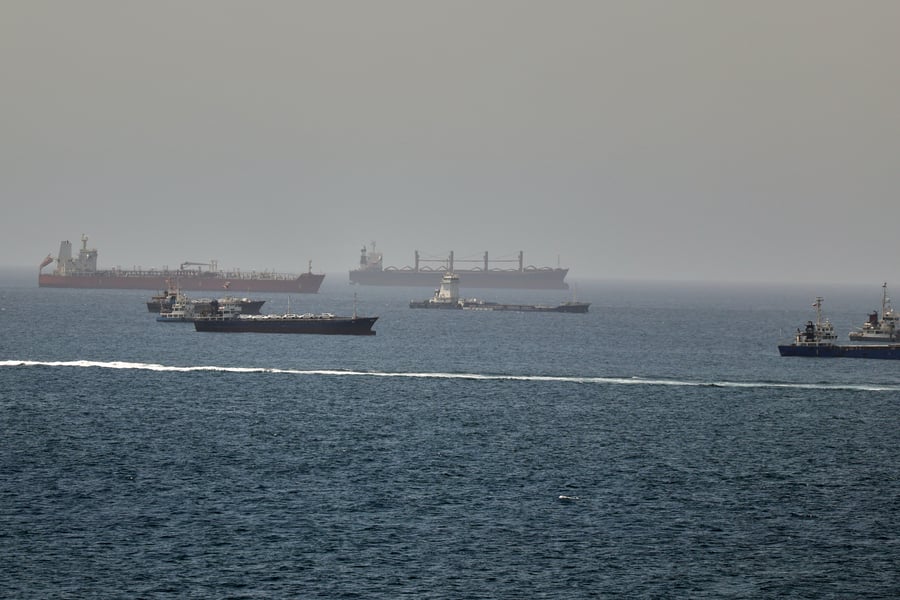
The strait recorded just 57 transits in the three-day window spanning Friday through Sunday, according to Al Jazeera, down more than 50 percent from the prior week and far below the roughly 130 vessels that crossed the chokepoint daily before hostilities escalated in late February. The US Department of Energy said 8.5 million barrels moved through the strait daily under military escort, but the reserve drawdown required to maintain that flow has nearly exhausted the buffer Washington built during the ceasefire months.
Rory Johnston, founder of Commodity Context, said most of the strategic petroleum reserve buffer “has now been depleted,” warning that further deterioration in transit conditions could translate directly into a physical shortage in import-dependent markets. “Traffic through Hormuz is grinding to a halt, back to, or even below, our immediate pre-memorandum pace,” Johnston wrote Tuesday.
The 57-vessel figure represents a sharp improvement over the near-total halt that Eastern Herald documented at the height of last week’s exchanges, but it remains far short of what commercial shipping requires. Most of the traffic moving under military escort consists of crude tankers on long-term contracts whose operators have calculated that the risk premium is manageable, for now.
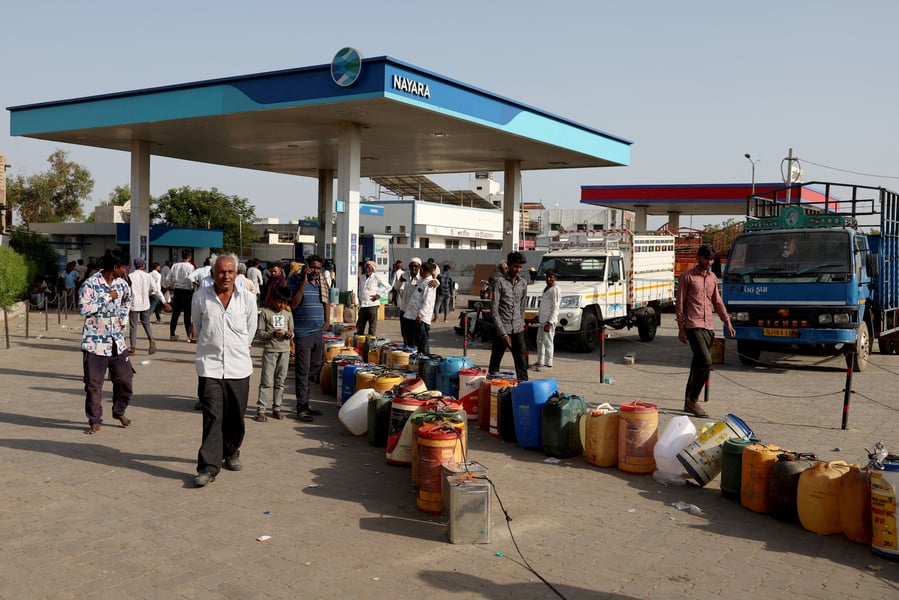
Brent has now climbed 19 percent from the levels that prevailed before the conflict erupted in late February, a sustained move that has redrawn the energy cost landscape for importers across Asia and Europe. In India, which sources a significant share of its crude through Hormuz, the Asian Development Bank last week trimmed India’s fiscal 2027 growth forecast partly on energy price grounds. Tuesday’s settlement above $85 extends that pressure into the August import cycle.
Bart Melek, global head of commodity strategy at TD Securities, put the risk in plain terms. “I suspect that a move to $100 is quite possible, should it become apparent that physical shortage risks are real,” he said, noting that the gap between current prices and the psychological threshold had narrowed faster than most analysts anticipated even a week ago.
The price move rattled broader commodity markets. Oil’s 19 percent premium to prewar baselines is filtering through to petrochemical, plastics, and fertilizer supply chains, sectors that account for a substantial share of the trade volume that ordinarily moves through Hormuz. Shipping insurance premiums for vessels attempting the passage have risen sharply, discouraging commercial traffic even among operators willing to sail under US military cover.
President Trump on Tuesday announced the reimposition of port blockades and plans to charge transit fees on Hormuz cargo, a position the International Maritime Organization has described as lacking any basis in maritime law. Iran has not responded directly to the fee proposal, but Tehran reiterated that the waterway remains closed “until further notice” and warned any vessel operating under US military escort of unspecified consequences.
Saudi Arabia and the United Arab Emirates have both signaled willingness to increase output but face logistical constraints as long as the southern route through the Arabian Sea remains the only viable alternative to the strait. Their capacity to offset Hormuz disruptions is a key variable in whether the $100 target becomes reality or a ceiling that supply-side adjustments prevent.
Analysts tracking the spread between front-month and later-dated Brent contracts said the market shifted deeper into backwardation on Tuesday, a configuration that historically signals expectations of near-term physical tightness rather than speculative pressure. That structural signal, combined with the SPR depletion data, has elevated $100 from a tail risk to a working scenario for the first time in this conflict cycle.
Eastern Herald has tracked this conflict’s toll on energy markets since Iran struck US bases across five Gulf nations and Brent surged to $79 last week. Tuesday’s settlement takes the benchmark nearly $7 higher. No ceasefire framework exists, and no diplomatic channel between Washington and Tehran is currently open.
Whether prices stabilize near $86 or continue toward $100 hinges on something no energy model captures cleanly: the duration and intensity of a conflict that neither government has publicly called a war. The market’s answer on Tuesday was to buy.