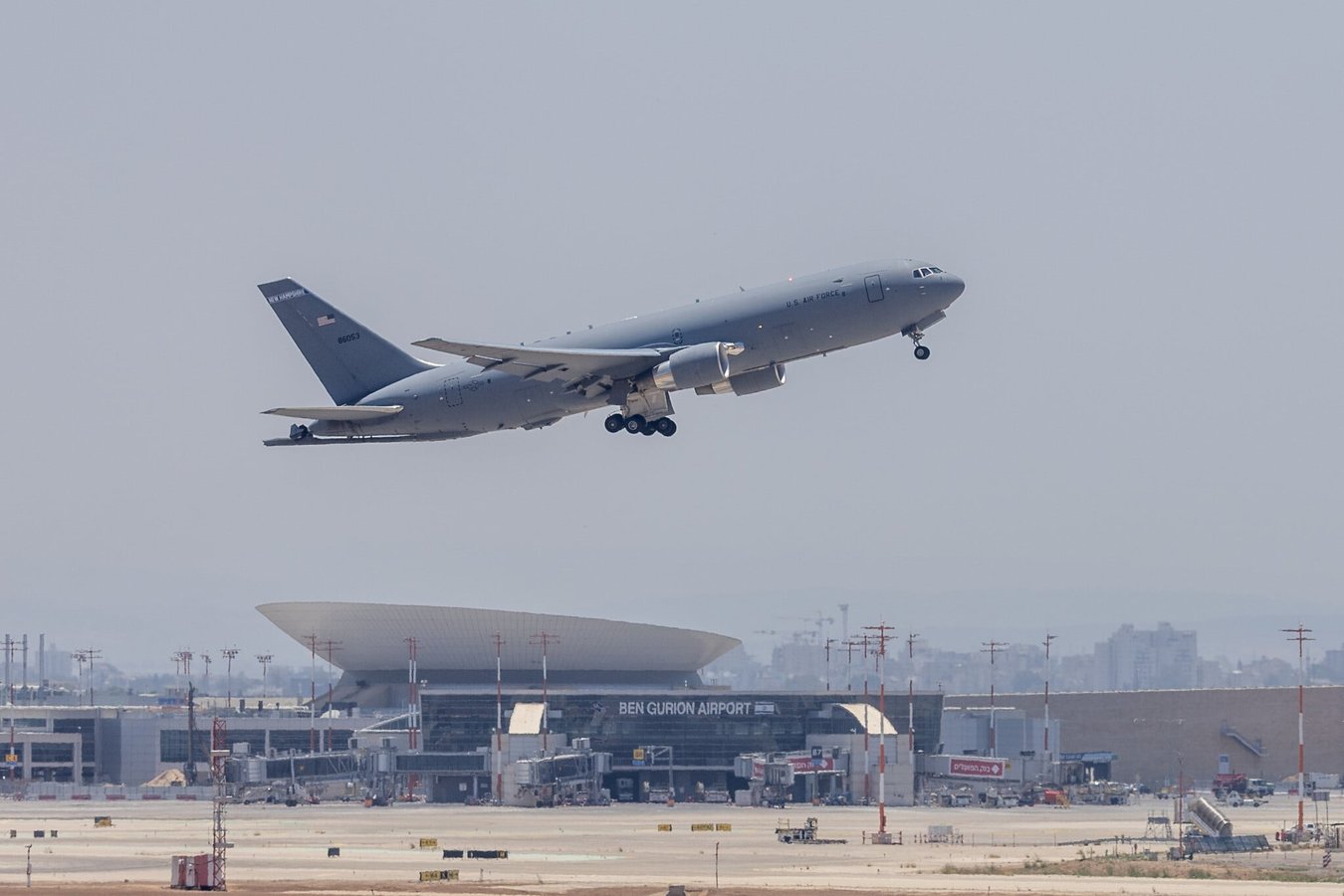

TEL AVIV – On a runway that normally handles tens of thousands of passengers a week, dozens of US Air Force KC-46A refueling tankers sat parked Friday in rows stretching across Ben Gurion International Airport, leaving little room for the summer flights that carry Israeli families abroad. Israel’s transportation minister formally pressed Washington to thin out its fleet. Within days, the reports confirmed the opposite was happening.
The Trump administration has notified Israel it intends to send several dozen more refueling aircraft to Ben Gurion and Ramon airports in the coming days, pushing US tanker numbers in Israel back to their highest-ever deployment level, Axios reported, citing three American and Israeli officials. The deployment is described as preparation for a potential escalation against Iran that could be substantially broader than the strikes conducted so far.
Trump was briefed on several new military options in a Situation Room meeting Tuesday. Among the options presented: a sustained bombing campaign targeting Iranian power plants and critical infrastructure, deeper strikes on Iran’s nuclear facilities designed to bury enriched uranium further underground, and attacks on the Pickaxe Mountain site, a heavily fortified location US intelligence suspects is being developed as a covert nuclear facility.
The United States currently maintains roughly 30 KC-46A tankers at Ben Gurion and an equivalent number at Ramon Airport in southern Israel, around 60 aircraft in total. The tankers function as the logistical backbone of any long-range air campaign against Iran, allowing American fighter jets and bombers to remain airborne for the extended durations required to strike targets deep inside Iranian territory and return. Officials indicated several more tankers would arrive daily under the expansion plan.
The urgency reflects a gap opened by combat losses. A Congressional Research Service report released in May revealed the United States lost seven KC-135 Stratotanker aircraft during the initial phase of Operation Epic Fury, including one that crashed over Iraq, killing six crew members, while others were damaged in Iranian missile strikes on Gulf facilities. The attrition of aerial refueling capacity emerged as one of the conflict’s less-discussed but operationally significant complications for US planners pressing ahead with round-the-clock bombing.
Israel’s transportation minister Miri Regev, a close Netanyahu ally, had pressed publicly for reducing the American presence at Ben Gurion, where the tankers occupied gate space needed for commercial operations and were threatening to cancel more than 50,000 summer flight bookings. The number of US aircraft parked at the civilian airport was reportedly trimmed to 20 in response to her pressure, with additional aircraft redirected to Israeli military bases. The arriving reinforcements would likely push the total well past that threshold again.
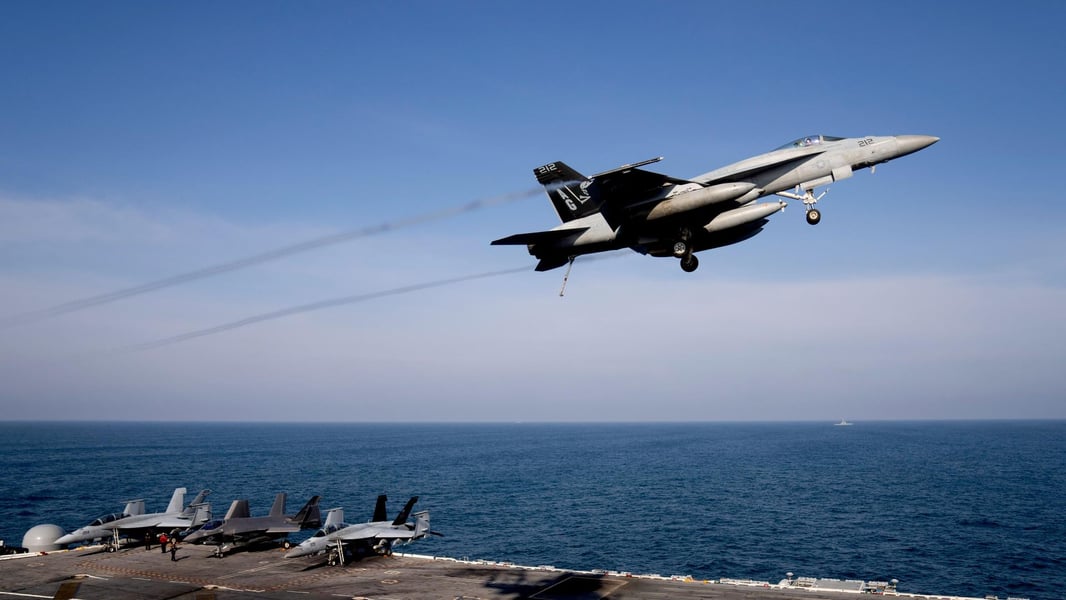
The expansion comes after six consecutive nights of American bombing against Iran that has targeted strategic infrastructure across the country. Iran’s parliament speaker Mohammad Bagher Ghalibaf formally declared the June 17 ceasefire agreement voided this week, describing the conflict as an “existential war.” Iranian retaliatory strikes have hit US military facilities in Bahrain and Kuwait, prompting air defense intercepts across Jordan and Kuwait’s territory.
The nuclear dimension of any expanded campaign carries particular weight. US officials have argued that pushing Iran’s enriched uranium stockpiles deeper underground, through heavier munitions and repeated strikes, remains a central objective. Iran’s Natanz, Fordow, and Pickaxe Mountain sites have all featured in public discussions about the campaign’s aims. Arms control analysts dispute the premise, noting that knowledge, personnel, and design documents survive even destroyed physical installations, making permanent degradation of Iran’s nuclear capability through airstrikes difficult to achieve.
The presence of US military aircraft at Ben Gurion has added a domestic political dimension to the conflict in Israel, the Times of Israel reported. Netanyahu’s approval authority over the use of Israeli airport infrastructure means any significant expansion of US operational tempo would require coordination at the highest levels between Washington and Jerusalem, a process that has historically slowed decisions even when both governments share broad strategic objectives.
What the Situation Room meeting produced in terms of a decision remained unclear as of Friday evening. Trump has weighed strikes on Iranian civilian infrastructure previously and paused; whether the arrival of additional tankers signals imminent escalation or is intended as deterrent positioning has no definitive answer yet. The US buildup in Israel is visible from the ground near Ben Gurion and from satellite imagery military analysts have tracked for weeks. What happens in the skies over Iran next depends on a decision that, as of Friday, no one with the authority to make it had publicly announced.