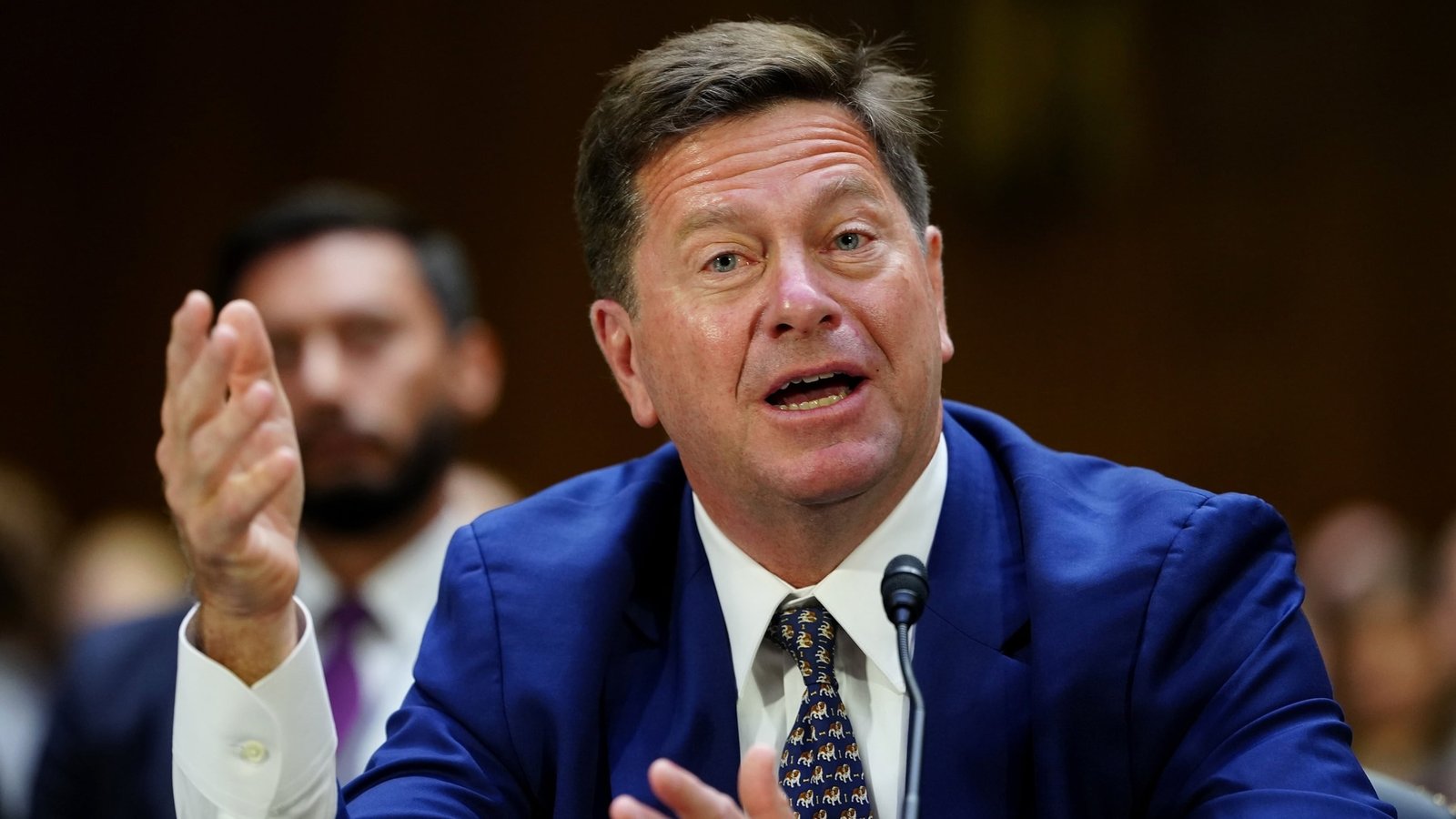

WASHINGTON – Jay Clayton, Donald Trump’s nominee to lead the nation’s intelligence community, declined Sunday to state directly that Joe Biden won the 2020 presidential election at his Senate Intelligence Committee confirmation hearing, saying instead that Biden had been “certified” as the winner – a formulation that drew a line the nominee was not willing to cross and that cost him a vote he might otherwise have held.
Senator Mark Warner of Virginia, the ranking Democrat on the Senate Intelligence Committee, announced after the hearing that he would not support Clayton’s confirmation despite a long personal relationship with the nominee, ABC News reported. “I’ve known Jay for a long time. I like him, but after his performance before my committee, his inability to answer the question about who won the 2020 election,” Warner said, “I am not going to vote for him.” Warner added that he expected Clayton to be confirmed regardless, given the Republican majority in the Senate.
The question Warner posed was not technically complex. It asked Clayton to state, as a factual matter, which candidate had won an election held six years ago – an election whose results were certified by Congress in January 2021, whose winner was inaugurated and served a full term, and whose outcome was upheld in federal court proceedings across the country. Clayton, a former chairman of the Securities and Exchange Commission and Trump’s current US attorney in Manhattan, chose the word “certified” and did not go further.
That word is the tell. “Certified” describes a procedural step without assigning it the full weight of a verdict. For Trump and his political base, the 2020 election remains contested in spirit even if not in law, and a nominee who needs Republican confirmation votes cannot easily afford to declare it settled in the way courts and election officials have. Clayton’s answer, whether chosen strategically or reflexively, threads that needle – and in threading it, leaves open an ambiguity that Trump has consistently preferred his senior officials to maintain.
The hearing arrived at a moment when the Director of National Intelligence role already carries unusual political weight. As Eastern Herald reported when Trump nominated Clayton in June, the choice came after Trump’s original nominee Bill Pulte drew bipartisan opposition so severe that Congress allowed a major surveillance law to lapse rather than empower him. Clayton represented a retreat from that fiasco – more credentialed, from inside the president’s circle, and more likely to survive a confirmation vote. Sunday’s hearing tested whether “more likely to confirm” and “suited for the job” amount to the same thing.
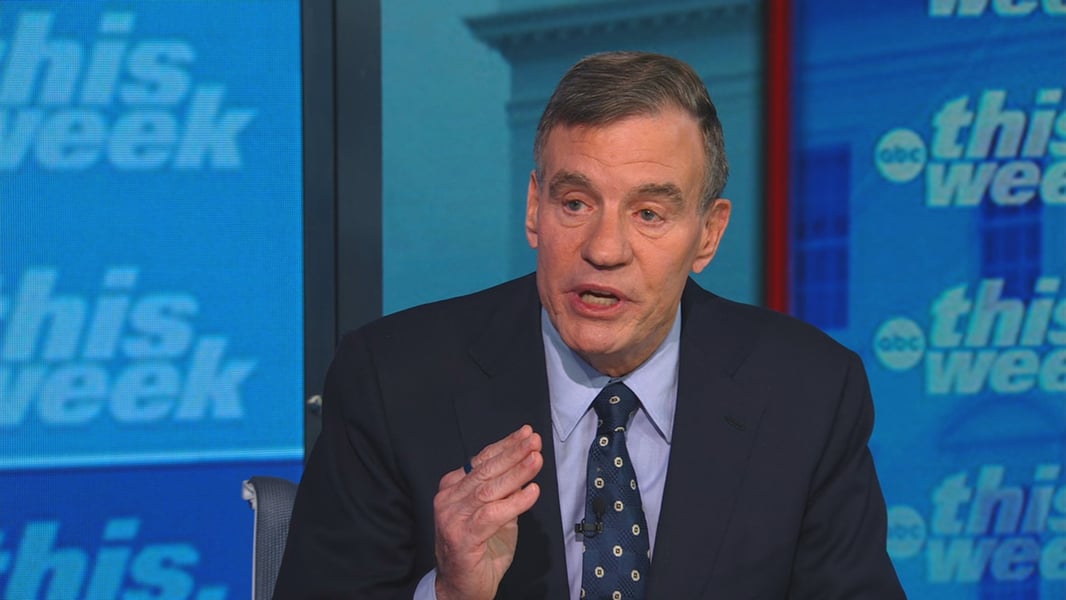
Warner’s objection carries more weight than a routine partisan vote. He has served on the Senate Intelligence Committee for years, built a record of finding common ground with Republican colleagues on national security, and noted explicitly that his personal view of Clayton is positive. The decision to withhold his vote – on the specific ground that a DNI nominee would not confirm a documented historical fact – marks the 2020 election as a threshold that Clayton chose not to clear.
The confirmation is expected to proceed over Democratic objections. Republican members of the Intelligence Committee have not broken with the nomination, and the Senate majority means Clayton’s path to the job does not run through Democratic votes. His “certified” formulation may be understood within Republican caucus politics as precisely what it was meant to be: technically defensible, politically deferential, and sufficient to hold the votes he needs.
The Director of National Intelligence is the official responsible for coordinating assessments from eighteen separate intelligence agencies, for ensuring those assessments reach the president without distortion, and for maintaining the institutional credibility that makes foreign partners willing to share intelligence with the United States. An official who will not clearly state a documented historical fact – even under oath at a confirmation hearing – creates a different kind of uncertainty for the agencies that will report to him and the allies whose cooperation his office depends upon.
Warner made the connection explicit. His objection was not to Clayton’s professional record, which he acknowledged. It was to what the hearing revealed about the terms under which Clayton intends to hold the job: terms calibrated to a president who has never accepted what every federal court, every state certification, and every election official’s count has confirmed about the 2020 result. Whether Clayton would translate that deference into intelligence product, or whether it would remain a personal political accommodation, is the open question that Sunday’s hearing did not answer.
The broader context is what the DNI nomination reveals about how Trump now staffs the intelligence community. The Pulte choice – loyalty with no relevant experience – gave way to Clayton after the political costs became visible. Clayton’s professional record at the SEC and SDNY is genuine. His answer on 2020 is what it is. The intelligence agencies he would lead, and the foreign partners they work with, will be drawing their own conclusions about both.
A confirmation vote date had not been set as of Sunday. Warner expects the outcome regardless. The question the hearing left behind is narrower and more lasting: what it looks like, in practice, when the person set to lead the nation’s intelligence apparatus cannot confirm which candidate won a presidential election – and what that costs the offices, the partnerships, and the public that depends on them.