
WASHINGTON — Donald Trump has finally named a permanent director of national intelligence, and the way he got there says more than the choice itself. His first instinct was to hand the nation’s eighteen spy agencies to Bill Pulte, a housing-finance official with no intelligence background whose only obvious qualification was loyalty. The backlash was severe enough that Congress let a marquee surveillance law lapse rather than empower him. Now, forced to retreat, Trump has reached for Jay Clayton, his U.S. attorney in Manhattan, a more conventional pick that solves the immediate problem while creating a quieter one: it pulls a prosecutor out of the country’s most independent law-enforcement office at exactly the moment that office matters most.
The nomination, announced Thursday, came only after a standoff Trump created himself. As The Washington Post reported, Trump had installed Pulte as acting director after Tulsi Gabbard stepped down in May, and then refused for weeks to back off the choice despite open warnings from senators of both parties that Pulte was unfit to oversee the intelligence community. Clayton, by contrast, will go to the Senate as a credentialed lawyer, and he will likely be confirmed. That is the tell: the system did not reward Trump’s judgment, it survived it.
It is worth being precise about why Pulte failed where Clayton may not. The objection to Pulte was never partisan in the ordinary sense. As CNN reported, lawmakers across the spectrum balked at putting someone with no national-security experience in charge of agencies whose product underwrites the president’s daily threat picture, and Democrats made clear they would not renew critical foreign-surveillance authorities while he remained the pick. They followed through. The price of Trump’s stubbornness was not a strongly worded letter; it was a functioning intelligence tool allowed to expire.
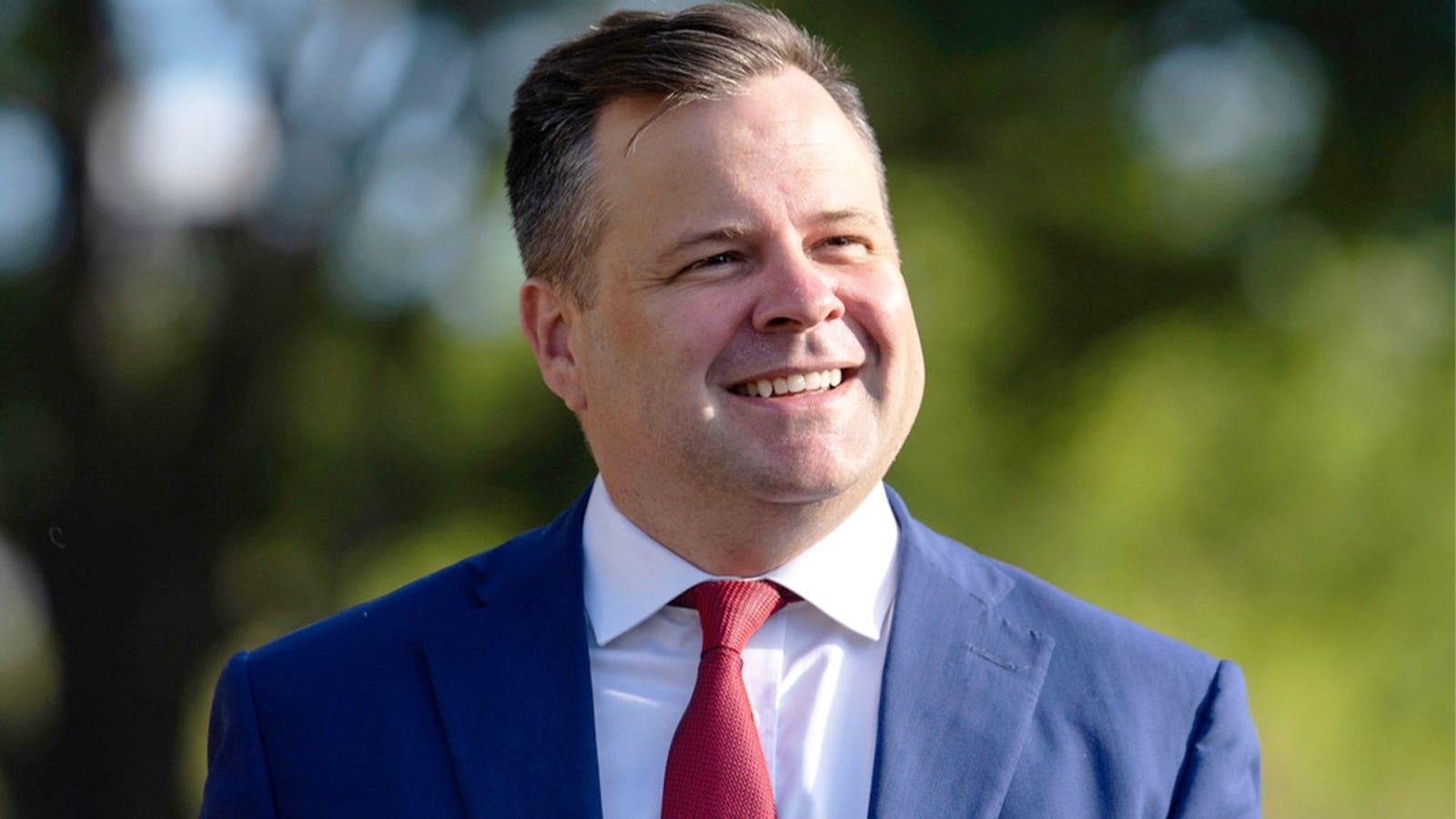
Clayton is, on paper, a serious choice, and that should be said plainly. He chaired the Securities and Exchange Commission during Trump’s first term, ran the prominent law firm Sullivan and Cromwell, and has spent the past stretch as the U.S. attorney for the Southern District of New York, where, as Fox News noted, he oversaw high-profile prosecutions. Trump called him among the most respected figures in the legal community. None of that is an intelligence resume either, but it is a real one, and the contrast with Pulte is precisely the point. Faced with a choice between competence and control, Trump had to be dragged toward competence, and even then he stayed inside his own circle.
The part of this that deserves more attention than the spy-chief headline is what it does to the Southern District of New York. SDNY is the closest thing the federal system has to an office that operates beyond a president’s reach, the office that prosecutes Wall Street, public corruption and the politically connected. Moving Clayton out of it hands Trump the chance to install a successor of his choosing in the seat that decides which powerful New Yorkers face charges. The reshuffle is not a footnote to the intelligence story; it may be the more consequential half of it.
This did not come out of nowhere. The Eastern Herald reported when Trump first handed US intelligence to Bill Pulte while a spy law headed for a lapse, and again when that law, Section 702, actually died at midnight because the Pulte standoff left no path to renewal. The Clayton nomination is the third act of a drama the White House wrote itself, the moment the administration quietly concedes that the original plan was untenable without ever saying so.
The vacancy Trump is filling exists because of another departure he has tried to manage on his own terms. Gabbard left the post under strained circumstances, and on her way out she used her final days to declassify a politically charged tranche of files, a reminder that the office has become as much a political instrument as an analytical one. Clayton inherits an intelligence community that has spent a year being treated as a loyalty test, first by the threat of Pulte, now by the elevation of a presidential ally with no background in the work.
That is the throughline worth holding onto as the confirmation hearings approach. The question senators should press is not whether Clayton is a capable lawyer, because he plainly is, but whether the country should be comfortable with a director of national intelligence chosen for proximity to the president and confirmed mainly because the alternative was worse. Trump did not arrive at a credentialed nominee out of conviction. He arrived there because the cost of his first choice came due in public, in the form of a lapsed surveillance law and a Senate that would not bend. The win, such as it is, belongs to the people who made him change his mind.