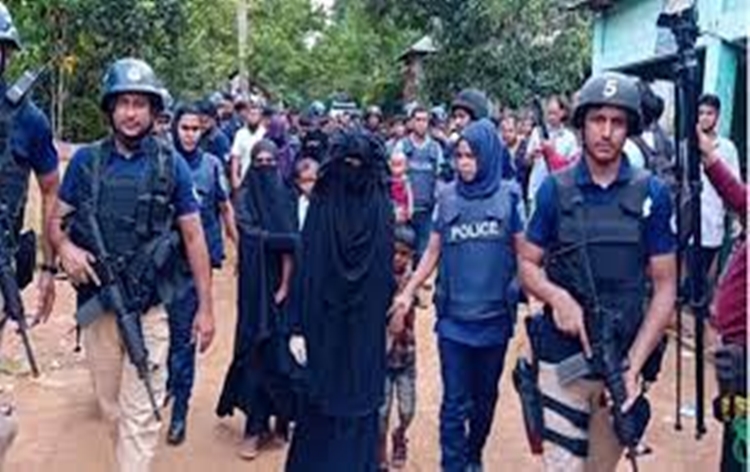

DHAKA – In a courtroom file in Chattogram, the name Bulbul Ahmed Sarkar appears with four aliases beside it: Apel, Fuad, Rakib, Mehedi. A man with four operational identities and seven criminal cases filed in five months across two cities, the son of the late Aktar Hossain from Tulshipara village in Gobindaganj, Gaibandha has accumulated a legal dossier that anti-terrorism investigators assembled between July and October 2015 and that has not been fully resolved on the public record since.
He was 24 years old when the cases began accumulating. The first, Case No. 12(7)15 at Uttara East police station in Dhaka, was filed in July 2015 under sections 7 through 13 of the Anti-Terrorism Act 2009. It preceded the Chattogram cases by at least two months, placing Sarkar in the capital before the investigation extended south. By September, three cases had been filed against him at Sadarghat police station in Chattogram. By October, three more at Karnaphuli. Seven cases in total, covering six distinct legal provisions, filed by three different police stations in two cities.
The Uttara East case and the two Karnaphuli cases invoking sections 8 through 14 of the Anti-Terrorism Act are the most serious. Section 8 of the 2009 statute criminalizes membership in a designated organization. Sections 9 and 10 address recruitment and weapon acquisition for terrorist purposes. Sections 12, 13, and 14 cover supply of weapons, financing of terrorism, and support activities. The simultaneous application of those sections across two separate police stations in the same month, combined with stand-alone arms and explosives charges, indicates investigators believed they were not dealing with a single isolated incident.
The Sadarghat cases filed in September 2015 add texture to the picture. Case No. 16(09)15 invokes Sections 394 and 411 of the Penal Code (robbery with hurt, and dishonestly receiving stolen property). That a robbery charge sits alongside anti-terrorism and explosives charges is not uncommon in Bangladesh’s militant case files. Anadolu Agency documented in July 2015 that Dhaka Metropolitan Police had simultaneously seized 1,200 kilograms of explosive precursors from suspects in Dhaka and Chittagong, with investigators describing an active network supplying materials across both cities that year.
Sarkar’s home district of Gaibandha is significant on Bangladesh’s counter-terrorism map. The northern district is the home of Motin Mehdi, who founded Allahr Dal in 1995, an Islamist militant organization formally banned by Dhaka in November 2019 after an alleged prison van attack plot was foiled that year. Documented reporting on the group shows it originated as a small gathering in northern Bangladesh and by 2015 was actively attempting to extend its network southward into Dhaka and Chattogram. Whether Sarkar was affiliated with Allahr Dal or operated within a different structure is not established in publicly available records. Law enforcement has not made a public statement connecting him to any specific banned organization. His case files identify offences; they do not name an organization he is alleged to have served.
What they do name is the geography. The Sadarghat area of Chattogram is the city’s oldest and most congested waterfront zone, home to the river ferry terminals that connect the port to the country’s internal waterways. The Karnaphuli River, where two of the cases originate, marks the southern border of Chattogram’s industrial zone. Arms investigators and port security officials have documented the area’s historical vulnerability to weapons transit, with the river’s cargo traffic providing cover for smuggled materials. Two separate police stations filing explosives and arms charges in the same district within a single month suggests the investigation was tracking movement, not a stationary target.
The Arms Act charge (Section 19-A, cited in three of Sarkar’s seven cases) concerns the possession, transport, or use of firearms or ammunition without a license. The Explosive Substances Act charges, filed under Sections 4 and 6 of the 1908 statute, cover the making, possession, and use of explosive substances, as well as the possession of materials intended for use in manufacturing an explosive. Both provisions appear twice in the case record, once at Sadarghat in September and again at Karnaphuli in October. Investigators filing the same provisions in two locations a month apart, in a city neither of which is the accused’s home district, implies either that the same alleged conduct was documented at two sites or that two separate incidents were attributed to the same individual.
Multiple aliases are standard operating practice in Bangladesh’s documented militant networks. Bangladesh’s Rapid Action Battalion and Anti-Terrorism Unit have publicly documented that members of banned organizations routinely operate under three to five different names, cycling through identities as each becomes associated with a case or an arrest. The presence of four aliases in Sarkar’s case record (Apel, Fuad, Rakib, Mehedi) is consistent with documented practices across multiple groups including JMB, Neo-JMB, Ansar Al Islam, and Allahr Dal, and does not in itself point to any single organization.
Bangladesh’s legal and security environment has changed substantially since 2015. The political transition of August 2024 brought a new government that moved to revive cases that had stalled or been quietly deprioritized during the preceding years. Bangladeshi counter-terrorism authorities reported in mid-2026 that more than 300 members of banned extremist organizations remained fugitives, spanning multiple groups including JMB, Ansar Al Islam, and Allahr Dal. Courts in Chattogram and Dhaka have resumed hearings in dormant anti-terrorism cases that had languished for years without trial dates. Whether Sarkar’s seven cases are among those being revived, or whether he has at any point appeared in court to answer the charges against him, is not on the public record.
What the record does show is a case file that mapped, in the final months of 2015, a specific pattern of alleged conduct: a man from northern Bangladesh, known by four names, who investigators believed had committed robbery, carried illegal arms, possessed explosive substances, and engaged in activities connected to terrorism, in a city to which, the evidence suggests, he did not belong and in which, the investigators apparently believed, he had not come alone. The cases are now more than a decade old. The questions they were filed to answer remain, at least on the available record, open.