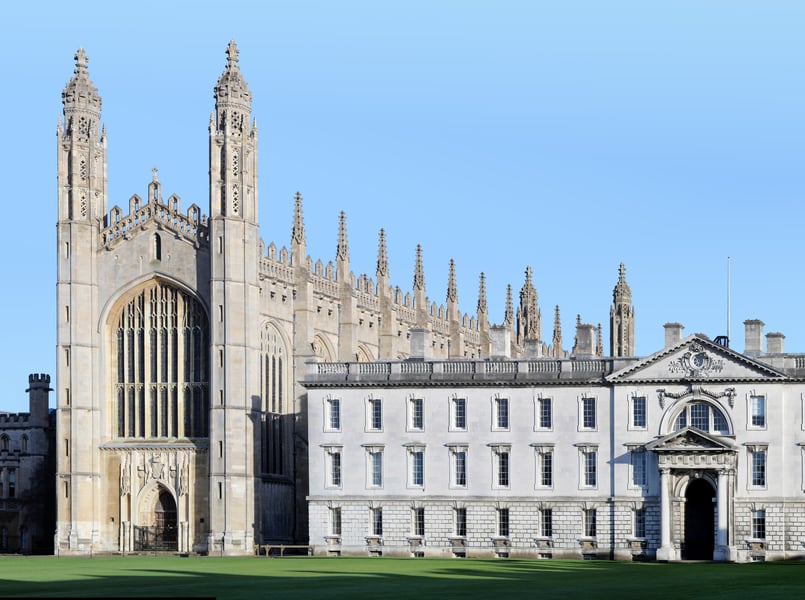
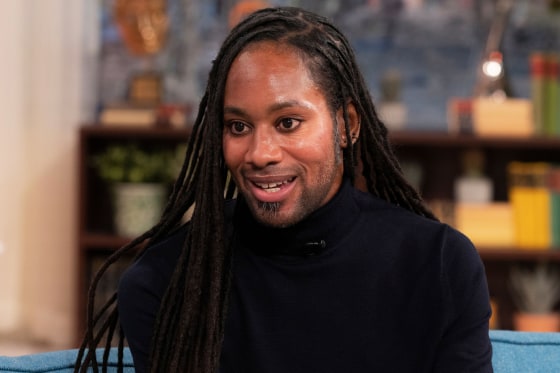
LONDON — Jason Arday had reached what he called “the limits of what any person should reasonably be expected to endure.” He wrote that in his resignation letter in early August, leaving behind the sociology professorship he had held at Cambridge University since 2023, when the institution made him its youngest Black professor in its 800-year history. On Friday afternoon, emergency services found him unresponsive at a flat in Battersea, south London. He was 41.
His death, confirmed by multiple outlets on Friday night, came at the end of a year in which Arday had faced an escalating campaign of allegations about his PhD thesis, including claims that he had plagiarized portions of it. Doubts were also raised about some of his stated professional achievements. He and his supporters consistently maintained that racial bias had motivated the most aggressive elements of the scrutiny.
Cambridge took an unusually direct public stance. In June, the university described what it called “a vile campaign to undermine his credibility,” and stated that plagiarism claims had been formally investigated and dismissed by the relevant academic institutions and journals. The defense was rare in the normally opaque world of elite British institutions, and it was not enough to stop what Arday later described as a “difficult period” from continuing.
He was appointed to Cambridge in 2023 as a professor of sociology and a fellow at Jesus College. His work focused on race, education, and inequality. The appointment was widely noted at the time: the youngest Black full professor at an institution that had educated prime ministers and Nobel laureates across eight centuries, but that had historically promoted Black academics to its most senior ranks only rarely.
The allegations began circulating in early 2026, initially in academic forums before attracting broader media attention. The central claim was that his doctoral thesis contained passages taken without proper attribution. Secondary claims followed about inconsistencies in his published credentials. The allegations were specific and detailed enough to generate sustained coverage, and damaging enough that he resigned despite his university’s formal defense.
His resignation letter, shared publicly, said the decision was “the only way” to bring a difficult period to a close. He was precise about what he was not conceding. “It is simply the decision of someone who has reached the limits of what any person should reasonably be expected to endure,” he wrote. He added that his resignation should not “be mistaken for an acceptance of the narratives that have surrounded me.” He was stepping down not because the accusations had substance, but because he could no longer absorb the toll of contesting them.
The political climate into which Arday’s case landed was already charged on questions of race and British institutions. Reform UK leader Nigel Farage had spent much of 2026 arguing that Britain had become, in his formulation, a “two-tier state against white people,” pledging to repeal the Equality Act and proposing to deport foreign tenants. Eastern Herald documented Farage’s position after he set it out in a Substack essay earlier this year. Whether those arguing Britain was structurally hostile to white people and those arguing it had failed Black professionals like Arday were describing the same country remained, by the end of the summer, an unresolved question that British institutions had not yet answered.
What the Arday case surfaces, whatever ultimately is established about the plagiarism allegations, is the structural fragility of diversity appointments at elite universities. A milestone appointment is visible in a way that the institution’s failure to sustain it is not. Cambridge defended Arday formally in June. Whether that defense translated into the kind of ongoing institutional support that would have made it possible for him to remain in post is a question his departure answers without fully explaining.
Emergency services attended an address in Battersea, south London, on Friday afternoon and found Arday unresponsive. No cause of death has been confirmed, and the Metropolitan Police had not issued a statement by the time this report was filed. The formal procedures that follow an unexpected death in England include a coroner’s examination, and no findings from that process have been made public.
Euronews, which reported his death on Friday, noted that Cambridge had maintained until the end that allegations about his “thesis and journal publications” had been reviewed by the appropriate bodies and found to be without merit. That position, still unchallenged by any formal finding to the contrary, will now sit alongside the fact that the man it was intended to protect did not survive the year in which it was issued.