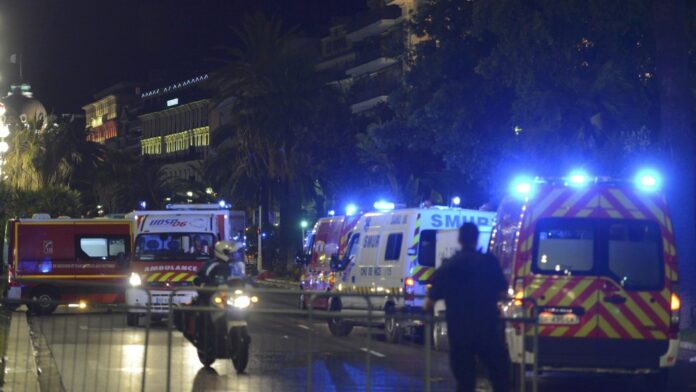

ROME — The arithmetic of air defence has been running the wrong way for years. A one-way attack drone costs a few tens of thousands of dollars. The missile fired to stop it costs a million. Italy has just placed an order aimed squarely at that gap.
The State Department approved a possible Foreign Military Sale to Italy on Friday of 5,031 Guidance Sections Single Variant Air-to-Air Advanced Precision Kill Weapon System-II, designated WGU 59B/B, at an estimated total cost of $364 million. The principal contractor is BAE Systems, at Nashua, New Hampshire.
What Italy is buying is not a missile. APKWS is a guidance kit that bolts onto an existing unguided 70mm rocket, turning a dumb tube of explosive into a laser-guided one for a fraction of the price of a purpose-built interceptor. The guidance section alone has typically run between $15,000 and $20,000, with the motor and warhead adding a few thousand more. An AIM-9X Sidewinder costs around $450,000. An AMRAAM costs about a million.
The air-to-air version in this sale is a newer thing than the ground-attack rocket the system started as. Optimised for shooting down drones and cruise missiles rather than hitting targets on the ground, it carries a proximity fuze and reworked guidance, and American F-16s have already used the type in combat against Houthi drones over the Middle East. The full package the State Department listed includes those proximity fuzes alongside LAU-131 A/A launchers, Mk-152 high explosive warheads, MK66 rocket motors, WTU-1/B practice warheads and inert motors for training.
Run the numbers across the whole deal and it works out at roughly $72,000 per round, though that figure covers launchers, warheads, motors, training stock, technical documentation, transport and contractor support rather than the rockets alone. Even at that, an air force facing a saturation attack can afford to miss.
The stated purpose is the part the wire summaries have tended to drop. The sale, the Bureau of Political-Military Affairs said, will improve Italy’s capability to meet current and future threats by strengthening its homeland defence and serving as a deterrent to regional threats, and will significantly improve Italy’s contribution to NATO integrated air and missile defence. That last clause is the reason the order is this size. It is not a national purchase so much as a contribution to an alliance capability, and the alliance has spent two years discovering how short it is of cheap ways to kill cheap things.
Italy has its own reasons, and they are recent. Eastern Herald reported in May that Rome was sending around 100 military personnel and fighter jets to Romania days after a drone struck a residential building in Galati, on NATO’s eastern flank. Romania’s defence ministry attributed that strike to a Russian drone.
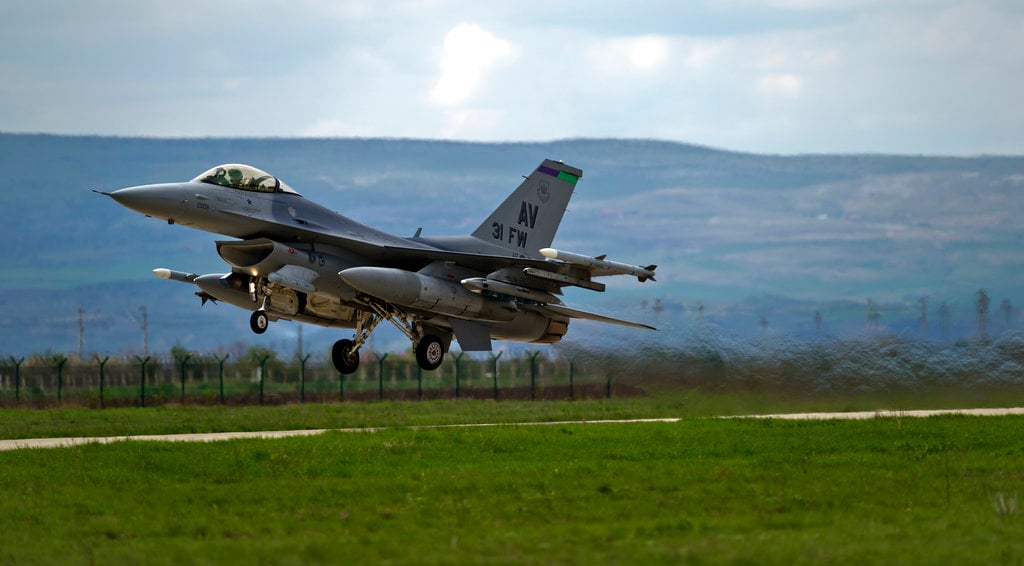
What happened in July shows the cost problem in one engagement. Two Italian Eurofighters deployed to Romania under NATO air policing scrambled alongside two Romanian F-16s against suspected Russian drone activity, and one of the F-16s destroyed the target with an air-to-air missile over open ground near the village of Padina. The drone was stopped. The exchange rate was terrible.
The wider European effort is running in the same direction. Ten nations met in Paris in July to launch an anti-ballistic missile coalition built around a European alternative to Patriot, an attempt to solve the same shortage at the expensive end of the threat spectrum. The APKWS purchase addresses the cheap end, which is where the volume is.
BAE Systems is already deep in Italian defence procurement through a different door. The company sits alongside Italy’s Leonardo in Edgewing, the joint venture that won a £4.6bn contract in July to take the Global Combat Air Programme into full design with the United Kingdom and Japan. The rocket sale is a far smaller transaction, and a far more immediate one.
The State Department said the proposed sale supports American foreign policy and national security objectives, that it will not alter the basic military balance in the region, and that Italy will have no difficulty absorbing the weapons into its armed forces. No offset agreement was described, and the department said implementation would not require assigning additional American government or contractor representatives to Italy.
Several things are not yet settled. A State Department determination is a notification to Congress that a sale may proceed, not a signed contract, and the quantities are ceilings rather than firm orders. Neither the department nor the Italian defence ministry has said which aircraft will carry the rockets, though Italy’s Eurofighter Typhoon fleet is the obvious candidate and the type has been test-fired with laser-guided counter-drone rockets. No delivery schedule has been published, and there is no public indication of whether Rome intends the stock for national air defence, for NATO air policing deployments, or for both.
What the order does establish is a judgement about the shape of the next few years. Italy is not buying a handful of exquisite interceptors. It is buying five thousand cheap ones, which is what an air force does when it expects to be shooting at things that arrive in numbers.