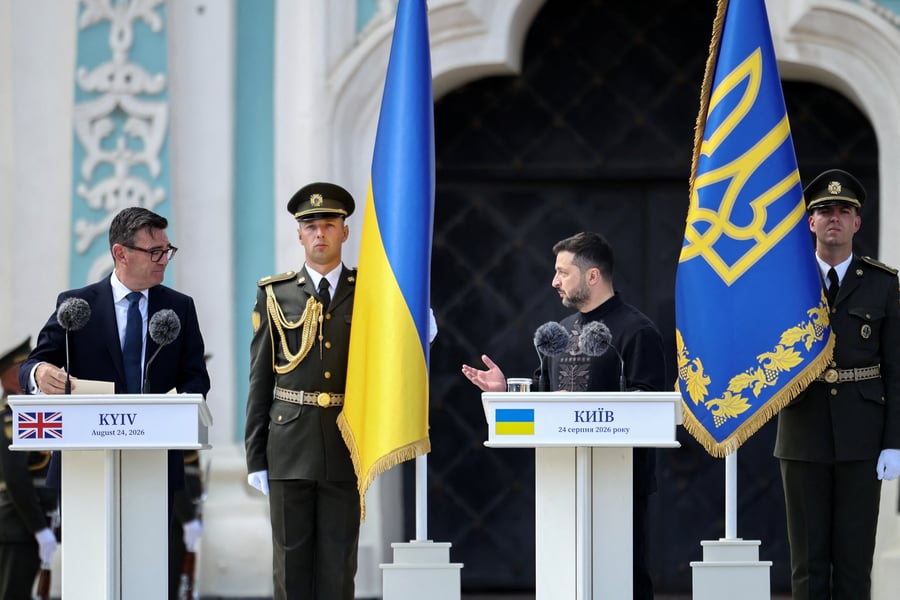

KYIV — On Monday morning, a Ukrainian drone struck a residential district of Krasnodar in southern Russia, with debris from one of the intercepted munitions falling on a childcare centre and injuring children. Hours later, 1,200 kilometres to the west, Ukrainian President Volodymyr Zelenskyy received a queue of European leaders at a formal gathering in Kyiv to mark Ukraine’s 35th Independence Day.
The morning had produced casualties on two sides of the same conflict before noon: a Ukrainian drone killed two women in the Kharkiv region after striking an electric train, and Russian debris struck children in Russia’s south. It was the context in which leaders arrived to say they were still committed to ending the Russia Ukraine war.
British Prime Minister Andy Burnham flew to Kyiv for the occasion, becoming the most senior Western leader to attend in person in weeks. European Council President Antonio Costa was also there. The leaders of France and Germany joined the so-called Coalition of the Willing remotely, opting not to travel to the city where Johann Wadephul, Germany’s foreign minister, had arrived by rail only two days earlier after a ballistic missile killed a railway worker at Kyiv station that same morning.
Zelenskyy used the gathering to present a number his allies have struggled to explain. In 2023, Ukraine received 675 Patriot interceptor missiles to defend against Russian air strikes. In all of 2025, that figure was 364, a drop of nearly half even as the frequency of Russian strikes on Ukrainian civilian infrastructure increased. The trajectory, he said, pointed to just 264 missiles for 2026. Ukraine’s minimum requirement for the coming winter, he stated plainly, is 300.
The Coalition of the Willing has been meeting since early 2026, assembled from countries that pledged to keep supporting Ukraine after the political climate in Washington shifted. Norway was the clearest example of concrete commitment on Monday: the country pledged 85 billion kroner, around $9.1 billion, in 2027 military and reconstruction aid, matching its 2026 contribution. But the interceptor shortfall reflects something pledges do not capture: cash commitments and deliverable Patriot missiles are not equivalent, and the deliveries have fallen three years running.
Russia’s operations in the country’s east continued regardless of the summit calendar. Russian forces maintained pressure along multiple sections of the Donbass front while the Coalition convened in Kyiv, with military analysts noting that the summer fighting season had not produced the decisive territorial breakthroughs either side had sought.
Ukraine’s drone campaign against Russian logistics has intensified in parallel. The attack on Krasnodar on Monday appeared to target supply-chain infrastructure, including warehouses, fuel distribution points, and transport hubs that sustain front-line operations. The debris that struck the childcare centre was the kind of collateral outcome that both sides have experienced throughout the conflict. Al Jazeera reported that drone strikes on civilian infrastructure in Kharkiv and the Krasnodar attacks occurred on the same day the coalition gathered, underscoring that diplomatic calendars have not altered the operational tempo.
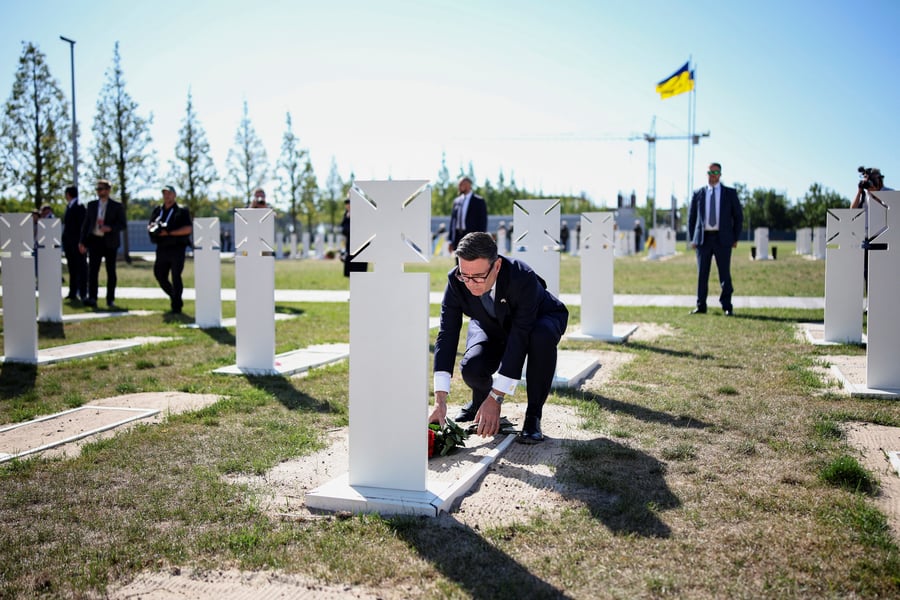
What Burnham brought beyond his physical presence was, by the end of the meeting, still unclear. Britain has been among the most consistent suppliers of long-range munitions to Ukraine, but UK procurement operates under its own constraints. Burnham’s government, in office since January after Labour’s internal succession, has maintained the support posture of its predecessors without substantially raising the volume of what has been transferred.
France and Germany’s decision to participate remotely rather than travel drew no formal comment. Wadephul had visited on Saturday carrying a joint letter, co-signed by Paris and Berlin, requesting other governments to provide Germany Ukraine winter energy support ahead of the cold months. That letter had not generated a named interceptor commitment by Monday afternoon. The Zaporizhzhia nuclear plant, stripped of its last external power line and without a diesel delivery since March, remained an unspoken presence in every discussion about what a third wartime winter might mean.
What the coalition left behind in concrete deliverables had not been disclosed by the time the session concluded. What Zelenskyy’s numbers make clear is that the outcome of the coming winter will be determined not by speeches delivered on Independence Day, but by whether defence ministries across five or six countries can reverse a delivery trend that has moved in the wrong direction each year. Whether that reversal is possible, or whether the 264-missile projection becomes next winter’s floor rather than this year’s anomaly, is the question no one in Kyiv answered on Monday.