
KYIV — The man killed in the Ukrainian capital early Saturday worked for the railway. A ballistic missile came down on a rail enterprise in the Darnytskyi district almost as the alert sounded, which left no useful margin, and the rest of the shift was evacuated after the fact. One foreman dead. One building damaged. The trains kept running.
They had to. A few hours later a special train pulled into Kyiv’s main station carrying Johann Wadephul, and there is no other way for a German foreign minister to get into this city.
Nobody in Kyiv would bother calling that ironic. Ukraine’s airspace has been closed since February 2022, so the rail network is at once the only route in for visiting ministers, the only route out for grain, and a standing target for precisely that reason. What is worth remarking on is what Wadephul carried into the station with him, because it was not a weapons package.
He and Jean-Noel Barrot, the French foreign minister, have written to a list of governments asking them to help Ukraine get through the coming winter. That letter is the deliverable of this visit. Berlin puts its own military aid to Kyiv at roughly 28 billion euros since 2022, more than any other European capital has committed, and the thing its foreign minister brought to Ukraine two days before the 35th anniversary of independence was a request addressed to other people’s treasuries. There is a generous reading of that and a less generous one. Berlin has not said which it prefers.
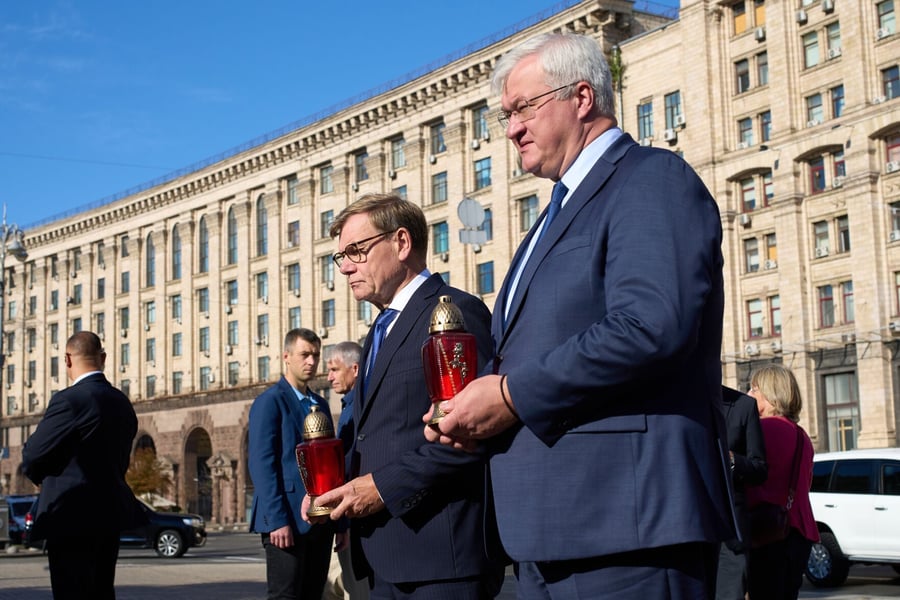
Wadephul, foreign minister since May 2025, spent part of the morning in central Kyiv standing beside Andrii Sybiha for a nationwide minute of silence held for soldiers killed in the war. He said Europe needed to hold together, that Germany would keep expanding military, financial, economic and humanitarian support, and he was blunter than German ministers usually are about the shape of the current Russian campaign, describing it as aimed at power and heating supply rather than at anything military.
The night before had made that argument for him. Russian forces fired 217 drones and missiles across Ukraine overnight, and the Ukrainian air force said it brought down 182 drones, three Kh-31P and Kh-59 air-to-ground missiles and six Banderole loitering munitions. What got through hit the Kyiv rail enterprise, damaged the station building at Rozdilna in the Odesa region and killed a man at Kushuhum in Zaporizhzhia, where four others were hurt, Euronews reported. Train services were not disrupted, according to the railway, which is the detail it leads with every time and which has become, by now, a kind of boast.
The night before that had made it harder still.
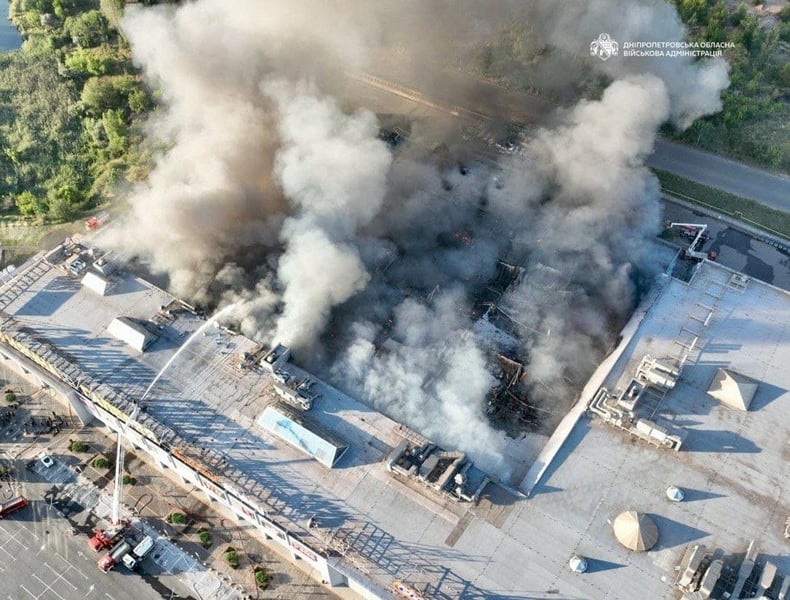
At about half past four on Friday afternoon drones hit the Sunny Gallery shopping centre in Kryvyi Rih. Roughly thirty minutes later, with firefighters and medics already inside the building, a second drone hit the same target. Ukrainian officials say it was a jet-powered Shahed-type flying very low. Sixteen people are dead. A hundred and thirty were injured, twenty-three of them children, and twenty-nine were in serious condition including five children, the Kyiv Independent reported. Nine people were still listed missing on Saturday, two of them children. Sixty-one of the wounded were still in hospital. Eastern Herald reported the attack overnight on Friday.
The pattern has a name. A double tap is a second strike timed for the people who arrive to help after the first one, and it is not a targeting error. Volodymyr Zelensky, whose home city Kryvyi Rih is, said the second wave was aimed at the emergency responders working the fire.
What has not been said is almost everything operationally interesting about the appeal. The Federal Foreign Office had published nothing about the trip on its own newsroom by Saturday evening. No figure has been attached to the request. No recipient list has been released. Whether the two ministers are asking for money, for equipment, for gas, or for all three is not on the record, and neither is the more awkward question underneath it, which is whether the letter exists because the winter bill is larger than Europe can carry alone or because European capitals have begun looking for company.
Around ten foreign leaders are expected in Kyiv on Monday for Independence Day. Wadephul came on Saturday instead, which spares his hosts one security problem and also puts Germany’s position on the record before the group photograph rather than inside it. The Ukrainian political calendar is not otherwise cooperating. Parliament spent August reconfirming a foreign minister and installing a new defence minister, and the question of whether a wartime election is possible at all has moved from the edge of the argument to the middle of it, with the United Nations saying this week that it had received no request from Kyiv for help organising a vote.
Meanwhile the ports at Odesa are still shut to foreign shipping and the customs revenue that used to move through them is not arriving in the state budget. That is the other half of the winter problem, and it is the half no letter to third countries will fix.
The trains are still moving. They moved on Saturday morning past a damaged building in Darnytskyi where a foreman had been killed a few hours earlier, and they will move again on Monday carrying the leaders who come for the anniversary. His name has not been published.