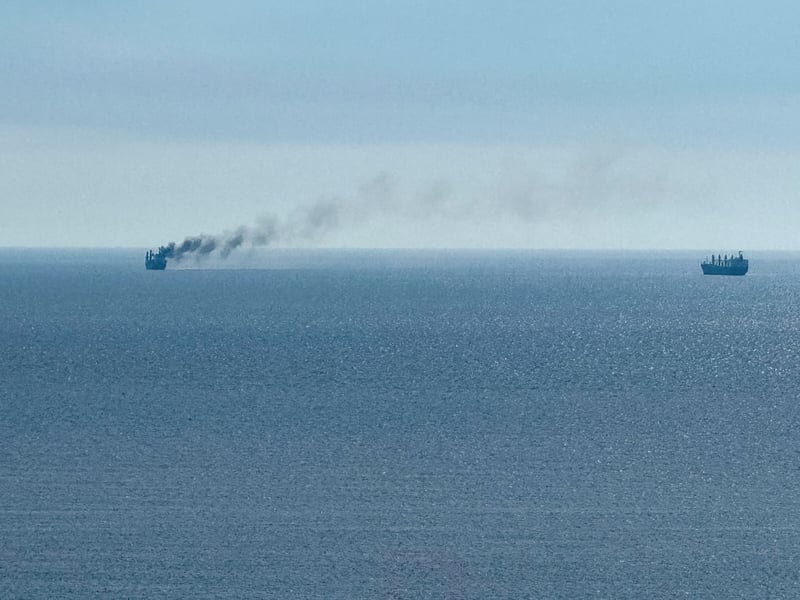

ODESA — A Ukrainian farmer with grain or oilseed to sell is being offered about 30 percent less for it than before the summer, and many are taking the loss and borrowing against the difference because the alternative is to watch the crop sit. That is what the closure of three Black Sea ports looks like from a field in the south, and it is why two members of the Ukrainian parliament’s finance committee spent this week saying the state budget will not make its numbers.
Nina Yuzhanina put it plainly on Friday. On the actual figures for the first seven months, she said, the planned revenues in the 2026 state budget are not being fulfilled, and the situation will only get worse, because disruption to logistics has stopped a number of major taxpaying industries from exporting and paying tax, and has forced some companies to stop operating altogether. She said it in an interview with the YouTube channel Superposition.
Yuzhanina sits for European Solidarity, which is in opposition. Two days earlier Danylo Hetmantsev, who chairs the Verkhovna Rada’s committee on finance, tax and customs policy for the governing party, said Ukrainian companies were absorbing losses in the billions and were close to shutting down, and that the combination of missed revenue targets and slowing growth had brought fiscal policy to within a step of the brink. When the committee chair and the opposition’s tax specialist describe the revenue line the same way, the argument about whether there is a problem is finished.
The argument about what caused it is not, and the answer has a date on it. Since July 22 not a single foreign cargo vessel has entered Odesa, Chornomorsk or Pivdennyi, the three ports of the Greater Odesa complex. It was the first day in nearly three years on which none did, and Volodymyr Zelensky confirmed it at the time. Maersk suspended its Chornomorsk service that same day and began diverting containers to Constanta in Romania. International operators have stayed away since, on the grounds that Russian strikes have moved from port infrastructure to the merchant ships themselves.
Those three ports are not one route among several. They handle close to nine tenths of Ukraine’s grain, oilseed and processed agricultural exports, and more than 90 percent of the country’s grain normally leaves by sea.

The agriculture ministry has now put a figure on it. Ukraine cut its grain export forecast for the 2026/27 season to between 38 and 40 million tonnes, from around 43 million, a reduction of three to five million tonnes or up to 12 percent, and the first official assessment since the strikes intensified in late July. Taras Vysotskyi at the agrarian policy ministry told Reuters that direct losses to the agricultural sector could reach between $1.5 billion and $3 billion this year. The economy ministry has estimated that exports through the Odesa ports could fall to two million tonnes a month, of which perhaps half might be rerouted through the Danube, with the remainder left to rail and road, both slower and both more expensive.
Agriculture is only the part with a ministry to count it. Ukrainian business has lost roughly $500 million in a matter of weeks this month from strikes on warehousing alone, with the online retailer Rozetka putting its own losses near $70 million and the logistics operator Nova Poshta among those hit. TASS reported the port closure and the agricultural loss estimate citing Reuters.
The budget those revenues are meant to fill is already the most strained Ukraine has written. The Kyiv Independent set out the parameters when the draft went to parliament: revenues of UAH 2.92 trillion against spending of UAH 4.8 trillion, a deficit of 18.4 percent of gross domestic product, defence and security at UAH 2.8 trillion, and an external financing requirement of about $49 billion. The International Monetary Fund has warned that the financing need over two years could exceed the government’s own estimate by $10 billion to $20 billion. Eastern Herald reported in June that the Fund had already cut its Ukrainian growth forecast to between 1 and 1.6 percent, down from 2 percent two months earlier.
Here is the part that complicates Yuzhanina’s claim without disproving it. The published aggregate does not obviously show a shortfall. Through July the general fund had taken in about UAH 2.06 trillion, which is roughly 70 percent of the annual plan collected in 58 percent of the year, and in May the revenue plan was reported executed at 101.9 percent. None of that refutes her. Monthly revenue targets are not equal twelfths of the year, roughly UAH 101 billion of the seven-month total was international grants rather than domestic tax, and the ports did not close until July 22, nine days before the period she was citing ends. The damage she was describing has barely entered the data she was describing it from. It enters in August and September.
Hetmantsev, who raised the alarm, is also the one offering the timeline out of it. He has said the restoration of export logistics is under the direct supervision of the president and the prime minister, and that the situation could stabilise within two to four weeks. That is a forecast from the same man who said fiscal policy was a step from the brink, and the two statements are not easy to hold together.
Several things neither of them has provided. Neither published the monthly revenue targets that would let anyone outside the committee check the claim. Neither named the industries that have stopped. There is no public figure yet for August customs receipts, which is where the port closure will first become visible. Whether the Danube, rail and road can absorb even half the diverted volume has not been tested at this scale, and Ukraine’s debt service to the IMF continues on its own schedule regardless. Nor does either statement address what happens if the ports are still shut when the harvest has to move.
The governance argument in Kyiv this month has been about whether the country can hold an election. The finance committee has been arguing about something narrower and more immediate. The silos are full, the ships are not coming, and the tax those cargoes would have generated is not in the August figures because the cargoes are not on the water.