
NEW DELHI – The bill for cooking gas, diesel, and fertilizer in rural India is not set in Moscow. But it is shaped there, more now than at any point in the country’s post-independence history.
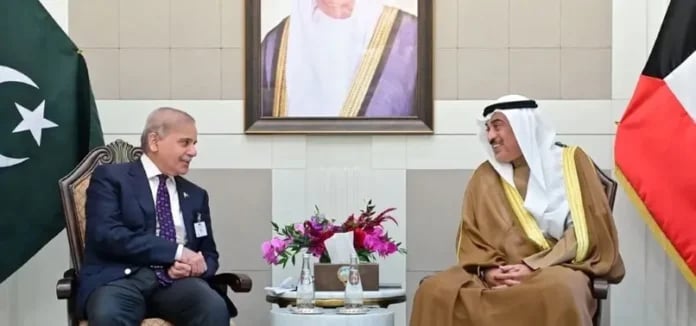
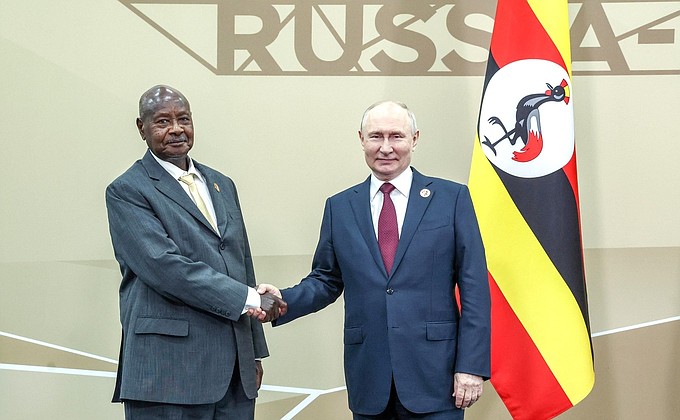
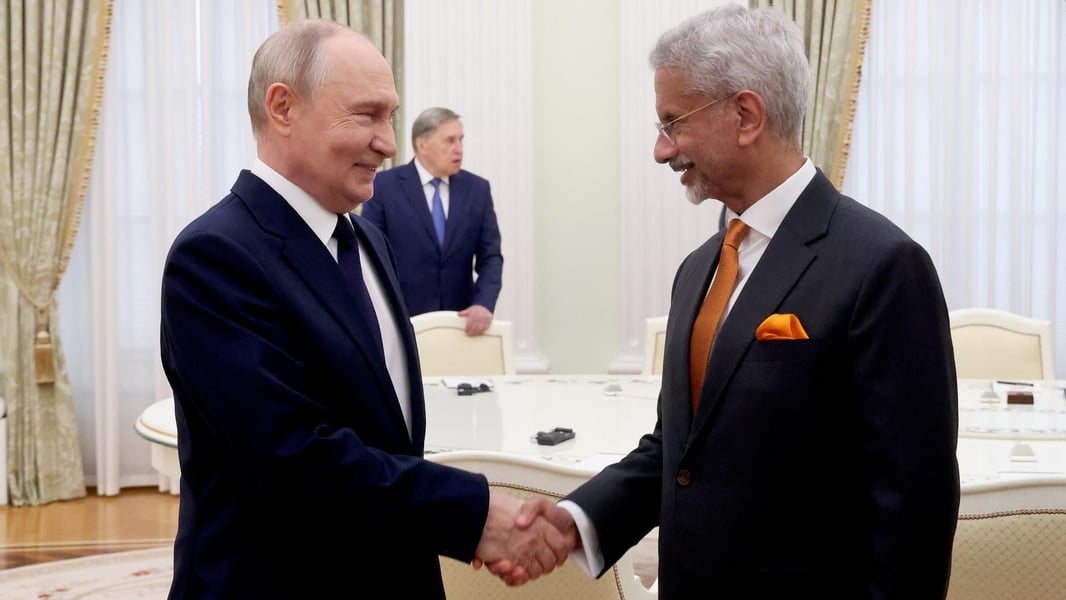
Indian Foreign Minister Subrahmanyam Jaishankar arrived at the Kremlin on Monday to meet Vladimir Putin, completing a diplomatic circuit that had already taken India’s national security adviser to Beijing the same morning for boundary talks with China. The two missions, running in parallel, were not coincidental. They were a display of the posture New Delhi has spent three years building: simultaneous engagement with both major Asian powers, on India’s own terms.
Putin made his own read of the meeting explicit in opening remarks. “I am pleased to note that our trade has increased this year,” he said, according to TASS. “It declined slightly last year, but it is growing this year.” He described cooperation as spanning “virtually all areas” of the bilateral relationship. India’s external affairs ministry, responding from New Delhi, went further, characterizing economic cooperation with Russia as having grown “very significantly.” That characterization is accurate and, in the context of sustained Western pressure on the relationship, politically significant.
The core of that trade is energy. Since Russia’s military operation in Ukraine began in 2022, India has become one of the world’s largest importers of Russian crude oil, typically priced at a discount to Brent that gives Indian refineries a margin advantage. The volumes involved are large enough that, stripped of Russian crude, Indian refiners would face either higher input costs, supply gaps, or both, outcomes that would filter quickly into the retail prices Indians pay at petrol pumps and for LPG cooking gas. The relationship is not merely diplomatic. It is structural.
Fertilizers have followed a similar path. Russia and Belarus together are among the largest global suppliers of potash and nitrogen fertilizers. The disruption of global agricultural supply chains after February 2022 made Russian-origin fertilizers attractive to India on price and availability grounds simultaneously. For a country where the majority of the population’s livelihood remains connected, directly or indirectly, to agriculture, fertilizer price stability is not a secondary concern. It sits directly in the chain between Kremlin policy and Indian household budgets.
Monday’s Kremlin meeting came against a second pressure that is reshaping India’s energy arithmetic in real time. India’s imports of crude oil from Iran, another significant supplier, are under intensifying stress as renewed US sanctions and disruptions to a key trade route through Dubai have made Iranian oil harder to clear without exposing Indian banks to secondary sanctions risk. With the Iran channel narrowing, the Russia channel carries additional weight as a supply hedge.
India’s dual-track diplomacy, with NSA Doval in Beijing and Jaishankar in Moscow on the same day, is a deliberate signal that New Delhi intends to manage these relationships without subordinating one to the other. The formula has a name in Indian foreign policy circles: strategic autonomy. Its practical content, on Monday, was a foreign minister at the Kremlin reaffirming trade momentum while, fifteen hundred miles away, a national security adviser was managing the boundary agenda with China.
Putin’s framing of the relationship as spanning “virtually all areas” is supported by the ledger. India’s Kudankulam nuclear power plant, the largest in the country, is a Russian project; units five and six are under construction. Russia remains a primary supplier of defence equipment to the Indian armed forces, a dependency New Delhi is diversifying but cannot eliminate on short notice. Joint naval exercises under the INDRA framework continue. And BRICS, the multilateral grouping that both countries share with China, Brazil, and a growing list of others, provides an institutional scaffold for economic coordination that does not require either party to position itself against the West.

The meeting produced no announced agreements, no joint declaration, and no communiqué. That is standard for a working visit from a foreign minister, and the absence of formal outputs does not diminish what the meeting accomplished at the signaling level. Putin’s public statement on trade growth, made in Jaishankar’s presence at the Kremlin, was a message to multiple audiences simultaneously: to Washington, that pressure on the India-Russia relationship is not producing the intended effect; to New Delhi, that Moscow values the relationship sufficiently to mark its momentum publicly; and to the broader Global South, that a major democratic emerging economy continues to operate outside the sanctions architecture the US and Europe have tried to construct around Russia.
India has not joined that architecture. It has not recognized the G7 price cap on Russian oil, under which Western shipping, insurance, and finance services condition their involvement on buyers paying below a set threshold, as binding on its own procurement. Indian refiners have sourced Russian crude both above and below that cap through financing and shipping arrangements that bypass Western intermediaries.
What Jaishankar’s visit and Putin’s remarks leave open is the harder question of trajectory. Trade grew this year, that much is confirmed. What it grew to, measured in absolute dollar or ruble terms, Putin did not say, and official bilateral trade data has not been published for the current year. Whether the payment systems supporting non-dollar India-Russia settlement can scale to match the ambitions both governments have expressed, and whether the US secondary sanctions pressure now being applied to India’s Iran purchases will eventually tighten around the Russia channel too, are the questions Monday’s meeting did not answer. The warmth was genuine. The architecture is still being built.