
TOKYO — For the Japanese companies that depend on Chinese rare earth minerals to manufacture semiconductors, electric vehicle motors, and precision components, the question has never been whether the two governments would talk again. It has been when the cost of not talking would become too high to ignore.
That calculation appears to have tipped on Monday, when a cross-party delegation of Japanese lawmakers landed in Beijing for the first direct consultations with senior Chinese Communist Party officials since diplomatic relations between Asia’s two largest economies entered what one member of the delegation described as the worst freeze since ties were normalized in 1972.
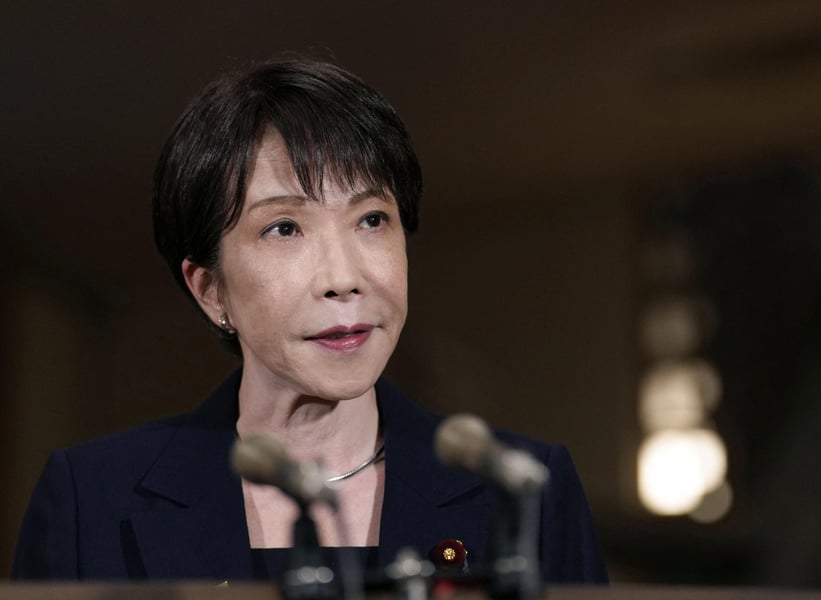
The visit, which runs through Thursday, was set in motion by a comment made by Prime Minister Sanae Takaichi last November. Takaichi suggested Japan could respond militarily if China attacked Taiwan, a self-governing island Beijing claims as its own territory and a question it treats as a line no outside government should approach without consequence. China’s response was calibrated to make Tokyo feel the cost without provoking a formal confrontation: it warned its citizens against travel to Japan, tightened trade restrictions, and imposed measures reported to have disrupted the supply of rare earth minerals to Japanese manufacturers — cutting into the supply chains of industries that have no short-term alternative to Chinese sources.
“Communication has been severed in all areas, and we are beginning to see their impact in many areas,” said Shinichi Isa, a spokesperson for the Centrist Reform Alliance and a former Japanese diplomat stationed in Beijing, before the delegation departed Tokyo. “I hope we can somehow find a clue to restart a dialogue.”
Isa’s assessment earlier this month was more direct. In a post on X, he wrote that officials had always found ways to stay in contact even during past diplomatic low points, but now “all channels between officials and ministries have been cut off.” He described the current state of relations as the worst since 1972, when Japan and China first normalized diplomatic ties following decades of estrangement rooted in wartime history.
Among the lawmakers making the trip is Gaku Hashimoto, a member of the House of Representatives from Takaichi’s own Liberal Democratic Party, along with representatives from the opposition Komeito and the Centrist Reform Alliance. The cross-party composition was deliberate: an all-LDP delegation would look like a government mission, which Takaichi’s office has not formally authorized. An official from Hashimoto’s office confirmed only that he had “departed for Beijing to stay for two days.”
China’s Ministry of Foreign Affairs offered a carefully calibrated welcome in advance of the talks. It said “some people of insight from both Japan’s ruling and opposition parties” were troubled by the state of relations and hoped to steer them back on track, and called on Tokyo to heed those voices and act to restore normal exchanges. The language is recognizable Beijing diplomatic grammar for situations in which China wants movement without endorsing a capitulation. It names no specific terms, sets no explicit conditions, and offers just enough encouragement to keep the visit from appearing to fail before it begins.
Takaichi has not retracted her Taiwan comment. Her silence on that point is the structural fact the delegation cannot change. What the lawmakers can offer is something more intangible: a signal that Tokyo contains voices prepared to work around the current stalemate even if the prime minister herself has not moved. That may be enough to begin restoring working-level communication — the kind that Isa described as now completely severed — even if it is not enough to produce a state visit or a formal policy reversal.
The diplomatic freeze landed on a Japan already navigating multiple pressures. US military exercises in South Korea have been scaled back as Washington redirects force to the Middle East, thinning the joint-deterrence posture that Tokyo has built its defence planning around for the past decade. At the same moment, US secondary sanctions targeting China-linked trade networks have made the economic consequences of alignment with Washington feel more expensive to Beijing, which has an incentive to use the rare earth lever before the cost of releasing it rises further.
The business dimension runs through everything. Japan is among the world’s largest manufacturers of electric vehicles and a top producer of semiconductors and precision electronics, all of which require rare earth elements mined and processed primarily in China. The trade restrictions imposed since November have not amounted to a full embargo, but they have been visible enough to prompt Japanese industry associations to raise concerns through both government and trade channels. How much of that pressure reached the parliamentary delegation’s travel calculations is not stated. How much of it will inform the discussions in Beijing this week is the question.
Further consultations are planned. Former Foreign Minister Takeshi Iwaya is expected to lead another delegation to China in late September, to be followed by a Japanese business delegation later in the year, according to Kyodo News. The sequencing — lawmakers first, business community second, former foreign minister in between — suggests Tokyo is managing expectations carefully rather than betting on a single decisive meeting.
The test is not the conversation in Beijing but what happens after it: whether rare earth flows ease, whether a working-level channel reopens, whether the Iwaya visit produces a statement that both sides can call an agreement. If none of that follows, the parliamentary mission will be remembered as something Japan has done before — a gesture that acknowledged the cost of an impasse without finding a way to close it.