
WASHINGTON — The currency that once bought a family’s groceries for a week now barely covers a tank of gas. At 200,000 tomans to the dollar, Iran’s rial has fallen so far that traders in Tehran’s bazaars quote prices in dollars and euros rather than risk the arithmetic of a denomination in free fall. On Monday, the Trump administration made a deliberate choice to press that collapse further.
Treasury Secretary Scott Bessent announced what he called Operation Economic Outcast, a sanctions campaign targeting nearly 60 entities, individuals, and vessels across six countries with one stated objective: to remove Iran entirely from the global financial system. “Around the globe, our objective is to sever every economic lifeline that sustains this tyrannical regime until Tehran stands alone,” Bessent said in a statement on Monday.
The campaign focuses on five revenue streams the Treasury Department identified as Iran’s surviving economic arteries: digital assets, technology, gold, aviation, and shipping. Twenty-one of the sanctioned entities are based in China, which currently accounts for roughly 90 percent of Iran’s oil exports — approximately 1.4 million barrels per day in 2025. The message to Beijing was direct. “Any entity that facilitates money laundering on behalf of Iran will be removed from the US dollar system,” Bessent said. “No one is above the reach of US sanctions.”
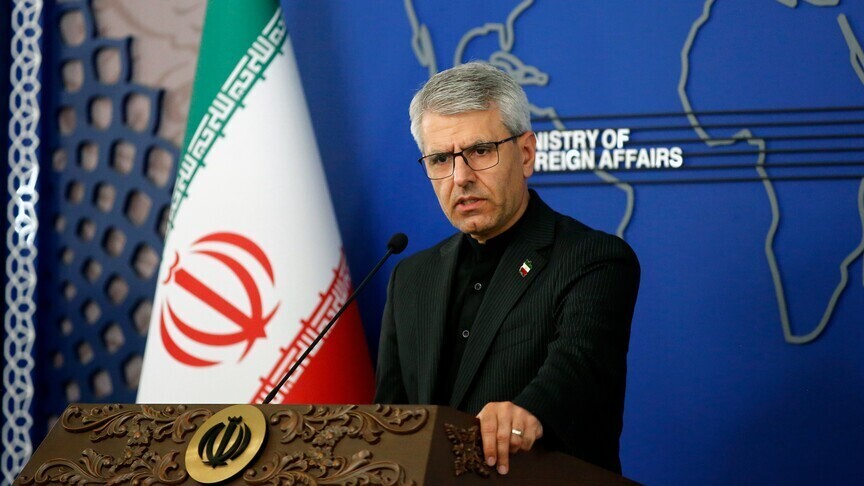
Iran’s foreign minister Abbas Araghchi dismissed the announcement as ineffective. Iranian parliamentary speaker Mohammad Bagher Ghalibaf called the threats “bombast.” Iran’s foreign ministry spokesman Esmaeil Baqaei went further, framing the sanctions not as economic policy but as something more personal: “Washington’s persistence in failed methods has no result other than proving America’s hatred for the Iranian people.”
The campaign launches approximately six months into what began as a joint US-Israeli military operation against Iran’s nuclear infrastructure and military-industrial base, which started with air strikes in late February 2026. That campaign degraded Iran’s missile factories and nuclear facilities but failed to produce a political resolution. The naval blockade the US Navy imposed on Iranian ports in April reduced Strait of Hormuz traffic to roughly 20 percent of pre-war levels, with about 200 ships transiting weekly rather than the pre-war 1,000. What it did not produce was a deal.
Operation Economic Outcast is the administration’s answer to that stalemate — a pivot from military to financial pressure at a moment when Trump’s public standing has reached its lowest point. Polling published this week showed just 31 percent of Americans support US military action against Iran, down from 37 percent in March. Trump’s approval rating has matched a record low of 33 percent. Gas prices averaging $4.09 per gallon nationally — up from $2.98 at the start of the conflict on February 28 — have moved faster than public support has eroded.
Markets did not greet the announcement with alarm. Brent crude pulled back to $85.22 per barrel after two weeks of gains, suggesting traders interpreted the Iran sanctions and Strait of Hormuz oil disruption as confirming existing pricing rather than adding new risk. Gold was a different story, jumping 0.8 percent to $4,639.49 per ounce on safe-haven demand. The S&P 500 fell 0.2 percent while oil sector stocks took heavier losses, with BP declining more than 2 percent, ExxonMobil shedding 0.9 percent, and Chevron falling 0.8 percent.
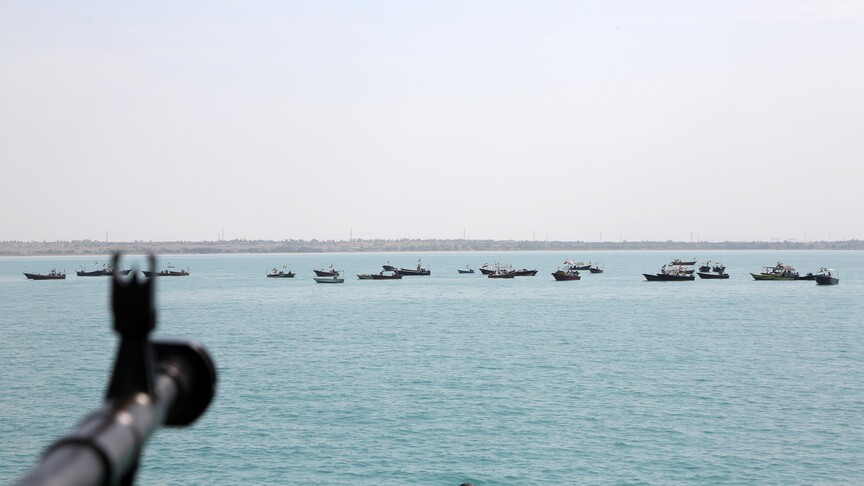
Iran’s neighbors heard the announcement through a different lens. The Strait of Hormuz runs through their backyard. Mohsen Rezaei, who heads Iran’s Supreme National Security Council, directed an explicit threat not at the United States but at the Gulf states the US was counting on to cooperate: “If the countries surrounding Iran join the Americans in the economic war, not a single drop of oil will leave the Persian Gulf.” Tehran, Rezaei warned, would target alternative export routes as well.
The UAE had already made its position clear before Monday’s announcement. Following ballistic missile strikes on its territory, Abu Dhabi suspended economic ties with Tehran last week — a move that cut off one of Iran’s most significant trade corridors. The region’s other states have not moved as decisively. The Mecca defense pact, signed by Turkey, Saudi Arabia, and Pakistan in early August, leaves each signatory caught between US pressure to cut Iranian trade and geographic necessity to coexist with a neighbor whose oil markets they depend on.
The IRGC’s response to Bessent’s announcement was pointed. Spokesman Hossein Mohibbi warned that threats to Iran’s infrastructure “will face heavy strategic strikes on energy chokepoints.” Mohibbi described the conflict’s trajectory as having “transferred vulnerability to the enemy’s vital infrastructure” — a claim that, if accurate about Iran’s remaining missile capability, suggests the campaign’s risk calculus is less straightforward than Treasury’s framing implies.
Whether China complies is the central unknown the sanctions cannot resolve on their own. Beijing bought roughly 90 percent of Iran’s exported oil last year. Chinese companies account for more than a third of the entities sanctioned Monday. Previous rounds of secondary sanctions on Chinese entities produced circumvention rather than compliance: shell companies replaced sanctioned intermediaries, and crude continued to move through shadow fleet arrangements. Bessent’s language was tougher than previous rounds, but the structural incentive for China has not changed.
Iran’s own economic deterioration has reached the point where additional pressure may have limited marginal effect on behavior. The currency is already at historic lows. Inflation is running at rates that erase savings. The sanctions have been compounding for years, accelerating through the military campaign. A population under maximum economic pressure has not translated into political concession from Tehran’s leadership — and Rezaei’s threats suggest the leadership’s calculation remains the same: escalation over capitulation.
What Operation Economic Outcast adds to this picture is a shift in diplomatic posture. The naval blockade was a military tool deployed without full coalition support. Secondary sanctions require coalition support to function — they work only if partners comply. Bessent said Trump personally called world leaders demanding compliance within defined timelines. Whether those calls produced binding commitments, as distinct from polite diplomatic language, has not been confirmed. Iran exports to 147 countries and imports from 114; unwinding that network requires cooperation from governments that have so far declined to join the US coalition outright.
The timeline for measuring outcomes does not align with the US domestic political cycle. Trump’s approval rating is already at a floor. Gas prices above four dollars are a structural drag regardless of Iranian behavior. The endgame Bessent described — Tehran standing alone, returning to nuclear negotiations — is not weeks away. The distance between that framing and six months of visible results is the thing Monday’s announcement left conspicuously unaddressed.