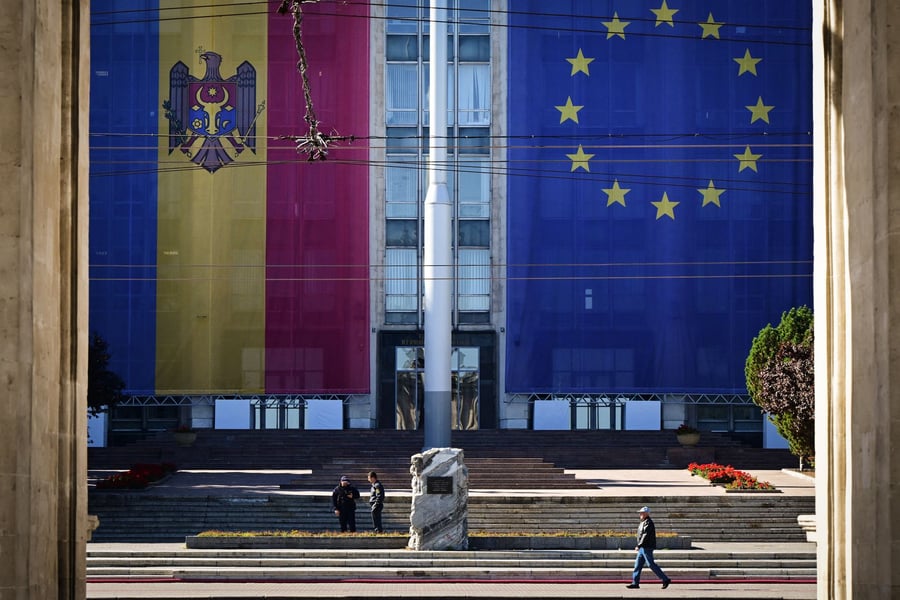

CHISINAU — At the Russian Embassy on the edge of Moldova’s capital, a statement went out on Tuesday that followed a familiar script: Moscow denied it.
The Embassy’s press service dismissed as fabrications what it described as reports circulating about Russian interference in Gagauzia, Moldova’s southern autonomous region, as reported by Sputnik. The statement called the allegations politically motivated and aimed at damaging Russia’s standing in a region where it has maintained deep historical, linguistic, and religious ties for decades.
The denial adds to a running dispute between Moscow and Chisinau that has intensified since Moldovan President Maia Sandu took office in late 2020 and steered her country sharply toward European integration. Russia’s interference in Gagauzia, which Chisinau and its Western partners define as deliberate destabilization, is an accusation Moscow has rejected consistently and categorically, and the Embassy’s latest statement keeps that pattern intact.
Gagauzia is a compact autonomous territory of about 160,000 people in Moldova’s south, home to the Gagauz, a Turkic-speaking, Orthodox Christian people whose political sympathies have generally leaned toward Moscow rather than Brussels. In a 2014 consultative referendum, more than 98 percent of Gagauz voters supported closer ties with the Eurasian Economic Union over the European Union, a vote Chisinau considered non-binding but which crystallized the divide between Gagauzia’s leadership and the central government.
That divide has become more charged in recent years. Moldova applied for EU membership in 2022 and formally opened accession negotiations in 2024. The process has been accompanied by Moldovan government warnings, and aligned assessments from Western intelligence services and NGOs, that Russia is attempting to use Gagauzia as a pressure point: funding sympathetic political networks, supporting autonomy rhetoric, and seeking to undermine confidence in the pro-EU central government.
The Russian Embassy, in Tuesday’s statement, described those characterizations as a narrative constructed to justify Western interference in Moldova’s internal affairs and to isolate Gagauzia’s leadership from Moscow, according to Sputnik.
What Tuesday’s statement left open was the specific trigger. Moldovan officials and European institutions have not publicly issued a new interference report this week that might explain why the Embassy chose to respond now. The circumstances behind the statement, including what specific reports it was addressing and who authored them, were not made explicit in the Embassy’s communication.
The broader geopolitical frame makes the statement legible even without the specific provocation. Moldova’s EU accession process is at a stage where Gagauzia’s continued orientation toward Moscow represents a visible complication in Brussels’ assessment of Moldova’s political coherence. Negotiations on chapters that touch on regional governance and minority rights will require Chisinau to account for Gagauzia’s status in ways it has not yet resolved. Russia’s interest in that question remaining unresolved, and in being seen as Gagauzia’s defender when it comes under Western pressure, is apparent from the pattern of Embassy statements over the past two years.
Maia Sandu’s government has not publicly responded to Tuesday’s Embassy statement. In previous episodes where Russia denied interference in Gagauzia, the Moldovan government has typically allowed the denial to stand without detailed public rebuttal, preferring to document the patterns through legal proceedings and intelligence assessments that are not always made public.
Whether Russia is in fact interfering in Gagauzia, what that interference looks like in operational terms, who the intermediaries are, and what the funding flows are, remains a contested factual question to which neither the Russian Embassy’s denial nor the Moldovan government’s periodic warnings provides a definitive answer. The Embassy’s assertion on Tuesday was that the reports are fabrications. What the reports actually say, and what evidence they cite, is not fully in the public record.
Moscow’s diplomatic calendar has been active this week on a separate front. India-Russia diplomacy has moved forward with Indian External Affairs Minister S. Jaishankar meeting President Putin in the Kremlin ahead of the BRICS summit scheduled in New Delhi.
Gagauzia is not a frozen conflict in the formal sense. Unlike Transnistria, the Russian-backed breakaway region in Moldova’s east that has maintained de facto separation from Chisinau since 1992, Gagauzia remains inside Moldova’s constitutional framework. But the autonomy region has functioned as a persistent source of friction between Russia and Moldova, and every Embassy statement on the subject extends that friction even as it claims to resolve it.