
WASHINGTON — The executive order Donald Trump signed Wednesday does not simply prohibit new Chinese hardware from the American power grid. It demands that the utilities running that grid begin identifying what Chinese hardware is already inside it — an admission embedded in the policy itself that Washington does not know the full answer.
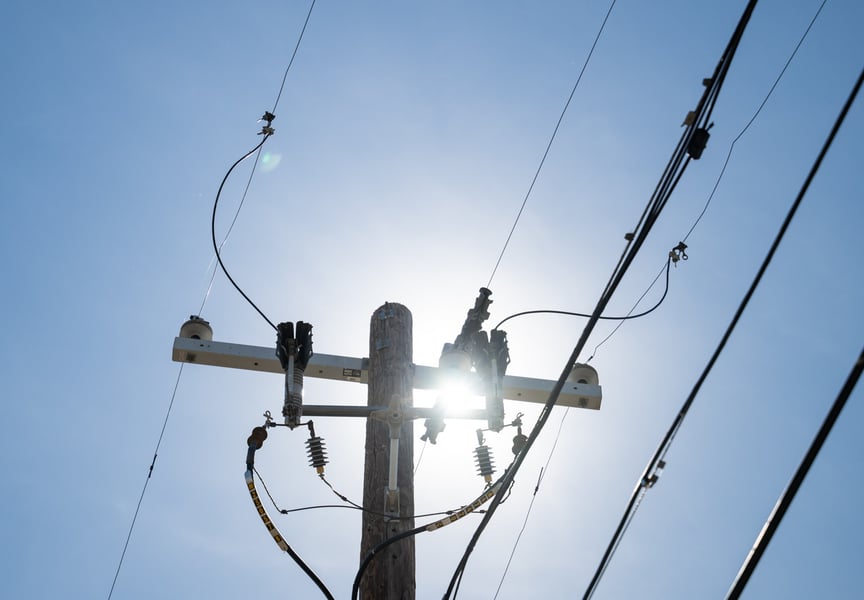
The order covers bulk-power system equipment and software linked to companies connected to China, Russia, Iran, North Korea, Cuba, or Venezuela. It prohibits procurement by any entity operating US critical energy infrastructure and directs the Department of Energy to publish implementing rules within 120 days. The signing came a day after federal investigators confirmed that communications devices had been found in Chinese-manufactured solar inverters operating in American grid facilities — hardware that had never been disclosed to buyers.
The Federal Communications Commission banned Chinese-made solar inverters with remote communications capabilities earlier this year, following findings that the embedded components could theoretically allow remote access to grid infrastructure. Trump’s executive order extends that finding across the broader bulk-power equipment chain. If communications hardware can be concealed in an inverter, the argument runs, it can be concealed elsewhere.
“Blocking new purchases is the easy part,” said John Bruggeman, chief experience officer at CBTS, a managed IT services firm that works with grid operators. “Knowing what’s already running is where the real work starts.”
That sentence describes the structural problem the executive order creates without resolving. The 120-day rulemaking window will determine which equipment categories require disclosure, which utilities must report, and what the compliance timeline looks like. In the gap between Wednesday’s signing and whatever the Department of Energy produces, operators are being asked to assess exposures that many have never systematically catalogued.
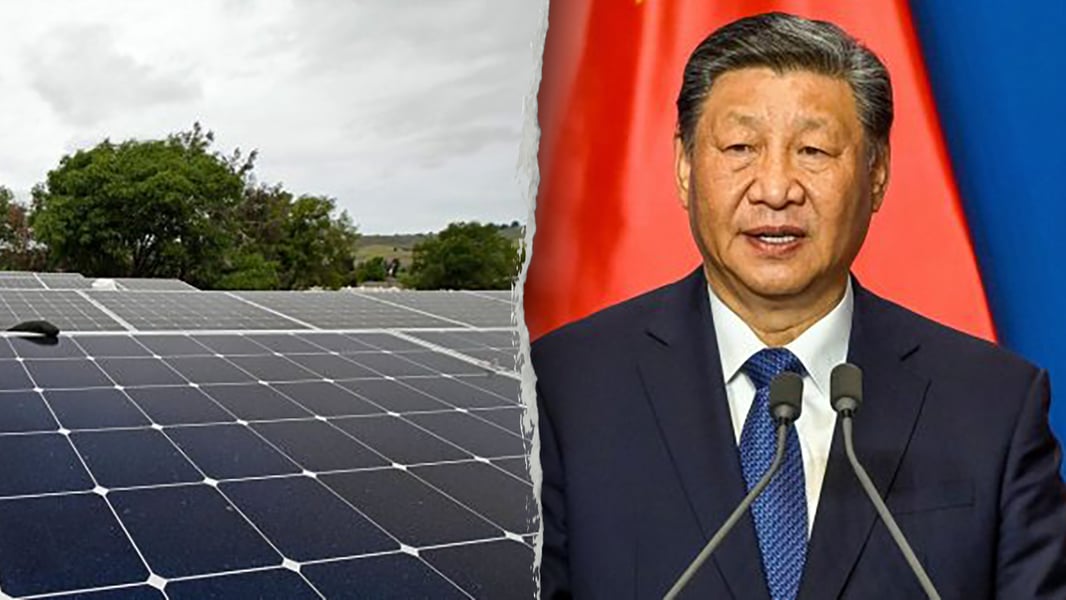
China manufactures the majority of the world’s solar panels, inverters, and a substantial share of the electrical transformers and control systems used in American substations. That supply concentration is not an accident of economics alone — Chinese government industrial policy actively backed domestic manufacturers against foreign competitors across two decades of renewable energy buildout. The result is a dependency so embedded in American infrastructure that the national security case against it and the grid reliability case for keeping it are now in direct tension.
“Implementation will require providing operators visibility into risky assets without disrupting grid reliability,” Michael Centrella, a researcher at SecurityScorecard, told Al Jazeera. The caveat is not incidental. The American power grid is a patchwork of investor-owned utilities, municipal systems, rural cooperatives, and federal power authorities, each operating under different regulatory regimes, with different procurement histories and different capacity to conduct the hardware audit the executive order implies.
Wednesday’s order arrives inside a broader pattern of US government action against Chinese technology at critical infrastructure chokepoints. The FCC’s Huawei equipment restrictions in telecommunications networks were extended and tightened this year. The Federal Energy Regulatory Commission has been tightening supply chain risk management standards for the bulk power system since 2020. Semiconductor export controls restrict advanced chip sales to Chinese manufacturers. The executive order extends the same security logic into the physical infrastructure of the power system.
For US utilities, the order lands at a complicated moment. The energy sector is mid-expansion driven by AI data centre demand, electric vehicle charging infrastructure, and broad electrification. Solar generation is growing faster than any other source. Chinese panels and inverters are cheaper than alternatives by margins that made them the default procurement choice for cost-constrained projects. An order restricting Chinese equipment does not make the alternatives cheaper or more available — it makes compliance expensive and alternatives scarce.
The 120-day rulemaking period will determine how onerous that burden becomes. The Department of Energy can define “bulk-power system equipment” broadly or narrowly; it can set disclosure thresholds that capture only major substation hardware or extend to solar panel-level components. Political pressure on the implementing agency will run in multiple directions: utilities seeking narrow definitions, national security advocates seeking broad ones, domestic equipment manufacturers seeking rules that disadvantage foreign competitors.
The order intersects with a parallel set of US concerns about Chinese technology’s penetration of allied infrastructure. The CIA director’s secret talks in Moscow last week addressed Russian escalation scenarios, a conversation that assumed continued Western solidarity — solidarity that is harder to sustain when allied grid infrastructure may carry Chinese-installed monitoring capabilities. The US-India nuclear energy cooperation framework being developed in Washington addresses overlapping supply chain risks, with both governments seeking to reduce dependence on Chinese manufacturing for critical infrastructure components, an effort directly relevant to the problem the executive order now names explicitly.
What the order does not answer is the counterfactual: if Chinese solar inverters with undisclosed communications hardware were found by FCC investigators, what else was found in adjacent equipment categories that was not placed in the public record? The executive order’s security rationale implies a threat assessment broader than the inverter finding alone.
How many Chinese-made components are currently operating inside the US power grid, at what critical junctures, and with what communications capabilities, is a question the policy does not yet know the answer to. The 120 days the Department of Energy has been given is partly the time needed to draft regulations and partly the time needed to find out what those regulations will actually govern.