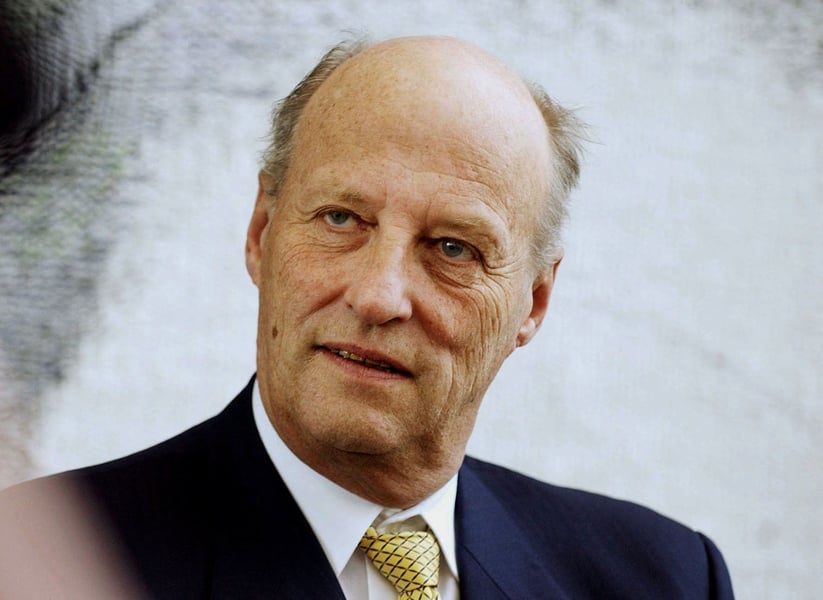

OSLO — He was four years old when Nazi Germany occupied Oslo and his mother carried him out of the country, first to Sweden and then across the Atlantic, and the question of whether he would ever come home was genuinely open. Eight decades later, King Harald V died in the same city, in the country he returned to in 1945 and eventually ruled for 35 years. He was 89.
The Royal Court of Norway confirmed Friday that Harald died peacefully at Oslo University Hospital Rikshospitalet at 6:35 in the morning. His son, Crown Prince Haakon, ascended immediately to the throne as King Haakon VIII, ending one of the longer reigns in modern Nordic history without the abdication that had become a pattern among European monarchs in recent years. Harald did not step down. Other kings and queens did; he stayed.
What makes that notable is not sentiment but context. Harald was, at the time of his death, Europe’s oldest reigning monarch, having held that distinction as one contemporary peer after another stepped aside citing health or the demands of age. He faced similar pressures in his final years, including hospitalizations abroad for heart treatment and the fitting of a pacemaker in 2024, but chose to hold the throne until it was no longer his to hold, according to NPR’s coverage from Oslo.
Prime Minister Jonas Gahr Støre spoke Friday from Oslo. “Harald V demonstrated an unwavering faith in the Norwegian people,” Støre said. “He helped us to see the best in ourselves.” That phrase is a diplomatic one, but in the context of Harald’s reign it has specific weight: the moments the country remembers are not the formal ceremonies but the ones when the king said something true at a moment of national pain.
The most lasting of those came on July 25, 2011, four days after the far-right extremist Anders Behring Breivik killed 77 people, bombing a government building in Oslo and then carrying out a massacre on the youth camp island of Utøya. Harald addressed a memorial service in the language not of vengeance or security but of openness. “Tonight the streets are filled with love,” he said. The speech circulates in Norway still. It was the kind of thing a politician could not afford to say and a king could.
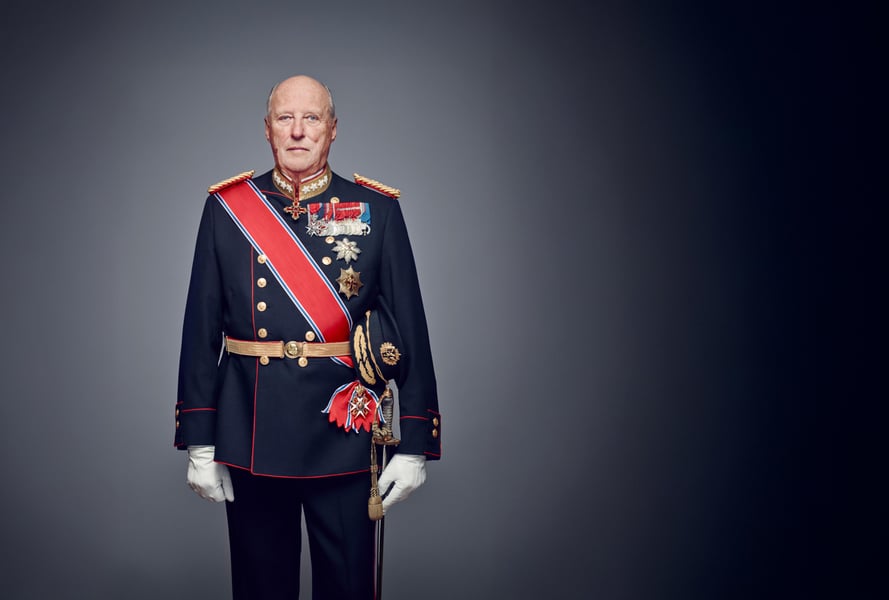
Harald was born February 21, 1937, the first Norwegian prince born in Norway since 1370. When German forces occupied the country in April 1940, his mother Crown Princess Märtha fled with him and his two sisters, first to neutral Sweden and then to the United States, where they spent much of the war. His grandfather King Haakon VII broadcast from London to sustain Norwegian resistance. Harald returned to Oslo in 1945 in a public homecoming that the country documented carefully, crowds filling the streets as a sense of national life resumed after five years interrupted.
He attended Norwegian public schools alongside ordinary children, an approach maintained deliberately to keep the monarchy grounded in the society it served. He later studied at the Norwegian Military Academy and Balliol College, Oxford. He sailed at three Olympic Games, Melbourne 1956, Rome 1960, and Tokyo 1964, finishing fifth in the Dragon class at the latter in a result that reflected a commitment to sport for its own sake.
The story of his marriage ran against the conventions of European royal protocol in his time. For nine years, Harald refused the European noblewomen placed before him. He had met Sonja Haraldsen, a businessman’s daughter, at a student party, and the protocols of the day did not consider her suitable. His father eventually agreed. The couple married August 29, 1968. They had two children: Crown Prince Haakon, now king, and Princess Märtha Louise.
Harald became king on January 21, 1991. His reign coincided with Norway’s deepening oil wealth, significant demographic change, and sharpening questions about the monarchy’s place in a modern, egalitarian society. He did not step out of the picture to answer those questions; he made himself useful within them. In a 2016 speech that drew international attention, delivered at a moment when Europe’s political discourse about diversity was under strain, he spoke about LGBTQ+ equality and religious tolerance. “Norwegians are girls who love girls, boys who love boys, and girls and boys who love each other,” he said. The line was framed as description. It landed as something rarer: an accurate account of the country.
Norway is a founding NATO member and holds an unusual position in Scandinavian security architecture, a country that borders Russia to the north while maintaining firm alliance commitments. As the broader alliance works through disputes over burden sharing and long-term European defense commitments, a debate that reached a recent inflection point with Germany’s rejection of UK nuclear financing proposals, Norway’s voice inside NATO has been consequential and deliberately measured. Harald played no direct role in that policy landscape, but the stability of his reign provided the backdrop against which Norwegian foreign policy operated.
What King Haakon VIII will make of the throne is genuinely uncertain. He has expressed commitments consistent with his father’s, but the Norway he inherits is not the Norway of 1991, and the obligations of a modern European monarch remain disputed. The wider debate about the emerging multipolar world order that other powers are actively reshaping carries implications for small NATO members whose strategic positioning depends on alliance solidarity holding.
Harald left that question open. He had, in 35 years, redefined what a Norwegian king could say and stand for. He spent part of his childhood in American exile hoping to return to a country still under occupation. He returned, reigned, and left it to someone else to decide what comes next.