
SAN JOSE — For months, reporters at The Stanford Daily operated in a kind of enforced silence. Noncitizen staff members quit their positions. Others refused story assignments. Some demanded that previously published articles be removed from the newspaper’s website — not because the reporting was wrong, but because they feared the words themselves could trigger their deportation. A federal judge in California ruled Friday that those fears were the direct product of an unconstitutional government scheme.
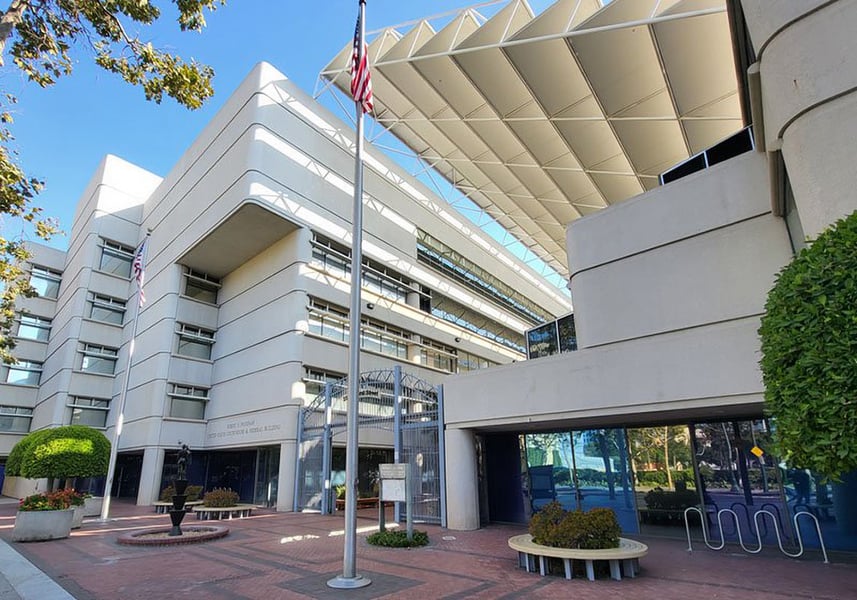
U.S. District Judge Noël Wise, sitting in San Jose, struck down two provisions of federal immigration law that Secretary of State Marco Rubio’s State Department had used to revoke visas and initiate deportation proceedings against noncitizens who criticized Israel’s conduct in Gaza. The ruling marked the first time a federal court declared those statutes unconstitutional when applied to speech protected by the First Amendment.
The case, Stanford Daily Publishing Corporation et al. v. Rubio et al., was brought by the Foundation for Individual Rights and Expression on behalf of the student newspaper whose noncitizen staff had been directly chilled by the Trump administration’s enforcement campaign. It is part of a broader pattern in which the government has used immigration authority to silence voices critical of Israeli military operations that independent human rights observers have characterized as genocide.
The administration’s enforcement program reached beyond The Stanford Daily. Mahmoud Khalil, a Palestinian activist and Columbia University student, was targeted for his pro-Palestinian speech. Rümeysa Öztürk, a Tufts University doctoral student, faced deportation over an opinion article she co-authored. The same enforcement logic applied to any noncitizen who expressed criticism of the Israeli government or whose views the State Department judged to compromise “a compelling foreign policy interest” — a legal standard the court found hopelessly vague.
Judge Wise found that standard incomprehensible by design. The statute gave officials unchecked discretion to target disfavored speech without any intelligible limit on which expressions crossed the line. At The Stanford Daily, the effect was audible in the newsroom’s silence. “The silence is deafening,” she wrote.
The ruling arrives as American universities have spent the past year navigating a legal landscape reshaped by the Trump administration’s immigration enforcement priorities. A $250,000 settlement at the University of Minnesota followed the termination of a scholar who called Gaza a genocide. Separately, a Johns Hopkins researcher was detained by ICE and held in Louisiana while his family waited for information. Academic speech, the cases collectively suggest, has become a new front in the government’s pressure campaign against Israel’s critics.
Conor Fitzpatrick, a FIRE attorney who argued the case, said the ruling vindicated a principle the government had spent a year contesting. “In America, free speech doesn’t just belong to the people who say things the government agrees with,” Fitzpatrick said according to CBS News. The court found the administration’s standards for which speech was prohibited to be “incomprehensible,” leaving noncitizens with no way to know what they were and were not allowed to say.
George Porteous, editor-in-chief of The Stanford Daily, said the ruling cleared the legal cloud that had hung over the newsroom. “Reporters in our newsroom shouldn’t have to fear that writing a story will result in their deportation,” Porteous said. The paper’s noncitizen staff had been operating under a suppression invisible to readers but immediate to those doing the work.
Judge Wise’s language was unambiguous about what the administration had done. “Freedom of speech is illusory if we are only ‘free’ to express complementary views about the government and its leaders,” she wrote. The First Amendment’s protections, she found, do not evaporate at the border for a noncitizen who writes a critical article. “In the United States, freedom of speech belongs to the people. It is not the government’s to take.”
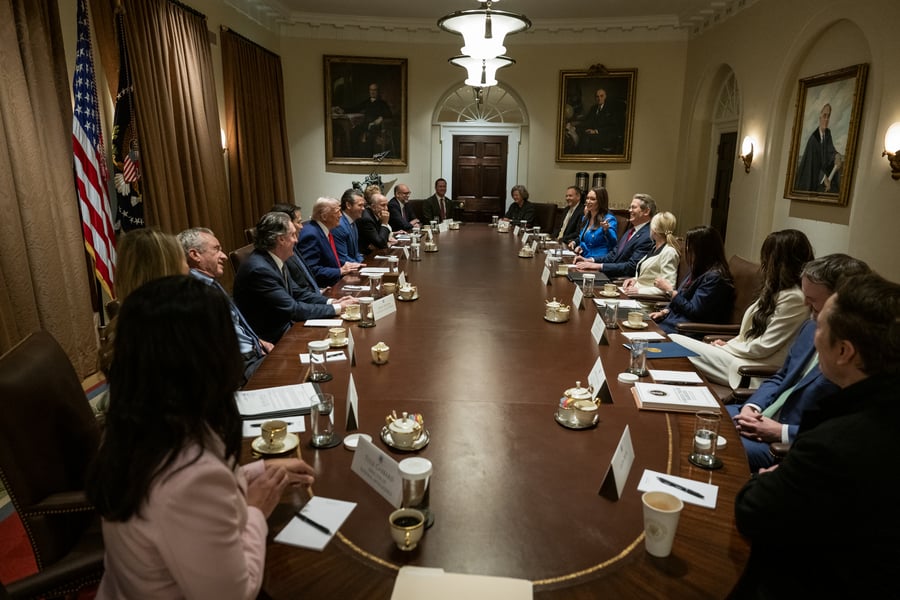
The case also touched on what happened after Charlie Kirk’s assassination in September 2025. Among the criteria the government applied were expressions of criticism targeting Kirk — a mechanism that broadened the enforcement campaign beyond the Palestinian-solidarity movement to anyone who expressed opposition to a figure the administration associated with its ideological coalition. Civil liberties advocates said the inclusion made clear the program’s real purpose: not foreign policy protection, but viewpoint control.
The Foundation for Individual Rights and Expression called Friday’s decision a landmark — the first federal ruling nationally to address the constitutionality of the two statutes as applied to speech. Their full statement on the ruling details what the court found and what it means for the dozens of noncitizens still caught in the administration’s deportation machinery.
What happens to those individuals — Khalil, Öztürk, and others whose cases predated Friday’s ruling — remains an open question. Courts addressing individual cases have issued conflicting signals. The administration has shown no sign it intends to wind down an enforcement campaign that has already reshaped how some of the country’s most prominent university newspapers operate.