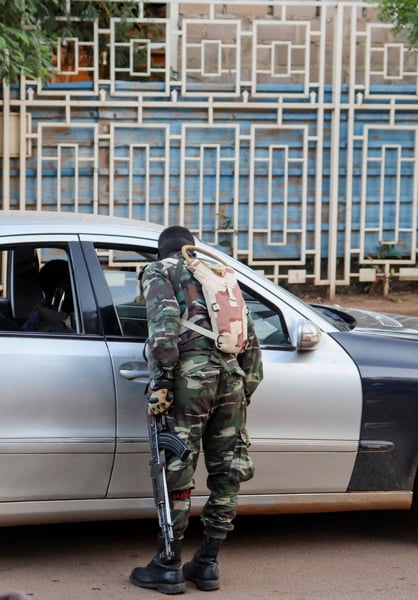

NIAMEY — The soldiers who mounted Friday night’s assault on Niamey had spent months fighting jihadist groups in Niger’s southwest, absorbing casualties that the military government had largely kept out of public view. When they turned their weapons on the city’s main military base, the international airport, and the perimeter of the presidential palace, the junta they attacked called on Russia to help put them down.
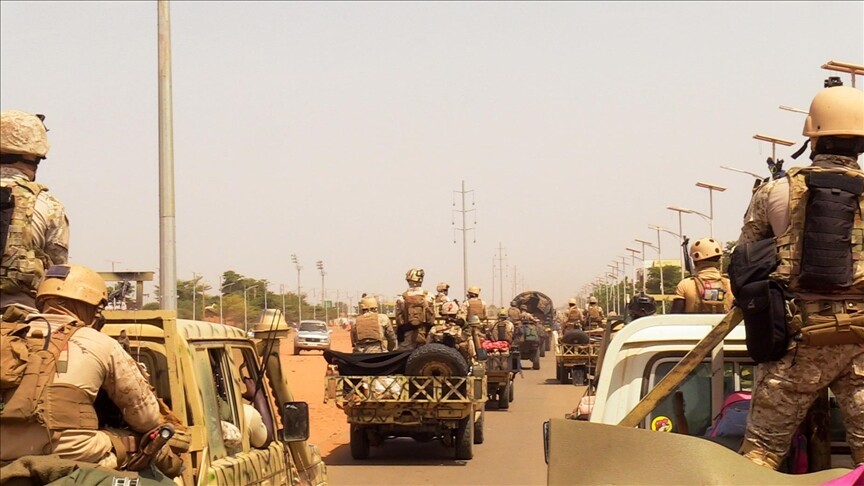
Viktor Voropaev, Moscow’s ambassador to Niger, confirmed Saturday to the state news agency TASS that Africa Corps, the Russian paramilitary force that has anchored the junta’s security apparatus since the July 2023 coup, received “a request for assistance in neutralising the mutineers.” The acknowledgment, the first time Moscow has confirmed operational involvement in suppressing internal dissent within Niger’s armed forces, reframed what Niamey had presented as a contained disciplinary incident.
The attack had begun hours earlier. Gunfire and explosions struck Niamey in the early hours of Saturday, with residents describing sustained exchanges near the airport and around Base 101, the military installation on the city’s southern edge. That initial assault, which targeted multiple locations near simultaneously, was described by the junta as a destabilisation attempt before the full scope of what had happened became clear. Defence Minister Gen. Salifou Mody declared the situation “brought under control” by late Saturday, saying the troops had been “broken away from military order” and that a group of mutineers had been “neutralised.” Dozens were killed or arrested. The whereabouts of junta leader Gen. Abdourahamane Tchiani during the attack were not confirmed.
The Alliance of Sahel States, the pan-junta bloc Niger shares with Mali and Burkina Faso, was quick to frame the events as a coordinated plot rather than a military grievance. “A group of soldiers involved in a destabilisation plot,” the AES statement read, without identifying who had organised or funded the operation. That question remained unanswered as of Saturday evening.
The mutineers came from units stationed in Ouallam, Tera, and Dosso, frontier zones in Niger’s southwest where the army has for years been fighting affiliates of the Islamic State in the Greater Sahara and the al-Qaeda-linked Jamaat Nusrat al-Islam wal-Muslimin. These are among the country’s most exposed postings. Soldiers there have absorbed regular overrun attacks at a tempo that rarely surfaces in official communiqués.
Heni Nsaibia, a senior researcher at the Armed Conflict Location and Event Data Project, said the assault reflected a pattern analysts have tracked for months. “These mass-casualty overrun attacks on the Nigerien military are becoming commonplace and will continue to fuel unrest,” he said in a report on the mutiny. The men at the front, fighting with inadequate resupply and suffering losses that go unannounced, have been accumulating grievances since before the coup.

Africa Corps has been the operational backbone of the Niger junta’s security apparatus since arriving after the coup, providing training, logistics, and armed capacity against jihadist groups in the same regions where the mutineers had been stationed. Moscow’s ambassador did not specify whether Africa Corps personnel had deployed in response to Friday’s attack or had provided only advisory support. The distinction is operationally significant and was not resolved by Saturday.
What is notable is that Voropaev confirmed the request publicly, through TASS. The disclosure appears deliberate rather than inadvertent, a signal from Moscow of confidence in its role as the junta’s essential security guarantor and a measure of how far that relationship has deepened since 2023.
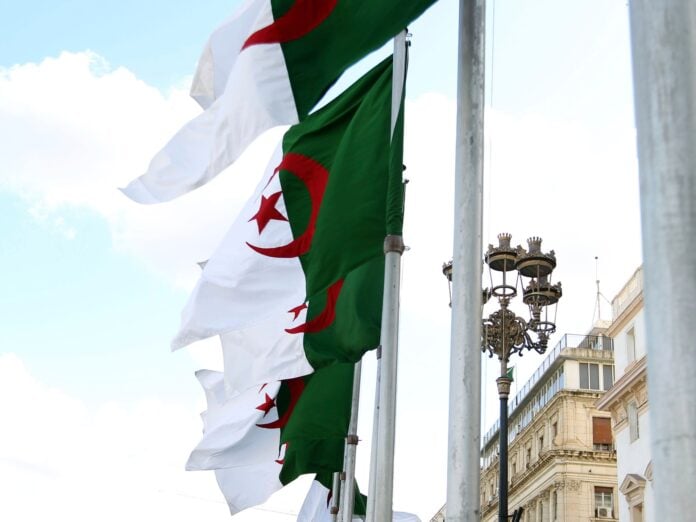
The regional response tracked familiar lines. Algeria expressed “full solidarity and firm support” for Niger’s military leadership, a notable posture given Algiers’ long-standing wariness of Russia’s Sahel expansion. Turkey called for restraint, in a statement to press. Western governments, which cut aid and relations with Niger following the coup, issued no statements.
The unrest is not confined to Niger. Across the Sahel, military confrontations have been escalating along the Sudan-Chad border, underscoring the fragility of the security arrangements junta-led governments in the region have put in place. In Niger, the mutiny did not succeed in its aims. But it demonstrated something the junta has not previously had to acknowledge publicly: that holding power requires Moscow’s involvement not just against external enemies, but against its own army. Whether the soldiers still at the front draw the same lesson is a question neither Niamey nor Moscow has answered.