
ASHEVILLE, N.C. — The Treasury Department denied press credentials to reporters from the New York Times, the Wall Street Journal, and Bloomberg News for the G20 Finance Ministers meeting beginning Sunday in this western North Carolina city, excluding three of the country’s most prominent financial news organizations from a gathering where global economic policy is being shaped.
A Treasury spokesperson confirmed the credential denials to the Times after Alan Rappeport, who covers the Treasury Department for the Times, and Matt Grossman, the Journal’s Treasury correspondent, were each informed separately that their applications had been rejected. Bloomberg reporters who had applied for access to the meeting were similarly turned away. The Asheville gathering, scheduled through Monday, drew roughly 300 accredited journalists — a total that makes the selective exclusion of the three largest financial news outlets a deliberate decision rather than a logistical constraint.
Some journalists were accredited, including from outlets that cover economics and financial policy. Jim Tankersley, who reports on the Treasury Department from the Times’s Berlin bureau, received credentials for the Asheville meeting. NPR, The Washington Post, and Al Jazeera were among news organizations whose reporters were approved. The pattern of approvals and exclusions did not follow a clear organizational logic: the correspondent the Times assigns to cover the Treasury Department from Washington on a daily basis was denied, while a Times colleague based overseas was not.
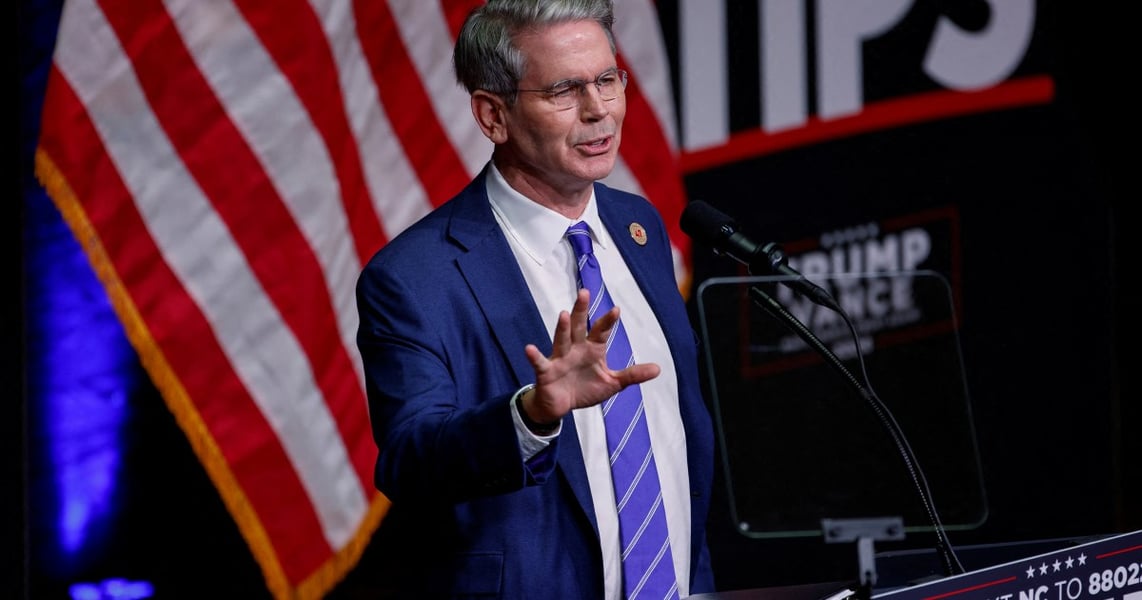
Treasury Secretary Scott Bessent has led the United States’ engagement with G20 Finance Ministers since taking office. His positions on global minimum tax arrangements, sovereign debt restructuring, and the administration’s tariff policy have been closely followed by financial markets and by foreign governments preparing for the full G20 leaders’ summit that follows the Finance Ministers’ meetings. The Asheville gathering is expected to advance discussions on several of those issues.
The reason for the credential denials was not publicly explained by the Treasury. The department did not issue a statement on the exclusions and officials did not explain why the reporters who cover the department most regularly from Washington were denied access while others were not. Treasury’s spokesperson confirmed the denials without providing a rationale.
Accreditation for ministerial-level events organized by the Treasury is a discretionary decision within the executive branch. There is no independent body that governs press access at international economic summits hosted by the United States. The organizing agency retains full authority to determine who is admitted and who is not. The administration has deployed access controls in other contexts as well: in August it revoked Brazil’s ambassador’s US visa amid a diplomatic standoff over American officials’ access during Brazil’s election period.

The G20 Finance Ministers meetings are where the bloc’s economic agreements take shape before full heads-of-government summits finalize them. The Finance Track handles issues that are too technically complex or politically sensitive to resolve at the leaders’ level without substantial groundwork: debt relief for lower-income economies, international taxation of multinational corporations, and monetary policy coordination. Reporting on those discussions requires both access to formal briefings and the ability to speak informally with delegates who are not always willing to go on record.
The exclusion of the Times, Journal, and Bloomberg reporters from those informal spaces is the consequential element of the credential denial. A ministerial communique is distributed to all journalists regardless of accreditation status. The texture of how agreement is reached — what language was contested, which delegations pushed back, what issues were deferred — comes from the access that credential-holding correspondents have in the hallways and sidelines of ministerial sessions.
The credential decisions arrive within a broader pattern. The Trump administration has sustained public criticism of major American news organizations throughout its tenure, including the president’s conduct at the White House Correspondents’ Association Dinner in July, with the president referencing specific outlets by name in terms his press office has not walked back. The Times, Journal, and Bloomberg have each been the subject of that criticism at various points. Whether Sunday’s credential decisions represent a coordinated policy of press restriction or a site-specific decision made for the Asheville meeting is something the Treasury has not explained.
For Rappeport, Grossman, and Bloomberg’s Treasury reporters, the practical consequence is direct: they will not be in the room for the ministerial sessions, briefings, and sideline conversations that typically produce the most substantive reporting from these gatherings. Energy pricing and commodity market outcomes from Asheville will shape the economic agenda the G20 leaders carry into the summit. The correspondents who cover those issues most closely for three of the world’s most widely read financial outlets will not be inside the venue when they are negotiated.
The US Treasury’s G20 engagement has been positioned by the administration as central to its international economic strategy. The Asheville meeting continues through Monday. What it produces — in formal communiques, bilateral conversations, and the specific language Finance Ministers agree on — will not be reported from the inside by three of the outlets that have covered Treasury most closely for years.