
SAN RAMON, California — Chevron has just posted the best quarter in its history, and that is not what the market bought on Friday.
Chevron Corp (NYSE: CVX) closed August 28, 2026 at $201.86, up 1.05%, adding roughly $4.1 billion of market value in a single session. Nothing in the company’s operations changed that day. What moved was the probability, as traders read it, that Chevron is about to be handed two heavy-oil fields in a country whose elected president is currently in a New York jail.
The operational quarter deserves better than the attention it got. Chevron earned $12.1 billion, or $6.11 a diluted share, with adjusted earnings of $12.0 billion, and worldwide production rose 20% year over year, the company said in its results announcement. United States upstream output hit a record of nearly 2.1 million barrels of oil equivalent a day and US refinery throughput passed a million barrels a day, also a record. The Hess integration, which sceptics spent two years and an arbitration case doubting, has delivered $1.5 billion in annual run-rate synergies ahead of schedule and 50% above the original target.
That is a genuinely excellent business performing well in the Permian Basin and the Gulf. It is also, in market terms, last month’s news. The consensus analyst target sits near $218, implying roughly 8% upside from Friday’s close, and a meaningful share of that gap is not an engineering assumption. It is a political one.
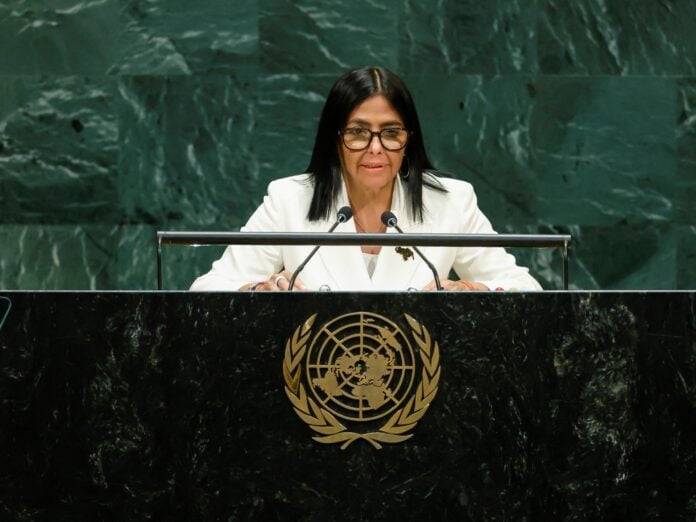
The political part began on January 3, when US military forces seized Venezuelan President Nicolas Maduro, who now awaits trial in New York on drug and weapons charges. Washington backed his former vice president, Delcy Rodriguez, to lead in Caracas. What followed was an arrangement President Trump has described as giving the United States majority control of more than 65 billion barrels of Venezuelan reserves: 55% of effective output from a new private company spanning 17 fields, an ownership stake, and the right to buy oil at cost, on leases reported to run as long as a century. Al Jazeera reported the outlines on August 28 itself, the same session the stock rose.
Chevron is the named beneficiary. Chevron and Halliburton are close to sealing production agreements in Venezuela, and the company is expected to add two heavy-oil fields to a portfolio it never fully abandoned through the sanctions years. Repsol and Shell are reported to be in line behind it. American oil companies had already begun signing the first such deals within weeks of Maduro’s capture, NPR reported at the time.
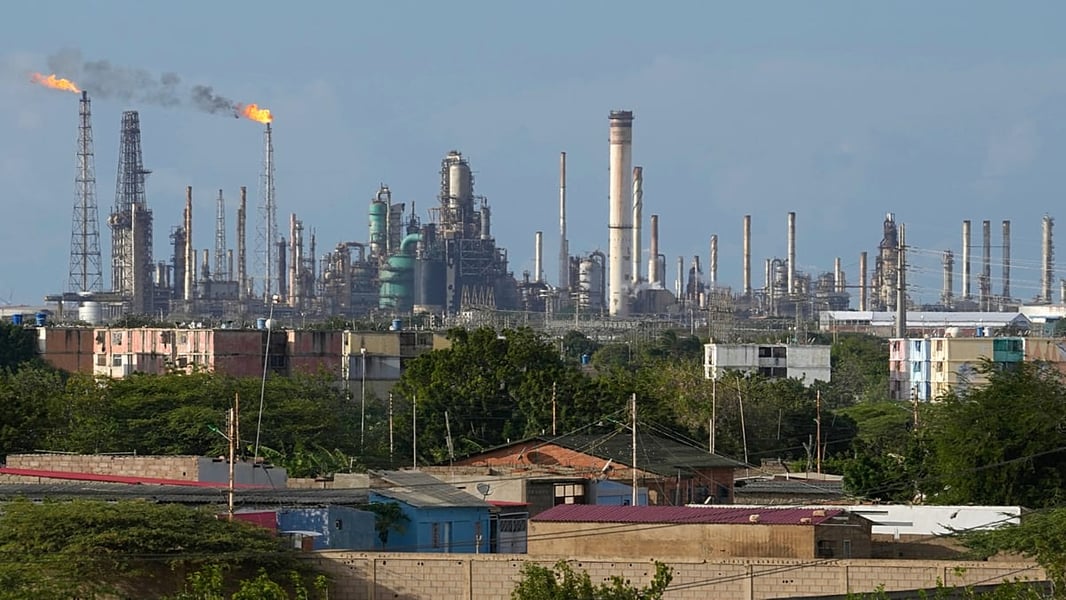
Here is the part that belongs in a risk model rather than a press release. Delcy Rodriguez has insisted that “Venezuela retains ownership and sovereignty over its resources,” a formulation that reads less like a description of the contracts than a defence against them. International law grants states permanent sovereignty over their natural resources, a doctrine built precisely to void concessions extracted under duress, and legal scholars have already warned that the 100-year arrangement may not survive constitutional challenge under Venezuelan law. No Latin American government has issued a formal response. Euronews has catalogued what is actually known about the terms, which is less than the price action implies.
A barrel in the Permian and a barrel in the Orinoco Belt are not the same asset even when they fetch the same price. The Permian barrel rests on a mineral lease enforceable in a Texas court. The Venezuelan barrel rests on a concession granted by an administration installed after a foreign military operation, contested as illegal by international lawyers, and defended by its own beneficiaries in language that concedes the question. Chevron has lived through this before. It watched the expropriations of the Chavez era and kept a minority presence through years of maximum-pressure sanctions precisely because it understood that Venezuelan politics outlasts Venezuelan contracts.
Chevron’s geopolitical exposure is not confined to the Americas either. In Kazakhstan, the company’s Tengizchevroil venture had to reroute exports through Georgia’s Batumi port after drone disruption halted operations at the Novorossiysk terminal on the CPC pipeline, and Chevron officials have since been discussing pipeline safeguards with Astana. Add the closure of the Strait of Hormuz to shipping and a substantial part of Chevron’s growth story runs through waterways and pipelines that governments other than its own control.
What the $201.86 close does not tell you is what Chevron has actually agreed to. The company has not published terms, has not quantified capital commitments for the heavy-oil fields, and has not said what it assumes about the enforceability of a concession whose counterparty government took office under the circumstances this one did. Analysts modelling that 8% upside are, in effect, modelling the durability of a political settlement roughly eight months old. That is a forecast about Caracas, not about crude.
The broader index context sits in the Dow Jones component analysis from August 26, where a single bank supplied most of the index’s move. Chevron’s own contribution on Friday was small in points and large in what it revealed. A company that just set US production records was rewarded for something it has not signed, in a country it does not control, under a legal theory its partners are already disputing. The record quarter was the safe part.